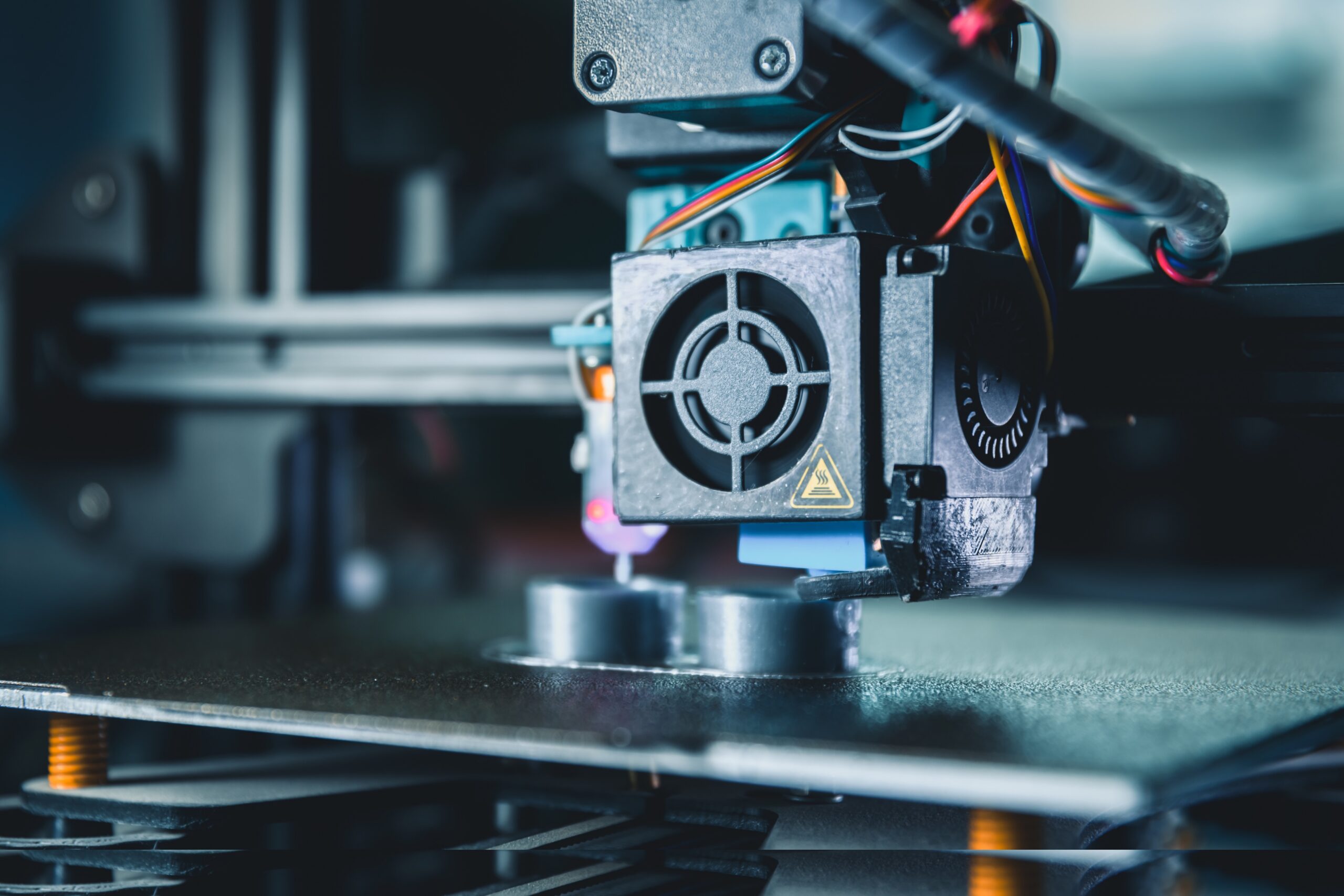
The Australian government launched the Additive Manufacturing Cooperative Research Centre (AMCRC) last year with a commitment of nearly AU$60 million (~$40 million) in public funding, with the AMCRC’s partners from academia and the private sector pledging to add AU$200 million in investments over the following seven years.The AMCRC will leverage AM to benefit the full gamut of strategically critical sectors that comprise Australia’s domestic industrial base, using a matched-funding system to channel resources to businesses capable of executing R&D projects over two-to-five years.Now, a year after that initial funding announcement, the AMCRC has announced the first five research projects in its CORE program (which I assume stands for ‘Cooperative Research’).
With just under AU$2 million in government funding, the remaining AU$11 million will come from matching commitments by industry partners and be rounded out by AU$7 million in in-kind contributions from AMCRC’s collaborators at research institutions and commercial sites.The specific projects haven’t been disclosed yet, although AMCRC said this information will be revealed on a project-by-project basis as each one begins.Additionally, AMCRC did note the sectors represented: “aerospace, mobility and transport, medtech, mining and defence.” Pretty standard targets in the global context of AM acceleration hubs that the AMCRC fits into.
Despite Australia’s government renewing its prioritization of manufacturing funding in recent years, the nation’s manufacturing sector continues to contract, which is a rather similar state-of-affairs to other nations that have been trying to relocalize their manufacturing supply chains in the 2020s, most notably the US.On the other hand, Australian companies have also managed to make inroads into allied nations’ manufacturing bases — again, the US above all — with the US subsidiary of Australian maritime giant Austal the most prominent example.In a press release about the funding of AMCRC’s first five CORE projects, AMCRC Managing Director Simon Marriott said, “This is a significant milestone for Australia’s manufacturing sector.
These projects show industry is investing in additive manufacturing not just as an emerging technology, but as a critical pathway to stronger manufacturing capability, more resilient supply chains and globally competitive production.The level of collaboration and co-investment we’ve seen in this first funding round highlights the appetite to accelerate commercial outcomes and bring advanced manufacturing innovations to market faster.” AMCRC Chair Susan Jeanes said, “These partnerships are creating the know how, infrastructure and industry connections needed to strengthen Australia’s additive manufacturing ecosystem.Importantly, they are helping translate world-class Australian research into real industrial capability and economic opportunity.” Australia is a real wild card.
The nation has so many of the necessary ingredients to support a manufacturing rebound, but its geographic isolation and, relatedly, its dependence on the US seem to be immovable obstacles standing in its way.In that sense, it’s a solid symbol for why it’s tempting to view reshoring as nothing more than a pipe dream.At the same time, you could also view those same weaknesses as potential strengths, under the right circumstances.
The US military is prioritizing Indo-Pacific Command (INDOPACOM) more highly than ever via its advanced manufacturing objectives, which means that we may have reached a moment where the US needs Australia as much as Australia needs the US.No one is going to take my advice on this, but that gives me the advantage of getting to throw some outside-the-box ideas out there.If I were running the Australian government, I would become the anti-US, at least in terms of how the US is currently (mal)functioning.
A perfect example is immigration.Despite claims from the typical right-wing disinformation campaigns that can be found in every Eurocentric nation across the world, Australia’s immigration inflows have completely stagnated.Why not go in the opposite direction that the US and European nations are moving in, and try to actually attract more immigrants — especially those from Southeast Asian populations, who have experience in the semiconductor industry? Australia recently announced it will build its first chip-packaging plant, and I think that AM-backed advanced packaging would be an absolutely genius capability for the nation to put at the center of its economic future.
The only reason not to do that is that it would ruffle a lot of geopolitical feathers, which is the main thing preventing all bold innovative ideas from getting off the ground these days.Perhaps it would end up being more trouble than it’s worth.But Australia is actually firmly grounded in the Indo-Pacific region; the US mostly just meddles around out there.
In the long run, I feel like it’s clear which party needs the other one more.Images courtesy of AMCRC Subscribe to Our Email Newsletter Stay up-to-date on all the latest news from the 3D printing industry and receive information and offers from third party vendors.Print Services Upload your 3D Models and get them printed quickly and efficiently.
Powered by FacFox Powered by 3D Systems Powered by Craftcloud Powered by Xometry 3DPrinting Business Directory 3DPrinting Business Directory
Read More