Anyone who knows me also knows that I'm very much pro-desktop PC.If you want to make me happy, I don't ask for much.Give me a huge chassis, give me a ginormous GPU, fill up my cart with all the other components, and leave me alone so I can build the monster PC of my dreams.
But given the state of the market, even I had to budge this year.More than that, I understand anyone who chooses to give up their desktop-related dreams.It's especially easy when mini PCs have become so tempting...
Many people don't need a desktop tower anymore We've been buying more computer than we actually need Close I may not be ancient (yet), but I am old enough to remember the days when a desktop PC was the gold standard for everything.You'd have one at home (for many of us, in the "computer room"), you'd have one in the office.Some people had bulky laptops that weighed a ton, sure, but many preferred a desktop.
I built my first one in my teens, and I always liked them much more than laptops in every possible way.But the last few years have brought us a shift.It's not just desktops and laptops anymore; it's also mini PCs.
And they fill a gap in the market that many of us didn't even know existed.The truth is that desktop towers are no longer in line with how many of us live.Let's start with office workers.
With the rise (and more recently, slow decline) in remote work, many people now work on laptops, which support the hybrid work model.Having a desktop in the office makes zero sense if you're only there once a week, after all.And even companies that don't offer remote work often prefer to just get the person a laptop, as that's easier in case of travel.
What about gamers? That's less straightforward.In fact, I'm starting to think that the enthusiast gaming sector is the one thing truly keeping desktops alive during the RAM-pocalypse.A mini PC is hardly a gaming device (although many can play games), and laptops always come with a few compromises.
Personally, I love my gaming desktop.I still realize that many people don't need one, though, especially one as powerful as they tend to buy.The economics increasingly favor smaller computers Manufacturers have every reason to shrink your PC As consumers gravitate toward other solutions (read: mini PCs and laptops, not to mention actual phones and tablets), manufacturers do, too.
And it's not just a matter of supply and demand.A lot of it comes down to money, of course.A traditional desktop tower needs a large case, a separate PSU, a motherboard, and often a dedicated graphics card.
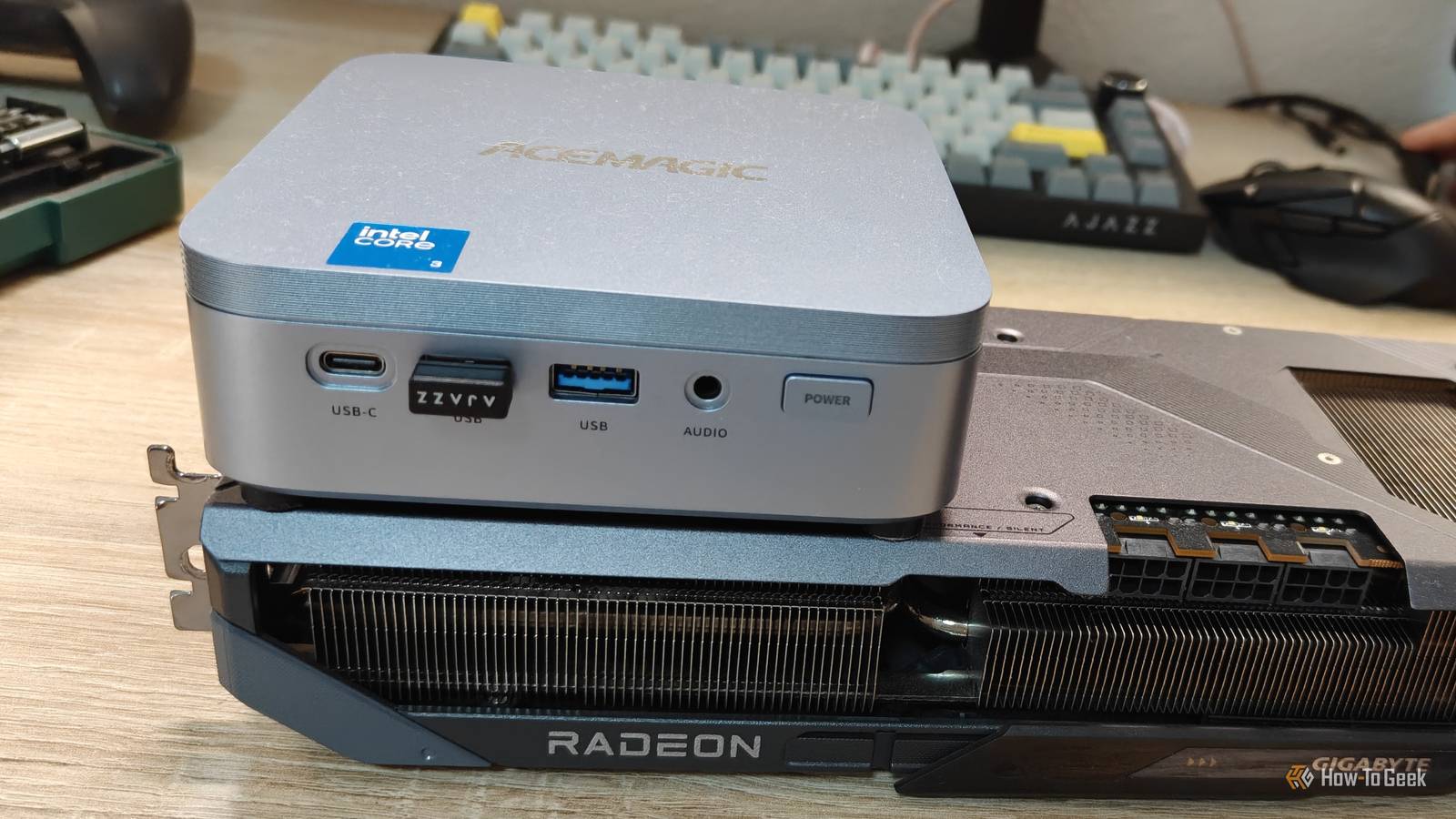
Mini PCs squeeze much of that functionality into a tiny chassis, often using components designed for laptops.They're also easier and cheaper to package, store, and ship, and when you produce PCs at scale, those savings add up.Of course, mini PCs can be expensive, too.
But smaller, standardized systems can make a lot of economic sense, and there's another advantage for manufacturers that many people are considerably less enthusiastic about: limited upgradeability.Many mini PCs have CPUs and RAM that are soldered to the board, meaning your upgrade options are non-existent.Even serious PC performance is no longer tower-exclusive Integrated graphics have come a long way Desktops used to be the only way to play games, but that's no longer true.
You can get by without an integrated GPU if you're not a demanding gamer, and that removes some of that exclusivity that towers used to benefit from.The majority of cheap mini PCs are, indeed, office machines or maybe homelabs, but you can definitely do some gaming on them.This is because integrated graphics have improved by leaps and bounds over the last five+ years, and they can now handle workloads that would've required a full-sized desktop with a discrete GPU in the past.
Some mini PCs are limited to stuff like Counter-Strike or League of Legends, but there are definitely models that can actually run Cyberpunk 2077 with no dedicated GPU.Businesses will help decide what your next desktop looks like Big manufacturers are already embracing tiny computers Individual buyers have all the say in what they buy, but often very little say in what their company decides they should use for work.And businesses are embracing mini PCs, too.
Meanwhile, major manufacturers have started catering to that increase in interest alongside more budget-oriented companies.Where we used to have the Intel NUC (RIP) and then very little else, we now have a whole lot of choice.These business-oriented computers are designed to handle everyday office workloads without taking up a lot of space.
From an IT department's perspective, I can see the appeal: a tiny PC that can be mounted behind a monitor, deployed across hundreds of desks, and managed remotely sounds pretty good.The desktop tower might become an enthusiast luxury Perhaps the best part of a mini PC is that you can get a perfectly decent computer for $500, brand new.Even less, to be honest.
Can you build a PC for that little in 2026, using all new parts? No chance.As desktop PCs get pricier and pricier and mini PCs get more capable, I can definitely see the market shift toward the latter even more.I love desktop PCs and I'll never abandon them, but I know that in 2026 and beyond, owning an enthusiast desktop is becoming more niche by the minute.
Related Laptops don't make sense anymore: Why a mini PC and tablet are the superior option I’d buy a mini PC and tablet before spending $1,000 on another laptop Posts 60 By Monica J.White
Read More