Australia’s Additive Manufacturing Cooperative Research Centre (AMCRC) works with 70 industry partners to deliver collaborative R&D projects.They also work on workforce development and technology transfer.It’s kind of analogous to America Makes, but with a broader focus than just defense.
AMCRC is funded to the tune of $57 million by the Australian government and is trying to help additive manufacturing grow and gain a foothold in the country.Now the AMCRC is working with Austal and Curtin University on a $600,000 research product.Austal is an Australian shipbuilder that employs over 4,000 people and has revenues of 1.82 billion Australian dollars ($1.29 billion in US).
Austal has built patrol vessels for many countries and also builds ferries, submarines, and autonomous vessels.Curtin, meanwhile, is a leading university for mining, geology, geophysics, and architecture. The research project will look through Austal’s defense supply chain to identify parts ripe for 3D printing.Running for 18 months, the idea is to develop “a practical, industry-ready framework capable of providing consistent methodology for assessing potentially thousands of components against operational, commercial, technical, and regulatory requirements.” This is similar to the US Army, Navy, and America Makes projects that we’ve seen in the US.
This seems like a sensible move for Austal.This way, the company can reap the benefits from AM while learning to deploy it more widely.The partners also want to look to “support sovereign manufacturing capability.” Australia is very far from anywhere else and indeed extremely far away from the US.
In the case of a long, drawn-out conflict or a very impactful one, Australia will have to make many parts itself.In Europe, these sovereign manufacturing exercises always have an air of tea, biscuits, and let’s run the flag up the pole.For Australia, on the other hand, this is a very serious thing indeed.
Especially for large parts such as steam turbine components or superstructures, Australia would need to be able to repair them quickly and on its own if it were cut off from the US or if the part was too large for even the US’s enormous C5 aircraft.Generally, having a repair ability would also be very useful in the event of a conflict.And speaking up lead times for casting and forging is always a good idea.
3D printing and sustainment are generally a match made in heaven.Head of Research and Development at Austal, Sam Abbott, noted that, “The challenge is no longer whether additive manufacturing works.The challenge is knowing where it delivers the greatest value.
This framework will help us quantify the demand for additive manufacturing across maritime and defence programs, allowing industry to make better investment decisions, build more resilient supply chains and accelerate the uplift of Australia’s advanced manufacturing capabilities.” Austal is already working as a prime contractor for the United States Navy’s Additive Manufacturing Centre of Excellence, so that experience should help.The Navy’s COE is doing a lot of work not only on qualification and the like, but also on actually getting 3D printed parts made and used.They’re currently looking for manufacturers of ball valve components and LPBF gate valve components.
This is good news for Curtin University, which could gain a deeper understanding of practical scale-up and have parts made on the AM side.Austal and AMCRC work on R&D.The university’s Dr.
Karl Davidson explained that, “By combining engineering, operational and commercial considerations into a single framework, we can help manufacturers make faster, more informed decisions about where additive manufacturing can deliver measurable benefits,” Meanwhile, the AMCRC’s Director, Simon Marriott, said, “Many organisations understand the potential of additive manufacturing, but struggle to determine where it makes commercial and operational sense.This project will deliver a practical solution that helps industry identify high-value opportunities, prioritise investment and build confidence to scale adoption.” This kind of collaborative work, rooted in real practice, is very valuable.Of course, a lot of hard work and discussion will still be needed for this to succeed.But if Australia develops a path from need to part, the country could see which parts it can make, which technologies it needs to invest more in, and which capacities it needs to develop further.
Australia has worked with Spee3D on cold spray and with several DED vendors to develop local capacity to manufacture parts and machines.But, being much further from anyone and lacking the immense budgets the US has, the Australians will have to make more precise choices earlier on to truly build capacity.The AMCRC is doing important work here, and there will be much more of it should Australia truly want to develop a sovereign manufacturing capacity.
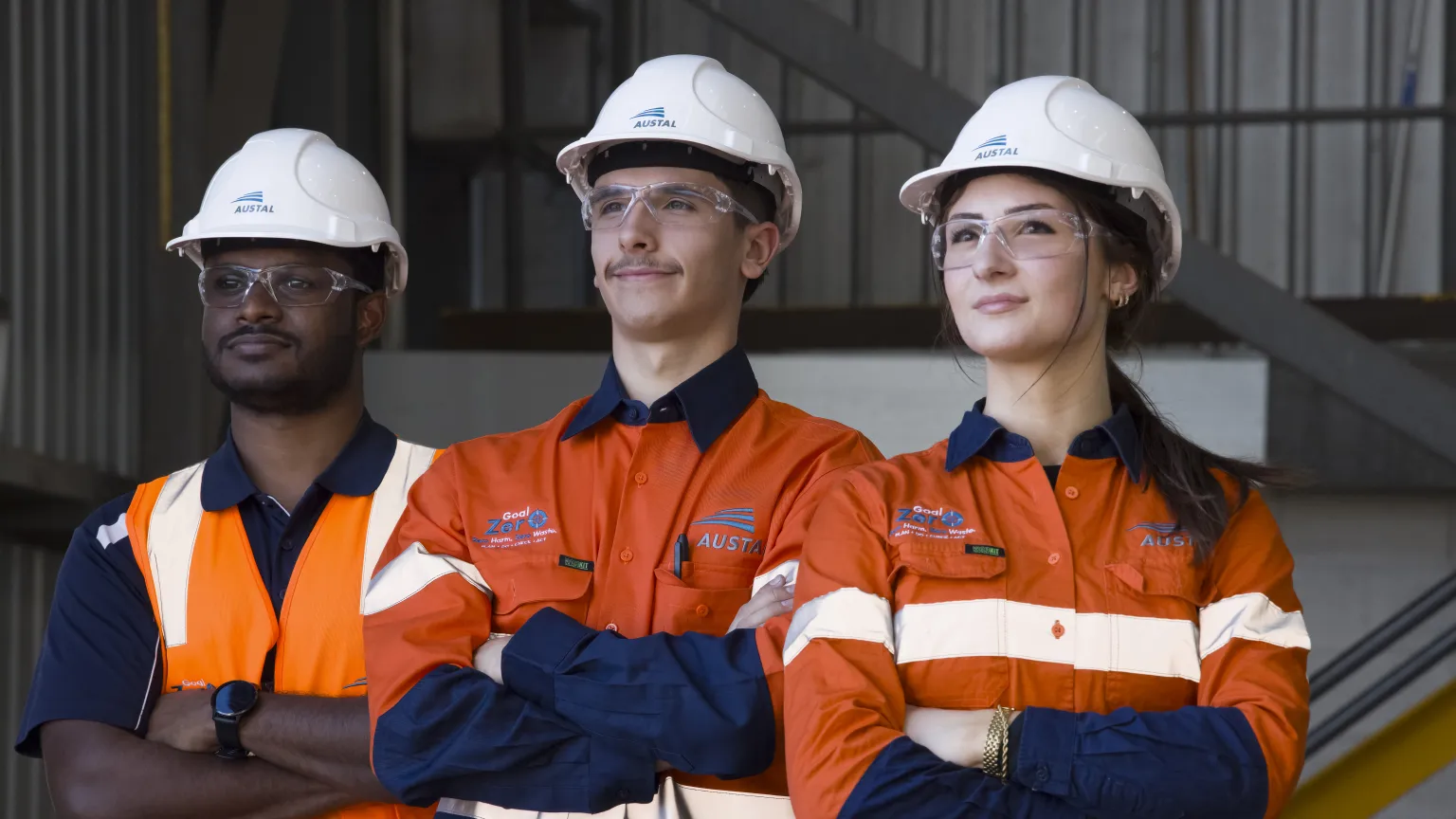
Images courtesy of Austal Subscribe to Our Email Newsletter Stay up-to-date on all the latest news from the 3D printing industry and receive information and offers from third party vendors.Print Services Upload your 3D Models and get them printed quickly and efficiently.Powered by FacFox Powered by 3D Systems Powered by Craftcloud Powered by First Mold Powered by Xometry 3DPrinting Business Directory 3DPrinting Business Directory
Read More