We’re kicking off this weekend’s 3D Printing News Briefs with some America Makes project call news, and then moving on to resin safety myths.We’ll end with a 3D printed heart model and a 3D printed bandage for chronic wound healing.Read on for all the details! America Makes Announces CATACS Winners, PADAM 2.0 Extension The winners of the Corrosion of Additive – Tested At Component Scale (CATACS) Project Call have officially been announced.
This $1.3 million America Makes project call is awarded through the Office of the Under Secretary of Defense, Manufacturing Technology Office (OSD ManTech).AM is increasingly important to the Department of War (DoW) due to its ability to deliver rapid, customizable production.But certification and qualification for metal 3D printed parts is still a barrier because there aren’t a lot of widely accepted testing and processing methods.
The CATACS program will establish, demonstrate, and validate a framework for evaluating 3D printed metal part corrosion testing needs, focusing mainly on representative testing of components in high-temperature environments and thermal management systems.The goal is to speed up adoption of AM parts in high-performance defense systems by offering a reliable corrosion testing framework.The winner of Topic 1, the Corrosion of AM Components at Elevated Temperatures, is RTX Technology Research Center (RTRC).
For Topic 2, Corrosion of AM Components for Thermal Management, Colorado School of Mines is the team lead, while the project team consists of Conflux Technology, Elementum 3D, Naval Surface Warfare Center Carderock Division (Corrosion and Coatings Engineering Branch), the National Institute of Standards Technology (NIST), Oak Ridge National Laboratory (ORNL), The Ohio State University (OSU), Ohio University (OU), and Quintus Technologies.Congratulations to all! Additionally, America Makes and the National Center for Defense Manufacturing and Machining (NCDMM) extended the proposal submission deadline for the Powder Alloy Development for Additive Manufacturing (PADAM) 2.0 project call to 5 pm ET, April 8th.This $6 million project call is funded by the Air Force Research Laboratory’s Materials and Manufacturing Directorate (AFRL RXN).
Learn more in the RFP.AmeraLabs Publishes Resin 3D Printing Safety Myths Guide AmeraLabs, a Lithuanian manufacturer of photopolymer and elastomer resins for 3D printing, recently published a free resin 3D printing safety guide.Sourced from peer-reviewed research, EPA and ECHA regulatory filings, and the company’s own experience formulating resins, the guide addresses what AmeraLabs says are “23 widespread misconceptions” about resin 3D printing.
Rather than just covering what to avoid, the guide covers what to do, and covers topics like ventilation requirements, PPE selection and limits, pregnancy risks, food-safe resin claims, post-processing, and more.It also targets the specific risk of permanent acrylate sensitization, which many resin users underestimate.This allergy, once it’s triggered, does not resolve if you stop using 3D printing, as the chemical is also used in certain dental materials, gel nail products, and UV-cured adhesives.
Safety Data Sheets do identify this hazard for resins, but AmeraLabs says they don’t explain the various consequences, such as sensitized people losing access to dental procedures or reacting to products they’ve long used with no issues.Andrius Darulis, AmeraLabs Co-Founder, said, “We formulate and manufacture 3D printing resin at AmeraLabs.We know what goes into photopolymer resin formulations, and we know Safety Data Sheets do not go deep enough to cover everything.” WSU Researchers Develop 3D Printed Heart Model that Beats Two 3D printed heart models.
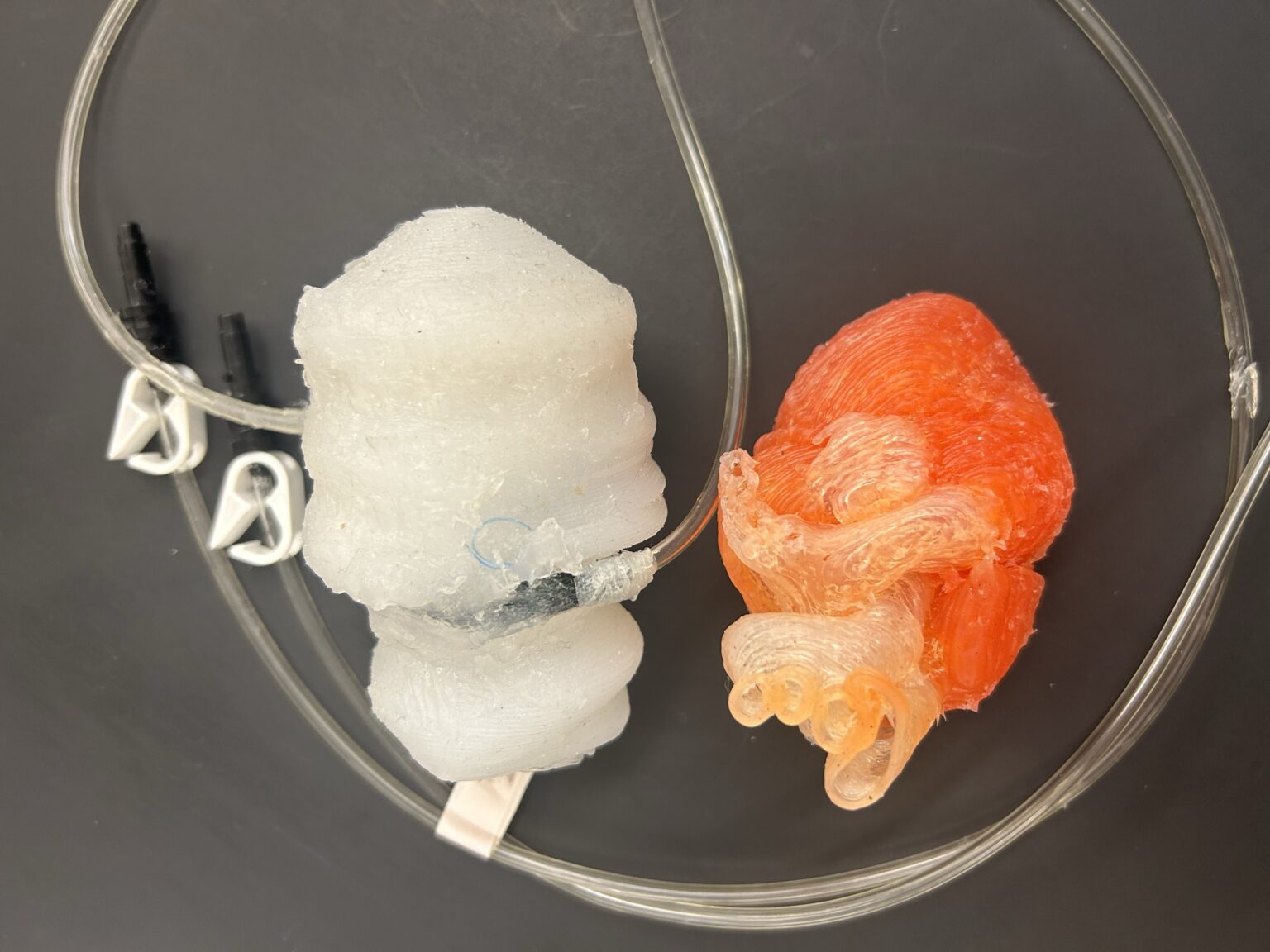
The white one replicates the left two heart chambers with a pneumatic actuator that makes it “beat” (photo courtesy of WSU).Heart disease is the top cause of death in the U.S., and doctors perform major heart surgeries often, as well as less invasive procedures like valve fixes.For training purposes, surgeons often work with animals, cadavers, on a computer, and even synthetic models, like mold-casted or 3D printed ones.
But, these synthetic models can’t achieve some of the heart’s complex curvature.A team of researchers from Washington State University developed a 3D printed model of the left side of the heart, and it actually contracts and beats like the real thing.To create the model, the team used a scan of a human heart to print a replica of the organ’s left side, which is the part that experiences the highest pressures.
The 3D printed model has a soft, lifelike texture; includes the atrium, ventricle, and mitral valve; and incorporates many tiny pneumatic actuators that pump the model.As imitation blood is pumped through, sensors monitor the simulated blood pressure.To test out their model, the team 3D printed a model with a defective mitral valve and repaired it.
They filed a provisional patent with the Office of Innovation and Entrepreneurship for their 3D printed beating heart model, and are now developing one with all four chambers and valves.“It’s very useful for doctors and surgeons to practice when the heart is still beating, especially for minimally invasive surgery.In our case, this model is the first fully synthetic model that, without any assistance of animal models, mimics the complete left side of the heart.
We were able to incorporate both the anatomic features and the dynamic functions,” explained Kaiyan Qiu, Berry Family Assistant Professor, School of Mechanical and Materials Engineering, and corresponding author on the paper.3D Printed Wound Scaffold for Chronic Wound Healing Michael Repka, distinguished professor of pharmaceutics and drug delivery, works with a 3D-printed medical device in his lab in Shoemaker Hall.Repka’s latest research shows that 3D-printed wound scaffolding could aid in healing chronic wounds.
Photo by Thomas Graning/Ole Miss Digital Imaging Services Chronic wounds, like pressure sores or diabetic ulcers, can linger for a long time.A team of researchers from the University of Mississippi’s School of Pharmacy created a customizable bandage, made with 3D printing, that will encourage healing of chronic wounds by delivering biodegradable antibacterials over time to reduce the chance of infection.The 3D printed, medicated patch, which can be placed over the wound, is made with chitosan, which is a natural material found in fungi, insects, and crustaceans, in addition to plant-derived antimicrobials.
The structure acts like a scaffold, protecting the wound while at the same time encouraging growth.By 3D printing the scaffold, the team can tailor the patch to fit any wound, and because it’s biodegradable, if the material is applied to wounds inside a patient’s body, a second incision is not needed to remove it.The team hopes to translate this from research to real patients, but before the 3D printed scaffold can be used clinically, it needs to be tested further and reviewed by the FDA.
“A lot of bandages are made with organic solvents, which actually hurt the wound-healing process, especially when applied intimately on the wound.With the materials and technique we’re using, you don’t have organic solvents,” explained researcher Michael Repka, distinguished professor of pharmaceutics and drug delivery.“We’re also not using traditional antibiotics over a long period of time, because that can often cause the bacteria to become resistant.
That’s the advantage of using natural products.” Subscribe to Our Email Newsletter Stay up-to-date on all the latest news from the 3D printing industry and receive information and offers from third party vendors.Print Services Upload your 3D Models and get them printed quickly and efficiently.Powered by FacFox Powered by 3D Systems Powered by Craftcloud Powered by Xometry 3DPrinting Business Directory 3DPrinting Business Directory
Read More