When you buy a used vehicle, you inherit the maintenance history, the previous owner's infotainment settings and radio presets, and maybe a coffee stain on the seat.Not counting aftermarket accessories, when we buy a pre-owned vehicle, we get the features that were originally equipped on that vehicle from the factory.Nothing significant about the feature set of that pre-owned vehicle is different, for better or worse.
That is starting to change with the arrival of software-defined vehicles, SDVs for short.An SDV uses updatable software within the vehicle to enable, unlock, or add additional features after the sale.Automakers can use an SDV platform to place said features, which can range from powertrain upgrades to helpful convenience tools, behind a paywall.
In effect, after a trial period, your new car works similarly to any other subscription service, in which the higher up the premium bracket you go, the more features you receive.With the promise of new and recurring revenue streams, a 2026 industry report from IoT Analytics found that 45% of automakers and suppliers now rank the transition to SDVs as their top strategic priority.While a software-defined vehicle in its truest form might not be on the market yet, there are vehicles now with features that showcase what an SDV can do and then some.
One of the gray areas here is what happens if the first owner unlocks a slew of features and then sells or trades the vehicle.Do those features stay with the vehicle and transfer to the second and even third owner? Do they stay with the original owner, or are they lost forever? The answer will depend on which automaker built the car and how the features in question function.Here is how GM, Ford, Toyota, and Mercedes-Benz each handle some of their banner features that could be classified as “software-defined.” Self-driving functions stay with the vehicle Ford and GM cash in on driver assist features GM’s Super Cruise is transferable to the vehicle’s second owner, provided the plan has not expired.
A hands-free highway driving system, Super Cruise can handle steering, acceleration, and braking on compatible highways, relying on LiDAR map data, real-time GPS, cameras, and radar sensors to keep the vehicle centered in its lane.The system now operates on more than 750,000 miles of compatible highways across the U.S.and Canada and is available on select Cadillac, Chevrolet, GMC, and Buick models.
Super Cruise comes free for three years on eligible vehicles, after which drivers must purchase a plan to keep it active.GM currently prices a standalone Super Cruise add-on at a mere $25 a month, but the driver assist system has become one of the automaker’s best assets in recent memory.GM expects to surpass 850,000 paid Super Cruise subscriptions by the end of 2026, with revenue from the feature projected to reach almost $400 million for the year.
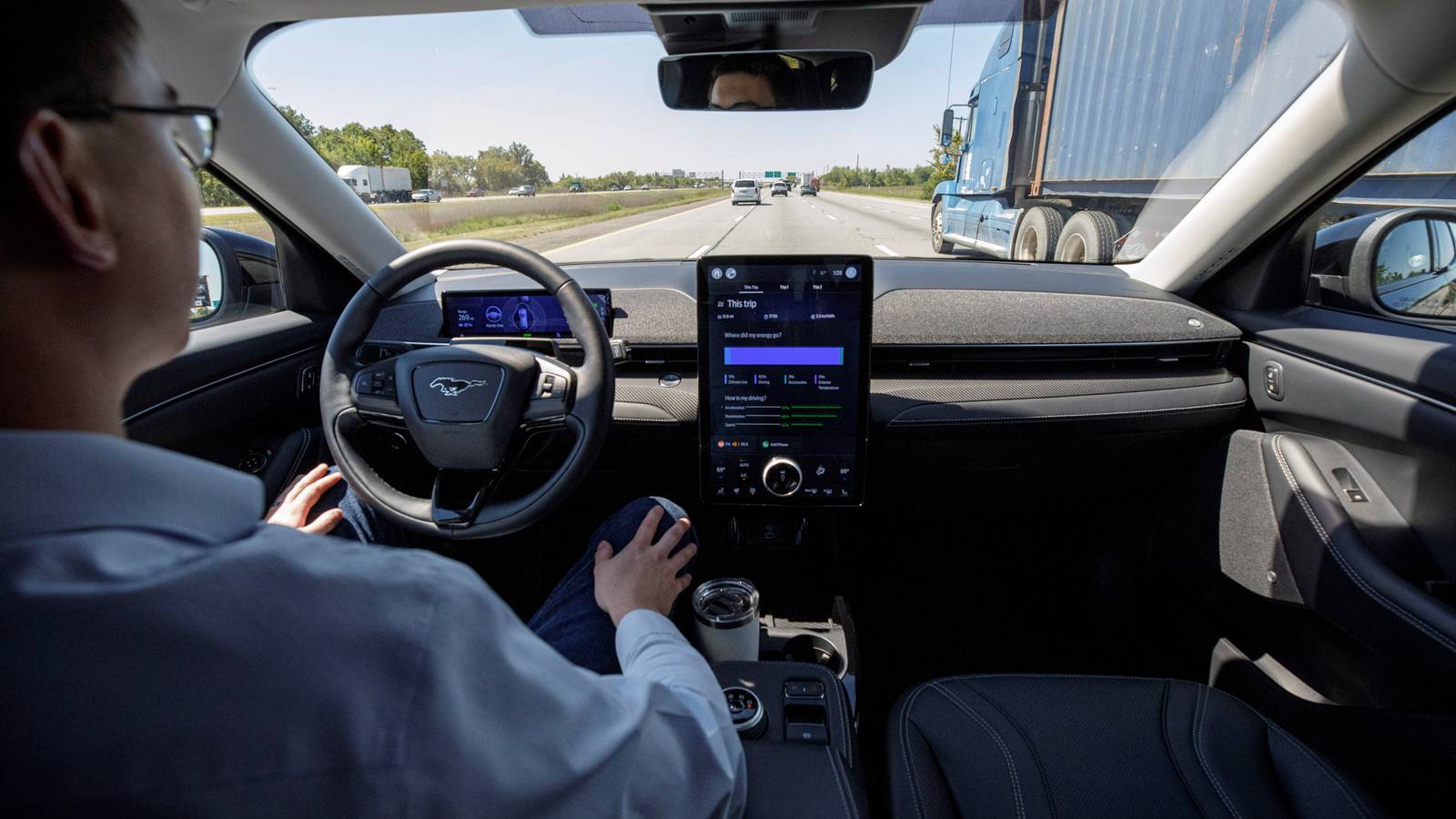
Ford handles BlueCruise similarly, tying the subscription to the vehicle rather than to the person who bought it.Owners on Ford's Mustang Mach-E forum confirm that the remaining subscription time follows the VIN when the Mach-E is sold, though the new owner has to run a factory reset and register a Ford Pass account before the system reactivates.BlueCruise controls steering, braking, and acceleration on prequalified sections of divided highways called hands-free Blue Zones, which make up over 130,000 miles of North American roads, accounting for about 97% of controlled-access highways in the U.S.
and Canada.BlueCruise is currently available on the Explorer, Expedition, F-150, and Mustang Mach-E.New vehicle subscriptions come with a free 90-day trial, after which owners can pay $495 a year or $2,495 for a seven-year subscription.
A monthly plan is also available for $49.99.Related Your car is spying on you just like a smart TV—and you can't always opt out The data your car generates is not just sitting on a server somewhere.It is being packaged and sold without your knowledge.
Posts 6 By Carl Anthony Horsepower upgrades can be expensive Negative sentiments persist around the subscription model Close Toyota ties its Remote Connect trial to the vehicle's original sale date rather than to whoever owns the car, so a change in ownership does not “reset the clock” as it were.Remote Connect lets owners start, lock, and unlock the vehicle from the Toyota app, track its last parked location, and receive vehicle health alerts.On 2018 and newer models, the subscription also covers remote start from the key fob itself, not just the app.
The Remote Connect trial lasts one year from the original purchase date for most Toyota vehicles, according to Toyota's 2023 Connected Services documentation (although some 2018 through 2020 Tundra models with the Premium Audio package got a longer runway of up to 10 years on Remote Connect alone).Toyota also extended Safety Connect and Service Connect, services that cover emergency assistance and maintenance alerts, to up to 10 years on several 2022 and 2023 models, including the RAV4 and Highlander.Whatever the specific service or length, the trial period starts with the original sale date rather than whoever happens to own the car at the time.
A Toyota with a 10-year trial that changes hands after eight years leaves the new owner with two years of free service, for example.Once the trial ends, Toyota's newer infotainment system bundles Remote Connect into a package starting at $15 a month.On Toyota owner forums, the community consensus is largely negative toward the subscription model, with most advising against renewing anything other than Remote Connect, and only if you regularly need to start your car from a longer distance.
By contrast, none of Mercedes-Benz's Acceleration Increase payment plans stay with the vehicle, not even the lifetime option.The upgrade is an over-the-air software update available for the electric EQE and EQS that increases output by up to 80 horsepower and improves zero-to-60 time by as much as a full second.Mercedes-Benz sells the upgrade either monthly, yearly, or through a lifetime purchase priced at $1,950 for the EQE and $2,950 for the EQS.
Lifetime sounds like it should mean the life of the vehicle, but rather it means for as long as the current owner has either the EQE or EQS.The Acceleration Increase feature is linked to the owner’s “Mercedes me” account rather than the vehicle itself.If the owner sells or trades their EQE or EQS, the upgrade is gone for good unless the new owner registers their own “Mercedes me” account and pays for the feature.
When looking at how feature sets like Super Cruise, BlueCruise, and Remote Connect function, it makes sense that any remaining time on the subscription (or trial) would be linked to the vehicle rather than to any one owner.Likewise, it may also seem reasonable that a feature like Acceleration Increase would be linked to the driver rather than to the vehicle itself, given its functionality.However, a Mercedes EQ owner forum thread shows that communication around Acceleration Increase might be lacking.
One owner who paid for the lifetime option asked their dealership whether the upgrade would carry over to a future buyer, but no one there had a definitive answer.Related Don't buy a new car until you've asked these 4 tech questions Modern cars are packed with apps, subscriptions, trial features, and software updates.Ask these questions before the tech becomes a headache.
Posts 1 By Rich Hein Questions to ask before your next test drive If you are looking at a late-model used vehicle, the odds are that it will have a subscription service of some sort that either has a portion of the factory trial left or has expired altogether.While at the dealership, ask which features are included outright versus which require a subscription, and whether they stay with the vehicle or were linked to the previous owner.Ask these types of tech-focused questions along with all of the standard questions that are advisable to ask when searching for a late-model used vehicle, including what the service history looks like and if there is any factory warranty remaining.
Read More