Ubuntu hasn’t been in better shape for gaming, probably ever.And for casual players with single-player libraries, it’s finally starting to feel like an actual alternative to Windows.But after I moved my gaming PC over, I realized the remaining issues aren’t just annoying little hiccups—they are the exact reasons why most gamers are still stuck on Windows.
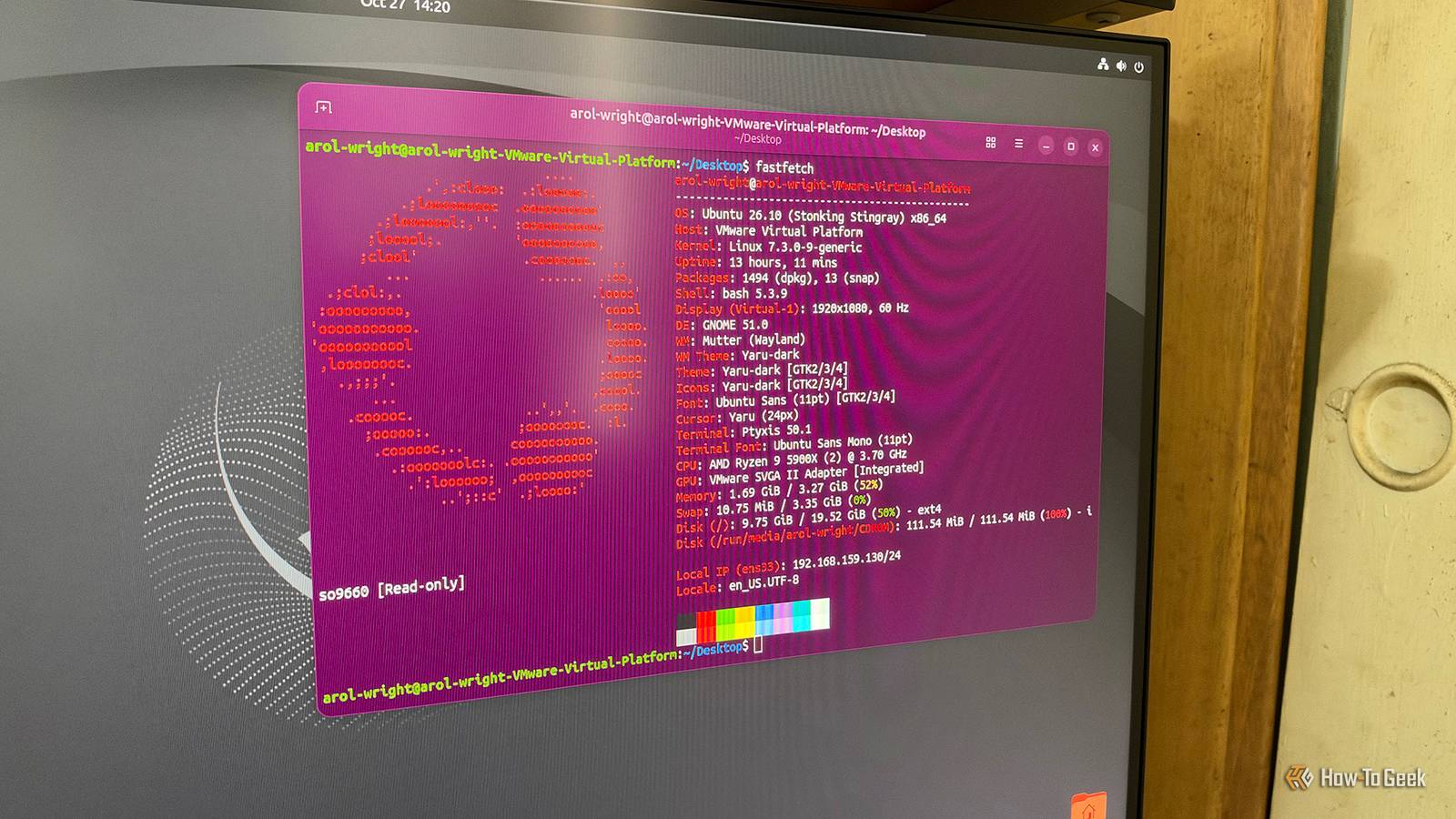
Add How-To Geek on Google Add as Preferred Source Follow on Google Discover The good stuff Ubuntu 26.04 makes the basics smooth Close The first thing you notice after installing Ubuntu 26.04 LTS is how much less jarring the setup feels.Canonical dropped “Resolute Raccoon” on April 23rd, and it comes packed with Linux kernel 7.0, which is a much more modern driver and hardware stack than the 6.8 kernel found in Ubuntu 24.04 LTS.On top of that, it features GNOME 50, which builds on HDR improvements from GNOME 48 and adds even more refined color management.
It’s also no longer a struggle just to get an Nvidia card running.You don’t need to go hunting for obscure PPAs anymore; the 595 driver is available right in Ubuntu’s repository and installs easily via the ubuntu-drivers tool.Early tests have already shown performance gains for Nvidia setups, aided by Nvidia optimizations in Mutter 50.
And AMD users have an even smoother ride since the open-source Mesa drivers are built right into the system.Neat, right? Steam is where a lot of the real magic happens.Valve’s Proton compatibility layer lets Linux translate Windows games, and for a good portion of your library, launching a game is as simple as clicking “Play.” From user comparisons, DirectX 11 games running through DXVK usually hold up well performance-wise, and Vulkan games can actually run better under Proton than they might on Windows.
If you’ve been playing on a Steam Deck, the experience feels familiar because the underlying software stack is essentially the same.And daily life on the desktop is just as painless.Browsers, Discord, Spotify, and most streaming tools either have Linux versions or run great in a web browser.
The file manager, settings, and updates all work predictably, and don’t force you to open a terminal just to get things done.So if your gaming is mostly single-player and you spend the rest of your time browsing and watching movies, Ubuntu is actually getting closer and closer to the “it just works” promise Linux enthusiasts have made for years.Which is a lot to say for Linux if you're actually familiar with Linux.
What’s still missing (or just plain broken) Anti-cheat, Nvidia issues, and missing software are still holding things back The moment you jump into a competitive multiplayer game, the problems start bubbling up.Anti-cheat is the biggest roadblock facing Linux gaming.Some major titles like Fortnite, Valorant, and Warzone simply won’t run—and probably never will.
Battlefield 6 joins that list because of EA Javelin, which runs at the Windows kernel level and doesn’t support Linux or SteamOS.Kernel-level anti-cheat isn’t compatible with Linux, which is why many games block it entirely.Sure, there are exceptions, like Counter-Strike 2, ARC Raiders and Marvel Rivals working nicely, but checking a compatibility list before buying any online game quickly becomes an annoying habit I'd personally rather not have.
Nvidia GPU owners face an entirely different, but equally annoying, kind of headache.DirectX 12 games run via vkd3d-proton, and that translation still costs them real performance on GeForce cards.Nvidia developers’ forums show that performance hits vary depending on the game and resolution; one test summary put the average Nvidia loss around 18% compared to Windows, whereas AMD’s loss was practically nonexistent.
A fix is in motion, but the vkd3d-proton side of things was still pending as of this year.Ubuntu also adds its own little snag.The default Steam client is Canonical’s Snap repackaging, and a Valve engineer noted the company is seeing a rise in bug reports caused by it, suggesting the official .deb file instead.
New users might end up troubleshooting bugs that wouldn’t exist with Valve’s own packaging.Then there’s everything else.The Xbox app and PC Game Pass aren’t available on Linux, and software for things like Razer Synapse or Logitech G Hub are Windows-only.
This forces lighting, macros, and DPI profiles into community tools that don’t always keep up with newer hardware.Why you might still want to stay on Windows All you need sometimes is for a game to work No matter the way of looking at it, none of these hurdles are any deep, and that’s why the switch is hard to advocate for a dedicated gaming PC.Every single fix depends on someone else thinking about whether the tiny contingent of Linux users is worth the fight, and for now, the numbers don’t convince them much.
Linux managed to crack 5% in the Steam survey for the first time in March 2026, but that spike didn’t stick.The October 2026 survey put Linux at 3.95%, with Windows at a massive 93.70%.For a publisher thinking about whether to support Proton in its anti-cheat, that kind of share is easy to ignore, and there's probably no shortcut for blocked games until Linux hits enough of a market share that it can’t be ignored.
That leaves Linux gamers with workarounds rather than easy solutions.Cloud services can patch some gaps, since GeForce Now lets you play Battlefield 6 through a browser or app, but that means paying a subscription to stream a game you might already own, plus the latency and image compression that comes with it—I famously constantly refuse to play cloud games unless absolutely necessary, because I think nothing beats running them on your own hardware.Proton launch options, alternative Steam packages, and community peripheral tools can fill other gaps, but each one is one more thing to babysit after updates.
So the most common advice from seasoned Linux gamers is actually to just not go all-in on Linux.Keep Windows on another SSD and boot into it for a few select competitive games, or anything that doesn't work, while using Linux for everything else.It’s a logical setup, sure, but it completely undermines the idea of replacing Windows.
If you still need Windows installed and updated for games you play most, Ubuntu just becomes a second operating system rather than a replacement.For some people though, the trade still makes sense.If your library is mostly single-player, you run an AMD card, and you never touch games with kernel-level anti-cheat, Ubuntu 26.04 can be your only OS without much compromise.
But gaming PCs are usually built around the newest, most popular releases, and those are exactly the titles Linux handles worst.Ubuntu is ready for gaming, but not every game Ubuntu 26.04 handles single-player Steam libraries better than ever, and AMD users have it especially easy.But anti-cheat blocks, Nvidia’s DirectX 12 penalties, and Windows-only companion software keep it from replacing Windows on a dedicated gaming PC.
Dual-booting remains the best option for now.
Read More