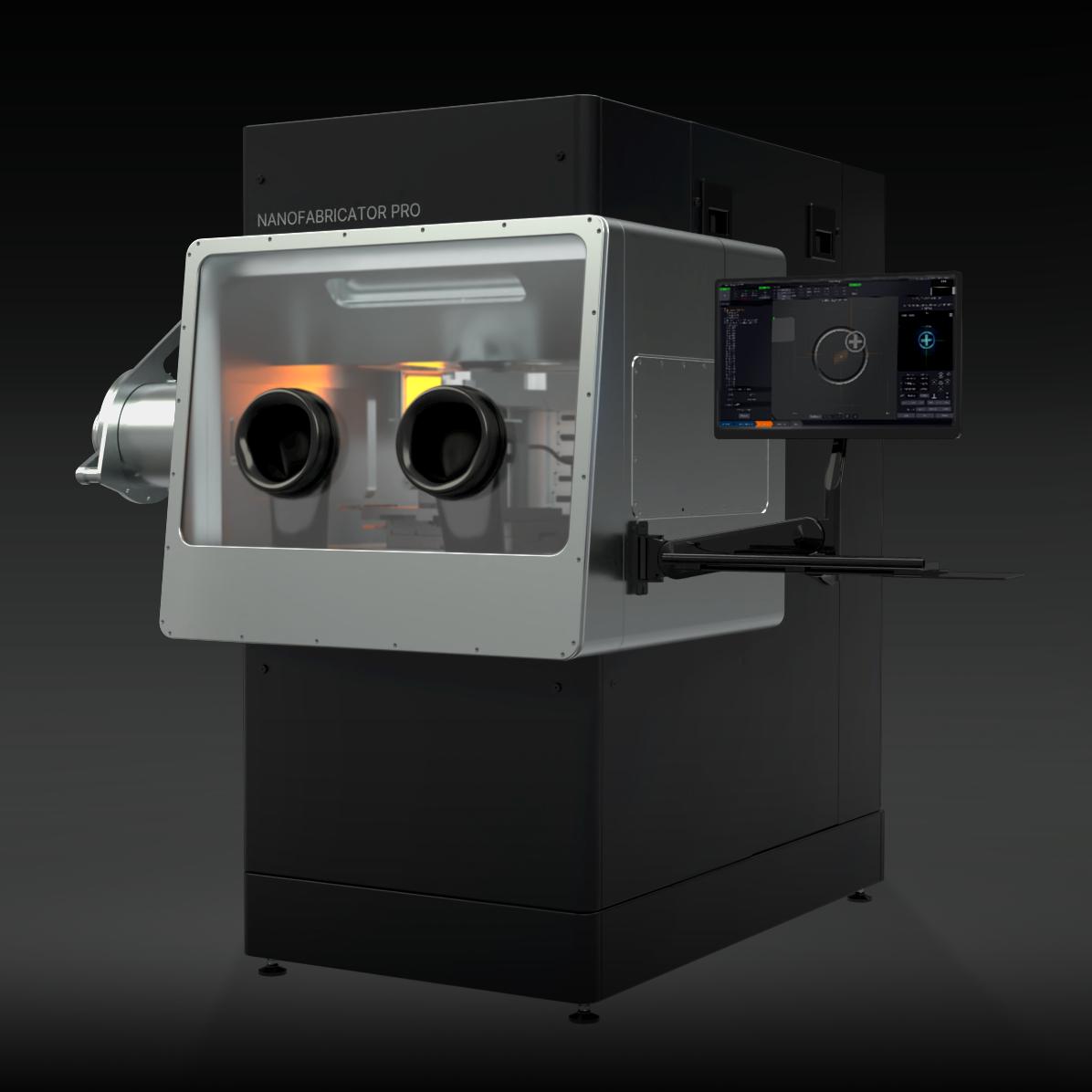
ATLANT 3D has launched a new industrial-scale manufacturing system as it works to bring its unusual form of atomic-scale additive manufacturing (AM) into semiconductors, AI materials research and advanced electronics.The new NANOFABRICATOR PRO is the latest piece of a much bigger expansion.ATLANT 3D is also setting up U.S.
manufacturing, building materials-development hubs in Asia, and recently received an order from an unnamed global AI hyperscaler.The company raised $15 million last year to help fund that growth.ATLANT 3D is not a typical 3D printing company.
Its machines do not print plastic parts like an FDM printer or metal components from powder.Instead, they work at a much smaller scale.ATLANT 3D uses a process called Direct Atomic Layer Processing, or DALP, to place extremely thin amounts of material only where they are needed.
This allows researchers to build and modify tiny structures used in chips, sensors, photonics, and other advanced devices.So it is much closer to semiconductor manufacturing and nanofabrication than conventional 3D printing.But there is still an AM connection because material is being digitally placed in chosen locations to create structures, only at the micro-, nano- and atomic scale.
ATLANT itself has used terms including atomic-scale manufacturing and atomic-layer additive manufacturing to describe this approach.From AI Prediction to a Real Material The NANOFABRICATOR PRO is mainly designed for research and development.One important use is helping researchers develop new materials faster.
AI can predict which new materials might work well for things like chips and electronics.But those materials still need to be physically made and tested.ATLANT wants its machine to help automate that step.
It can make small samples of different materials so researchers can test them and see which ones actually work.The idea is to create a faster cycle: AI suggests a material, the machine makes it, researchers test it, and the results help decide what to try next.ATLANT says the PRO can work with more than 450 types of materials.
It is aimed at research for chips, electronics, sensors, quantum technologies and other advanced applications.The PRO is not meant to mass-produce chips.Instead, it helps researchers develop and test new materials and manufacturing methods before they move into larger-scale production.
So what ATLANT wants to do is make it faster and easier to turn a promising new material into something that can actually be manufactured.ATLANT 3D Moves Machine Production to the U.S.The company has chosen Automated Industrial Robotics (AIR) to industrialize and manufacture the platform in the United States.
ATLANT says this will support both higher production volumes and its expansion in the U.S.market.AIR is an industrial automation and manufacturing group with more than 500 employees, five facilities and more than 400,000 square feet of manufacturing space across the U.S.
and Europe.In fact, its experience with the semiconductor industry is especially useful for ATLANT.Its Silicon Valley business, formerly Owens Design, has spent decades building equipment for chip and other technology companies.
AIR says it has built more than 2,500 systems and has experience turning new machines into products that can be made repeatedly and at larger scale.The operation is based in Fremont, California.This gives ATLANT an experienced manufacturing partner that can help it build more machines as the company grows.
Neither ATLANT nor AIR has said how many NANOFABRICATOR PRO systems it plans to make or how much it is investing in production.So, while the partnership could help ATLANT scale, it is still not clear how much demand there will be for the machines.But we do however know that there is already at least one interesting commercial signal.
On July 16, ATLANT announced that it had received an order for its smaller NANOFABRICATOR LITE from what it described as a “leading global AI hyperscaler.” The customer plans to use the system in an AI-driven materials-discovery laboratory.ATLANT said the machine will be used to physically make and test materials proposed through computational and AI-based research.Even though we don’t know who the AI customer is, the order is important because many of ATLANT’s earlier disclosed customers have been universities and research organizations.
In 2024, the company announced the first sales of its NANOFABRICATOR LITE, including one to the University of Vermont.More recently, in June 2026, ATLANT installed another NANOFABRICATOR LITE at the Slovak Academy of Sciences.Researchers there plan to use it to study semiconductors, sensors, batteries and other advanced materials.
ATLANT has also worked with NASA.In 2021, the agency purchased a NANOFABRICATOR 0G system to study how extremely thin layers of material can be made in microgravity.ATLANT 3D’s atomic-scale manufacturing technology in a laboratory setting.
Image courtesy of ATLANT 3D.ATLANT has also raised money to support its growth.In March 2025, it raised a $15 million Series A+ led by West Hill Capital, which had also led its $15 million Series A in 2022.
At the time, ATLANT said it had more than 35 employees and partnerships with more than 50 industrial and research organizations, including STMicroelectronics.The new funding was meant to help develop its technology and expand internationally.All of this points to a company trying to move its technology out of the lab and into wider commercial use.
The new NANOFABRICATOR PRO, the AI customer and U.S.manufacturing deal are important steps in that direction.Subscribe to Our Email Newsletter Stay up-to-date on all the latest news from the 3D printing industry and receive information and offers from third party vendors.
Print Services Upload your 3D Models and get them printed quickly and efficiently.Powered by FacFox Powered by 3D Systems Powered by Craftcloud Powered by First Mold Powered by Xometry 3DPrinting Business Directory 3DPrinting Business Directory
Read More