Are you ready to take your homelab to the next level? This weekend, I'm showing you three unique projects to try out in the homelab, from simplifying your Docker experience to replacing Canva.Here are the projects you should try before Monday rolls around.Enjoy a single-pane-of-glass (SPOG) in your homelab with Dockpeek One webpage, every Docker server Docker is the central point of my homelab, there's no question about that.
The problem becomes that I have multiple servers to check when I want to see what containers need updates, when I want to deploy a new container, or when I just want to see what's online or offline.Dockpeek is a great way to simplify that.Designed as what's called a "single pane of glass" or SPOG, Dockpeek gives you a single dashboard to look at your entire homelab's Docker deployment.
You'll start out by deploying Dockpeek to a single server, but you can also deploy it on additional servers and bring them all into view so that way you can see everything in one dashboard.Dockpeek connects through the Docker socket and API in order to handle everything.Dockpeek doesn't just give you a window as to what Docker containers are running or stopped, though it does do that, but it also allows you to see live logs, provides image update checks, and more.
If you run Docker on multiple servers, I definitely recommend giving Dockpeek a try.Generate shareable links to screenshots, files, and more with Zipline Stop uploading one-off files to Dropbox to send someone a link If you're uploading screenshots or files to Dropbox just to send someone a quick link, then Zipline is perfect for you.If you've never heard of Zipline, it's designed as a simple sharing website that you self-host in your homelab.
Simply upload an image, video, or other type of file to Zipline and it generates both a sharable link and embed that you can send to others.It offers URL shortening, password protection, two-factor authentication, and more.It also integrates with services like ShareX on Windows or iShare on macOS, Apple Shortcuts, and more.
Just keep in mind that for Zipline to function to its fullness, you'll need Zipline accessible outside your local network.The easiest way to do this is with Cloudflare Tunnels, as that doesn't require any port forwarding.However, if you're comfortable with port forwarding, then you could use a reverse proxy for external access if you prefer.
But, if you keep it local only or behind something like Tailscale, then the recipient will need to either be on your local network or also have access to Tailscale.Skip Canva and just run Penpot It's a browser-based design and prototyping platform Are you someone paying for Canva but want to host your own solution? That's what Penpot is designed for.Built as a browser-based design and prototyping platform, Penpot handles interface design, offers reusable components, design systems, and so much more.
It's actually more like a full design studio than just a Canva replacement, as it also offers comments and collaborative editing, and the developer tools expose things like measurements, properties, HTML/CSS/SVG information, and more.It's sort of like a Canva x Figma crossover that you can host yourself.Penpot supports multiple users with invitations, email, and more, making it something that can be used by more than just one person—it can support an entire team.
That makes Penpot the perfect solution for solopreneurs who need premium tools without paying a premium price.It's also awesome that Penpot is fully open source, meaning you could contribute to the project if you want to.Canva and Figma are closed source, so there's no way to make any changes if something doesn't work right.
But, with Penpot, if you'd like to change how a function works or add functionality that isn't there already, you easily can yourself.So, if you're still using Canva or Figma, give Penpot a try.It's a pretty solid solution that has definitely replaced paid-for design programs for many users.
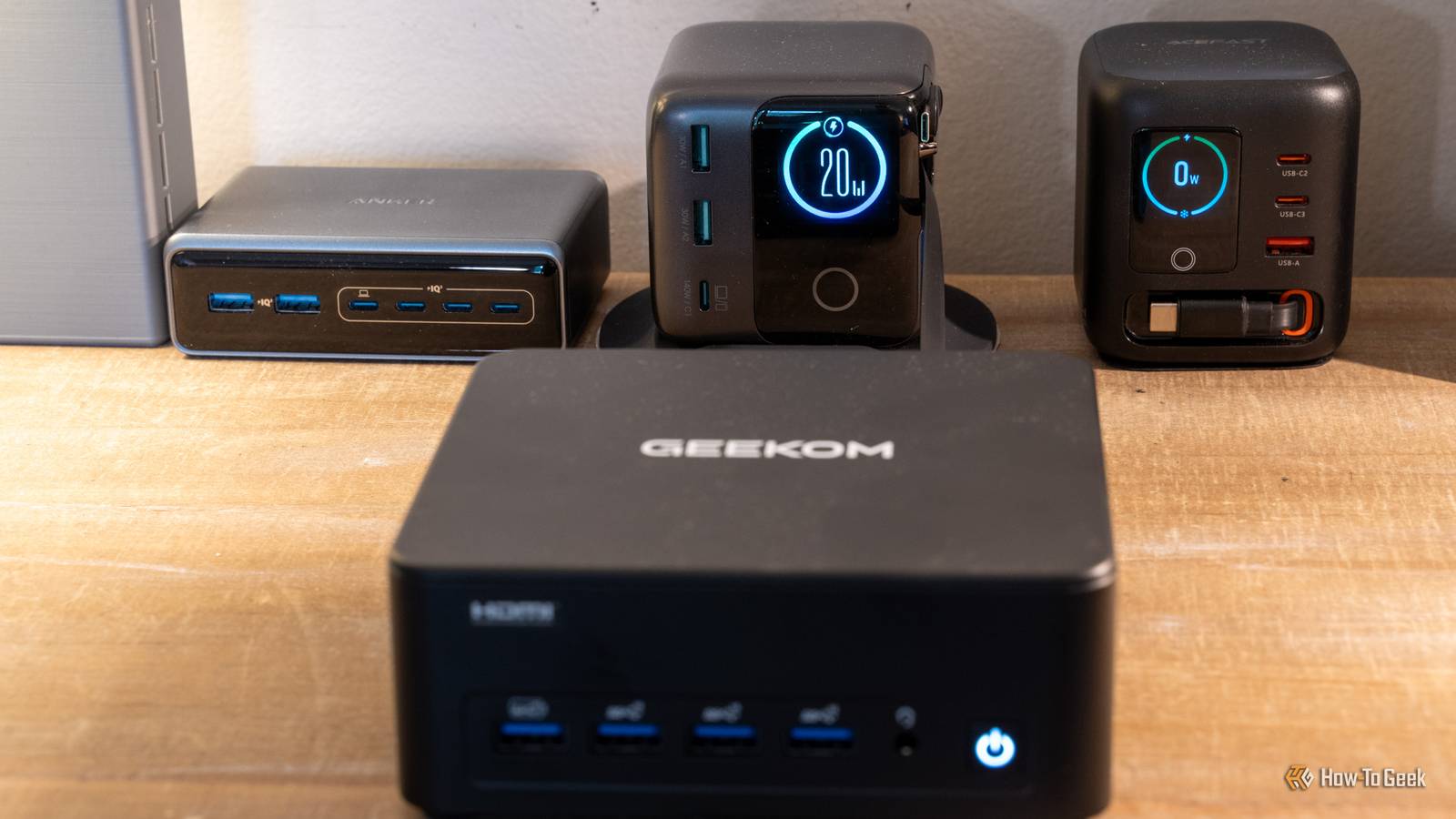
It's easy to deploy with Docker and ca be kept either local-only or opened up for external access with Cloudflare Tunnels or a reverse proxy.GEEKOM A5 mini PC Brand GEEKOM CPU AMD Ryzen 5 7430U The GEEKOM A5 mini PC packs 16GB of user-replaceable RAM, a user-swappable NVMe SSD, plus two other storage slots, giving you plenty of user-upgradability in this compact system.The Ryzen 5 processor packs plenty of power for general tasks, and it's even great at lightweight gaming and CAD work too.
See at Amazon $439 at Best Buy $439 at GEEKOM Expand Collapse KAMRUI Hyper H2 Mini PC Brand KAMURI CPU i5-14450HX The KAMRUI Hyper H2 Mini PC features an Intel Core i5-14450HX 10-core 16-thread processor and 16GB of DDR4 RAM.The included 512GB NVMe SSD comes with Windows 11 pre-installed so the system is ready to go out of the box.See at Amazon Expand Collapse Your homelab could be just what you need to save some cash While homelabbing can be a fun hobby, it can also be a useful tool for your life.
For instance, if you really only have Dropbox to send someone a link to a file sometimes, Zipline could let you do that without spending any money.Likewise, if you pay for Canva, but Penpot does everything you need it to, then that's another way to save some cash every month.So, if you have any services you pay monthly or yearly for, check to see if there's an alternative that you could self-host.
It might not be as feature-packed or capable, but if it does what you need, and does it for free, then it could definitely be worth considering.
Read More