Countless Windows apps have come and gone over the years.As our computing needs changed, some were replaced by better alternatives, while others simply became obsolete as new technologies emerged.Here are some iconic Windows apps you probably used regularly but haven't thought about in years.
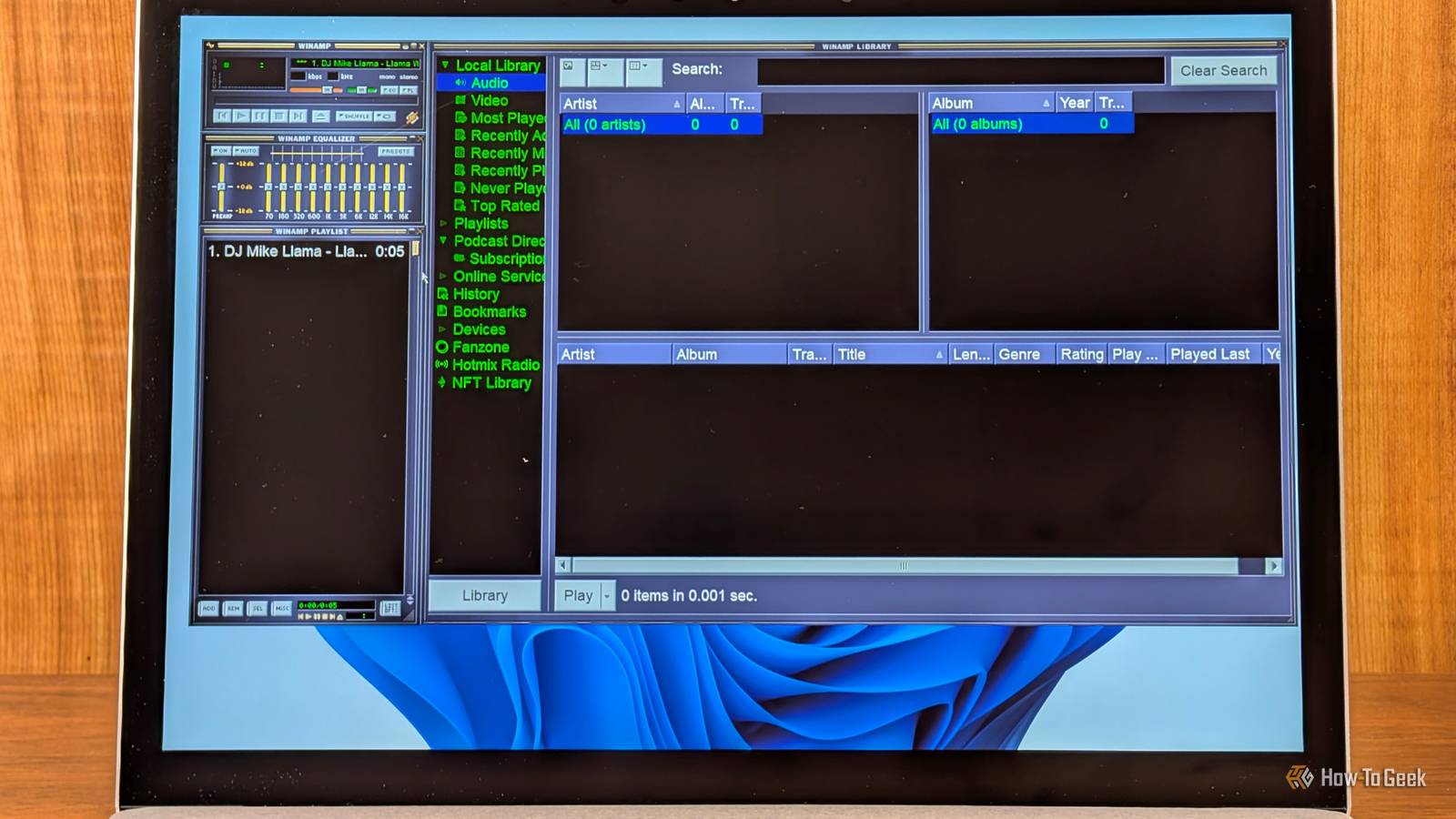
Winamp was the ultra-customizable music player that didn't slow down your PC A little player with a lot of personality Close Back in the late '90s and early 2000s, Windows Media Player was among the most hated first-party Windows apps.Each time you wanted to relax to some music by playing your collection of MP3 files, you had to stop everything else you were doing and wait several seconds for the app to start working.It took considerable resources away from the system, often grinding lower-end machines to a halt.
Fortunately, a little freeware app by the name of Winamp came out in 1997, forever transforming how we listen to music on our PCs.It consumed a fraction of the resources that Windows Media Player did, which made it ideal for listening to music while doing something else on the PC.On top of being lightweight and easy to use, its iconic 10-band equalizer added some extra functionality, while the green list of songs against a pitch-black background kept track of your tunes.
But if you didn't like how it looked, don't worry.Winamp featured several custom skins, each more visually unique and interesting than the previous one.If you wanted your music player app to look like an alien control board or a creepy sci-fi head, Winamp had you covered! Although Winamp is still around, the majority of users have shifted to streaming music rather than collecting MP3s.
At the same time, PCs have become exponentially more powerful, and the Windows Media Player app is perfectly serviceable now, further reducing the demand for a third-party music player.Related I built a smarter music player by modernizing Winamp with Claude's help The llama whipped Winamp back into shape.Posts 1 By Nick Lewis MSN Messenger was where a generation learned to chat online Back when "logging on" was still a thing For those of us who grew up in the early 2000s, MSN Messenger was one of our first experiences with online chatting as the internet became mainstream, years before platforms like Facebook and Instagram emerged.
I remember opening the app first thing after school and chatting with friends late into the night, just before hitting the bed.Despite its age, it was a surprisingly polished, feature-rich chat app that felt like way more than a simple IM client.You could add custom statuses, display what music you were listening to, send nudges and winks, and hop on webcam calls with your friends.
As if that weren't enough, Microsoft kept adding playful new features and visual makeovers that helped the app feel fresh as the years went on.The app had a good run, but users gradually moved to other platforms.Skype was one popular alternative, offering a chat function alongside its well-established voice and video calling features.
Smartphones also became more prevalent, helping popularize messaging through social media platforms and dedicated IM apps.Microsoft eventually bought Skype in 2011 and migrated MSN Messenger users to Skype in 2013 before retiring the app altogether.Windows Movie Maker gave millions their first taste of video editing Everyone's an editor Adobe Premiere Pro, DaVinci Resolve, and Final Cut Pro are powerful video editing tools that let you do almost anything you can imagine to create a finished video.
But for many of us Windows users, our first experience with video editing came through Windows Movie Maker, an app that I've heard several YouTubers cite as their first or even preferred video editing software.It was taught in schools and courses, but frankly, Windows Movie Maker was simple enough to understand that you didn't even need a tutorial to edit a basic home video.Its drag-and-drop timeline and simple yet well-organized interface let any amateur combine clips, and if you wanted to spice things up, you could add one of those iconic transitions between clips.
For most casual video editors, this was all they really needed to create a school project, YouTube clip, slideshow, or compilation of clips from a family vacation.Unfortunately, Microsoft stopped developing the Windows Essentials suite that Movie Maker was part of after its 2012 release, eventually ending support and removing the suite from its official download channels in 2017.Nero Burning ROM defined the era of burning CDs and DVDs Before USBs and cloud storage, we had this Early USB flash drives were expensive, had tiny capacities, and required you to trust the person you lent them to whenever you wanted to share a file.
Optical discs didn't suffer from those same drawbacks, which made them a popular way to share music, apps, and videos with family and friends before the era of cloud storage.All you needed to burn data onto optical discs was a CD-RW or DVD-RW drive in your PC and the right software, which was Nero Burning ROM.Whether you wanted to create a music compilation for your car, back up your photos, or prepare a movie to watch on vacation, Nero was a reliable tool for the job.
The app was easy enough for casual PC users to burn CDs while simultaneously offering enthusiasts a greater degree of control.Interestingly, Nero Burning ROM was often bundled with optical drives and preinstalled on OEM PCs, further contributing to its popularity.As you can probably guess, Nero Burning ROM's popularity dwindled as the years went on.
Although the app is still being developed and used by a small but loyal user base of physical media enthusiasts, most PC users have long since moved on.Related The forgotten art of burning discs (and why it still matters) Burn, baby, burn! Posts 1 By Sydney Butler RealPlayer brought streaming video to home PCs before Netflix and even YouTube Always buffering Before streaming services became commonplace, there was RealPlayer, a media player that let you listen to or watch content while it was still downloading from the web.Internet connections in the late 90s were incredibly slow, which gave RealPlayer its notorious reputation for constantly buffering for long stretches at a time.
Still, the fact that you could actually watch content while it was still downloading to your PC was nothing short of revolutionary.It rarely worked seamlessly, but when it did, it felt like a massive accomplishment.Unfortunately for RealPlayer, the app started losing traction as web browsers made it easier to stream content directly through plugins such as QuickTime and later Adobe Flash.
YouTube was arguably the final blow to RealPlayer's original purpose.It managed to stay relevant for a few more years before eventually falling into obscurity.Interestingly enough, the app is still around and can download online videos, convert media, and play legacy formats such as RealAudio and RealVideo.
Most of these apps are gone, but the memories remain While some of the apps I've mentioned today still exist in some capacity, I think we can all agree that they're well past their prime.Whether it's streaming video, playing music, or editing a short video, modern alternatives available on both phones and PCs have made these old apps far less relevant than they once were.
Read More