I've been playing guitar for more than two decades.I wish I could say that it made me an elite guitar player, but sadly it has not.But between guitar playing and running live sound for different bands, I've developed a pretty good understanding of the kind of gear it takes to get the job done in different situations.
Over the years, I’ve bought, sold, and experimented with more amps than I can count.My wife and I have an arrangement now where if I buy another guitar amp or guitar, I have to sell one to make room.That translates to me keeping only the things that I truly love.
I still own several vintage and custom tube amps because each one has a unique sound and feel, but when it's time to play a gig, I leave those amps at home now.When I'm playing out, my digital modeler lets me take the best of my amps with me.The pros and cons of tube guitar amps Tube amps have their own personalities Close Throughout the years, I've owned and played amps from Marshall and Fender to Vox, Supro, Carvin, Mesa/Boogie and more.
The amps that tended to sound the best to me typically had three things in common: they were blisteringly loud, ridiculously heavy, and, with a few exceptions, they were one-trick ponies.That is in no way criticism of them.Many amps do one thing incredibly well, which is why they’ve had such longevity.
Living down here in Florida, I've definitely had my experiences with how heat and different playing environments can impact your amp’s sound and performance.Tube amps respond to things like your playing dynamics, the acoustics of the room, and the volume that you're playing at.All of these things impact your tone.
With tube amps, an amp that sounds incredible in your garage might require some adjustment in a larger room or in the blistering sun outside.That can be really frustrating when you're trying to dial in your sound at a gig and everybody's waiting for you.The upside of using a tube amp is that, as a guitar player, the amp gives you feedback that is difficult to describe.
Each tube amp will respond a little differently to how you pick your guitar, where you set your guitar's volume, or your playing style.When a good guitar player locks in with the tube amp, it becomes more than just a way to make the guitar louder; it becomes a part of how you play.For this reason, I get why people want to hold on to their tube amplifiers.
A digital modeler gives me more sounds with less gear Digital modeling has come a long way I got involved with modeling technology the same way many guitar players did.It started with the Line 6 POD, and I eventually found my way to the Helix LT.Then I tried HeadRush.
They sounded good, but not as good as a tube amp cooking in the room.The technology improved over time, but I still preferred tube amps.I will say my back was much younger then.
In 2011, the Kemper Profiling Amplifier was released.For me, this is when things started to get interesting.Fractal and Line 6 were both out there doing their respective things, but Kemper was doing something different.
It allowed players to capture profiles of their own amps and play those profiles through the Kemper, leaving their heavy, loud amps at home.The original profiles weren't perfect, but they were close enough that I felt like only the guitarist could tell the difference.To the audience, they sounded just as good.
Beyond that, Kemper owners could download and share profiles from a large community of guitarists.This gave me access to amps I would never be able to own.Note: Kemper isn't the only company doing amp capture technology.
I've also used the Neural DSP Quad Cortex and IK Multimedia TONEX, and more recently started experimenting with the Livtra Nanocore.Each takes a slightly different approach, but they all demonstrate how far this technology has come.For my live gigs, I keep coming back to the Kemper Player because it fits my needs.
My sound is more consistent, and setup is easier than ever Less time setting up, more time playing I play in a cover band.That means covering different artists, genres, and guitar sounds from across multiple eras.With a digital modeler, I can choose amp profiles and effects that get me 90% of the way to the original sound on any given record.
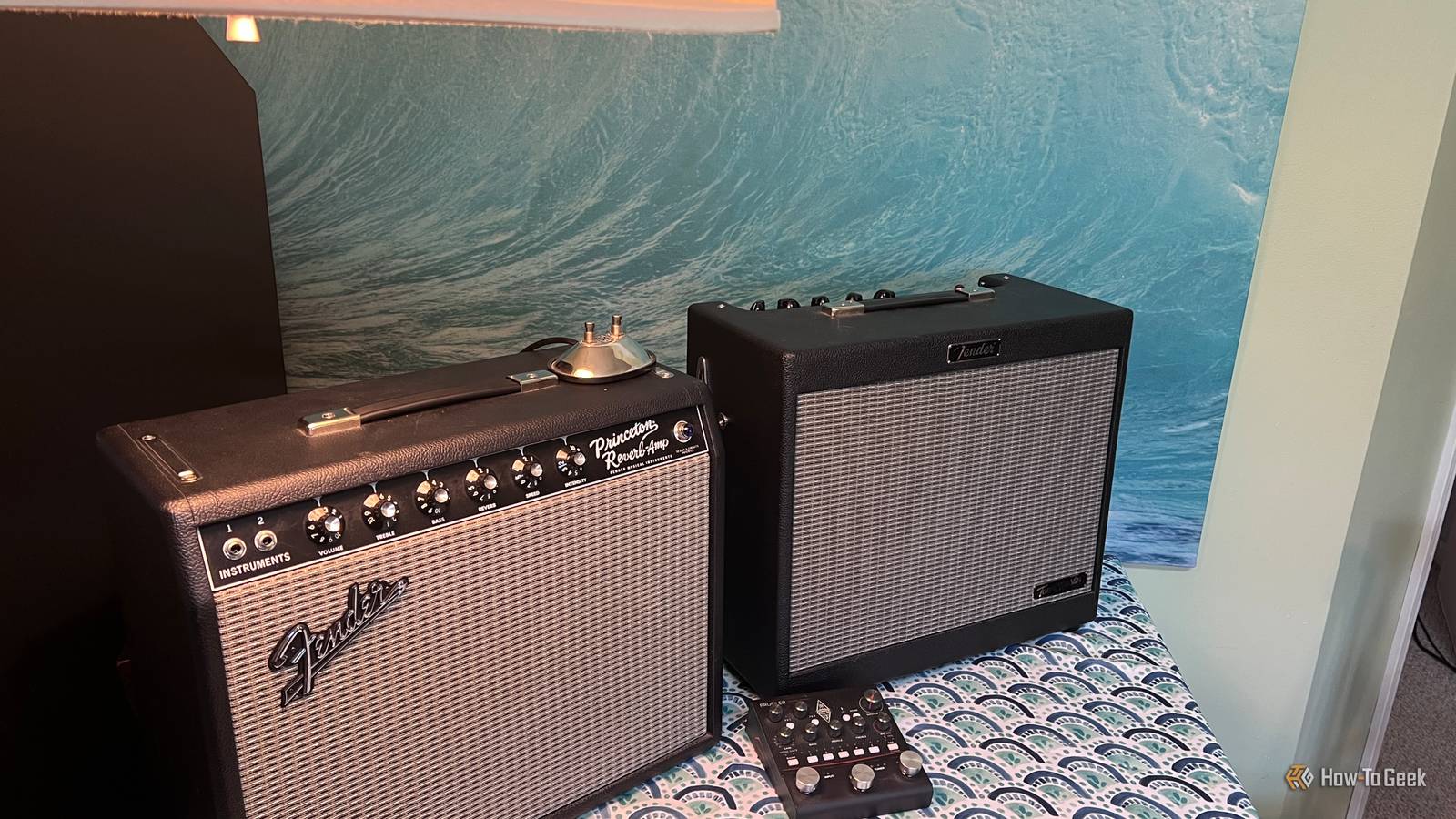
That's far harder to do with a tube amp and a collection of pedals.Using the Kemper, I can switch between those sounds seamlessly and get a consistent tone that makes playing more fun.For smaller gigs, I can get by with just my Kemper Player and a 10-inch Fender FR-10 powered speaker.
It's far lighter than any of my tube amps and plenty loud for the venues we typically play.If I need additional volume, I can run an XLR cable from the FR-10's output to the PA, giving the sound engineer control over my guitar in the front-of-house mix.This makes setup and soundchecks considerably easier.
Depending on the gig, I might not even need to bring the FR-10.I can connect the Kemper Profiler Player directly to the PA and use the venue's monitoring system to hear myself.Having worked on both sides of the mixing console, I appreciate how much easier this makes things for everyone.
There's less equipment to set up, less stage volume to manage, and fewer adjustments needed to get a good guitar sound out to the audience.The “amp-in-the-room” feeling can’t be discounted There's something to be said about plugging into a great tube amp, turning it up really loud, and then feeling how it responds to your playing.That is still an area where digital modeling struggles for me.
That connection between the guitar player and the amplifier’s response to their playing can be incredibly inspiring.It can change how you play the guitar.I love playing my tube amps loud with my band.
That's an experience I will always cherish.But as good as digital technology has become, I don't believe that tube amps will ever completely disappear.That connection between the guitar player and the amp will abide.
Having said all that, I can totally understand why younger guitarists are gravitating towards these types of digital modeling platforms.They offer access to a huge range of sounds without the expense, weight, and associated maintenance.
Read More