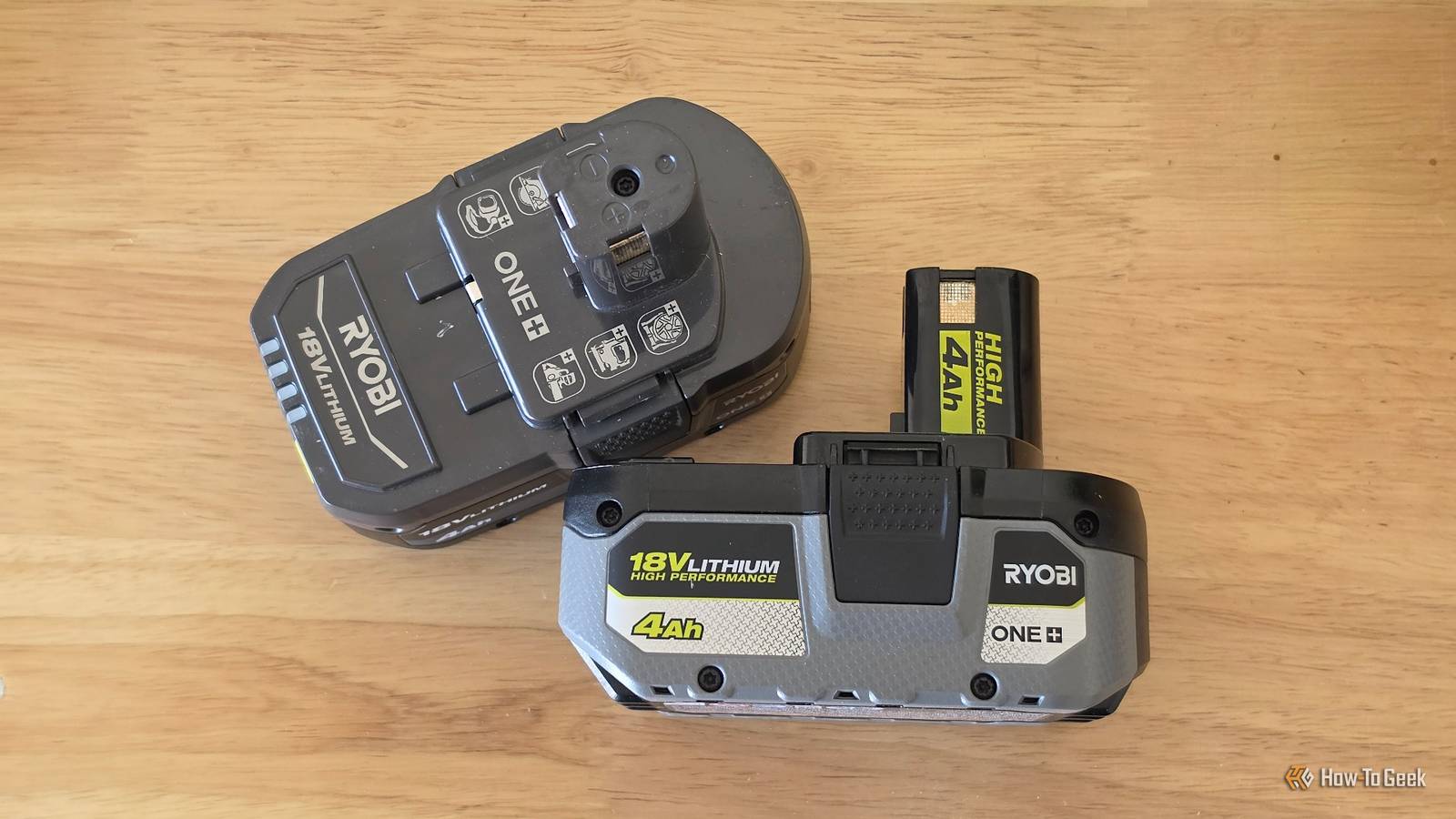
The Ryobi brand was founded in Japan in 1943 and made its first power tool in 1968.Eventually, popularity grew thanks to die-cast products in the 80s, but everything changed in 1996 with the introduction of its first 18V cordless drill.It had a nickel-cadmium (NiCad) battery with a simple connector rail on a plastic housing.
Three decades later, that design remains the same.Any Ryobi 18V product from 1996 or newer will work with the tools and battery packs you can buy at Home Depot today.That's hugely important, a massive reason for its success, and exactly why I've been buying Ryobi tools for over 20 years.
Think about that for a moment.In 1996, we saw the launch of Hotmail, Motorola released the StarTAC (its first flip phone), and the Nintendo 64 was hitting shelves in the United States.Tickle Me Elmo toys were all the craze.
Ryobi had an 18V drill and promised a consistent battery platform moving forward, and never wavered.The rest of the industry did.The Ryobi ONE+ promise from 1996 Consistency is key Close Ryobi launched its now-famous 18V tool platform in 1996 in a dark blue colorway, but it didn't add the signature ONE+ branding until the early 2000s.
I still have my blue drill from the late 90s, and it still works.The promise, taken right from a Ryobi about us page, reads, Every 18V tool, whether it was built 30 years ago or three weeks ago, shares the same battery interface.This ensures that every product released is backward-compatible for customers.
And with that promise now 30 years old and still going strong, Ryobi proudly mentions it throughout its website.Related How to clean your Ryobi tools so they look new and last longer Stop storing your tools dirty.Posts 8 By Cory Gunther Today, the brand makes printing equipment, power tools, lawnmowers, workwear, outdoor products, and various other tools and hardware.
That promise was easier said than done The switch to Lithium-ion is where other brands went wrong Close While keeping the overall battery shape, connections, and terminals the same was easy, balancing that with advancing technology and new cells required significant effort.In the first decade, Ryobi stuck to NiCad and even made a few tools with nickel-metal hydride (NiMH) cells, but everything changed in 2007 with the switch to lithium-ion.Most manufacturers, like Milwaukee, completely redesigned everything from how the cells were packaged, protected, and connected to tools.
During the switch to lithium, they completely abandoned previous customers and launched a new design and different batteries.I know, I was one of them.Related Here’s Why I Can’t Stop Buying Ryobi Tools The right tool for the right job.
Posts 22 By Cory Gunther Ryobi stuck to its guns, took a few years longer to release lithium-ion battery packs, and, in 2007, debuted more ONE+ branding and the now-famous bright neon green color to signify the switch.Those bright green tools and new lithium-ion battery cells promised better performance, longer runtime, and more.Since then, we've seen better HP battery packs and brushless motors, tabless battery technology with its new EDGE battery packs, and other advancements.
Along the way, Ryobi's original promise from 1996 has held strong.More importantly, the Chinese company Techtronic Industries Group (TTI) acquired Ryobi's North American tool business in 2000, followed by its European and Australian businesses in the coming years.Throughout all those changes, new technology, and stiff competition, the promise to keep battery designs the same prevailed.
Fun fact: TTI also owns Milwaukee Tools, RIDGID, HART, Oreck, Dirt Devil, and many other popular brands.The competition figured it out, eventually Milwaukee and Makita followed suit No other major power tool brand can match Ryobi's compatibility, and that probably won't change anytime soon.Makita is close, as the Makita 18V LXT system of professional power tools has a similar history dating back to its launch in 2005.
TTI bought Milwaukee in 2005 and followed Ryobi's winning recipe by launching the M18 platform in 2008, which is still going strong.It's approaching 20 years of backward and forward compatibility, while DeWALT did the same in 2010 with the 20V MAX line.The promise only covers 18V tools Don't forget about Ryobi's 40V line It's important to note that Ryobi's impressive 30-year compatibility only applies to its 18V ONE+ collection of tools, accessories, and other products.
The ONE+ platform has over 350 products that all work together, and that's impressive.However, don't forget that Ryobi also makes 85+ powerful 40V tools like lawn care equipment, and nothing from the 40V line is compatible with the 18V line, and vice versa.Well, with one caveat.
Some of Ryobi's awesome "Hybrid" tools, like the Hybrid TriPower Tripod light, can run off Ryobi's 18V battery, a 40V battery, or an extension cord.There's also the smaller USB Lithium lineup of USB-C rechargeable tools for around the house, and a massive 80V platform of riding lawn mowers.Either way, the Ryobi 18V ONE+ platform and promise are still going strong.
And the tools back it up At the end of the day, that battery promise from 1996 is only half the story.A battery platform that stays the same for 30 years is only as good as the tools they power.Thankfully, I still have several of my blue Ryobis, and they just won't die.
I use my blue Ryobi drill all the time, and the circular saw is an absolute beast over 20 years later.In my opinion, whether you have an old blue Ryobi drill or a brand new neon-green impact driver, you have a tool that's durable, capable, and will last for years.Take care of them, and they'll take care of your projects.
Related I'm ditching my pressure washer for Ryobi's new portable power cleaner Convenience and power even without a hose.Posts 7 By Cory Gunther
Read More