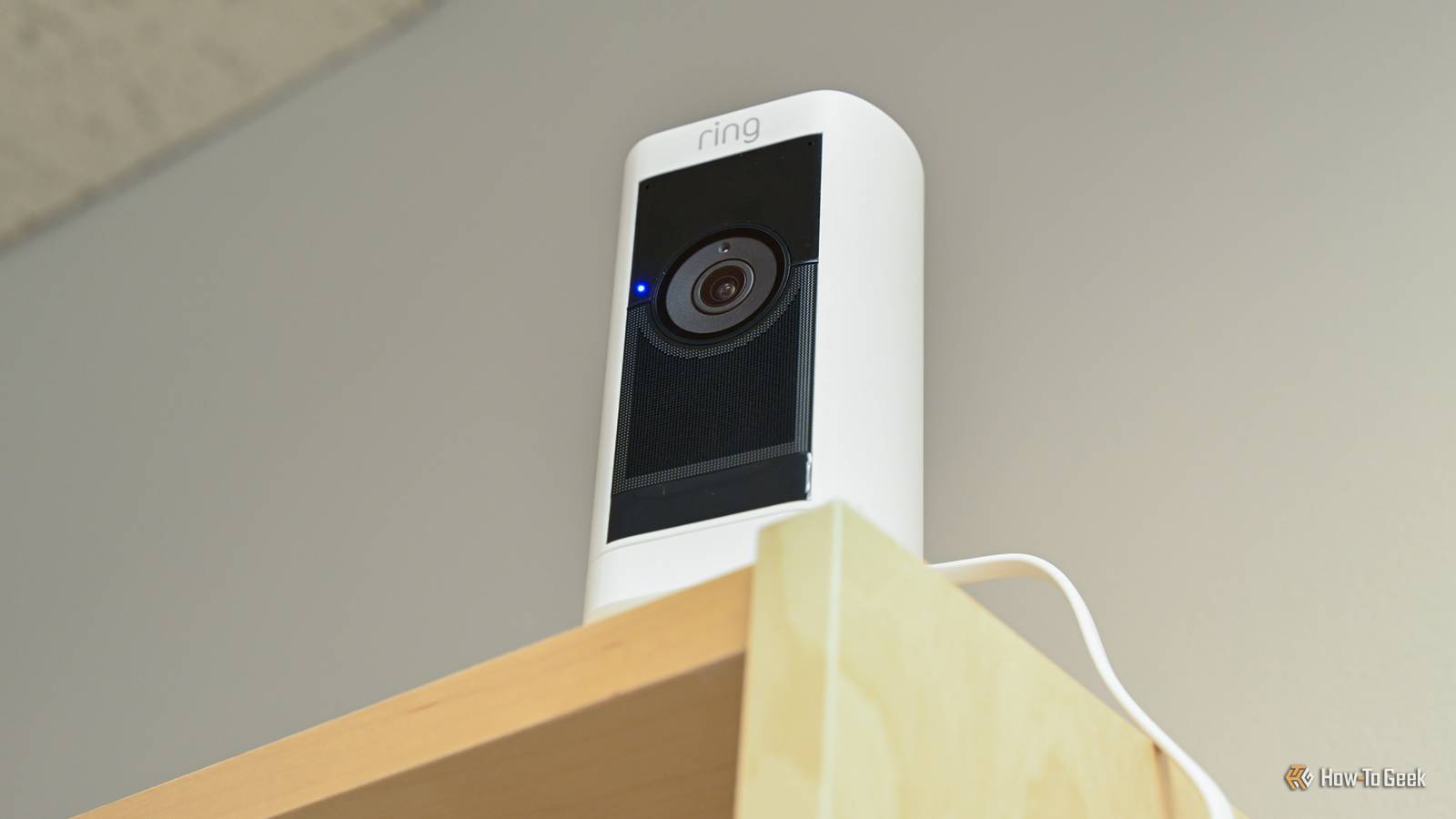
Ring is at last addressing some of its longstanding privacy issues by limiting its access to your security camera videos.The Amazon brand has introduced a TAKE (Throw Away the Key Encryption) security strategy that it claims will improve privacy for your footage while still enabling a raft of smart home features.The new approach locks down videos with rotating encryption keys that are temporarily stored in a secure cloud enclave.
Ring says it only has access to drive the active "intelligent features" linked to your account, such as Smart Alerts, and deletes the keys afterward.From then on, only you and Shared Users have the keys to the videos stored on their PCs and mobile devices.Ring already bars its staff and law enforcement from accessing cloud videos without either your permission or a warrant.
However, TAKE theoretically prevents abuses by denying access to the company itself under typical circumstances.The company also notes that end-to-end encryption (E2EE) is still available if you want to shut Ring out altogether.While this disables cloud features and Shared Users, you still get live feeds, on-demand playback, and video sharing.
TAKE begins rolling out in September in "phases," Ring says.Once the deployment is complete, it will be the default encryption method for users worldwide.A meaningful upgrade—and damage control Ring has a reputation for privacy problems The TAKE launch comes after years of allegations that Ring was not only violating users' privacy, but enabling mass surveillance.
Police could not only request security camera footage through Neighbors, Ring's neighborhood watch app, but didn't have to make those requests public until 2021.The request-for-access feature was shut down completely in 2024, but not after a security flaw exposed exact locations for anyone posting on the app.Related Ring doorbells can now identify faces Your doorbell now knows your friends from your delivery driver.
Posts 1 By Jorge A.Aguilar The concerns reached a peak this year when Ring aired a controversial Super Bowl half-time ad in February.It was showcasing an AI-powered Search Party feature that was meant to help find missing dogs using connected security cameras in a neighborhood, but customers and privacy advocates were alarmed at the potential—police and government agencies could theoretically use a variant of this to track people.
Days later, Ring ended a brief partnership with Flock Safety in February that would have let users share camera footage in response to law enforcement's community requests.The feature never launched and was officially canceled due to its requiring "significantly more time and resources" than expected, but it's widely seen as heading off a likely privacy uproar.TAKE doesn't completely eliminate privacy fears.
Ring is still storing keys in the cloud for a while, and authorities could potentially use this to access videos.Other concerns, such as a Familiar Faces feature that uses facial recognition to identify common visitors, haven't been addressed.Still, it's notable that Ring is actively reducing its control despite a potential backlash from police.
Read More