Want to share your Googlebook with a friend, family member, child, or stranger? While you probably shouldn't pass your laptop around to too many people, Googlebooks offer support for multiple user profiles, plus children and guest profiles.Setting things up takes just a few minutes, so you don't have to worry about anyone rearranging your desktop or digging through your stuff.Bear in mind that every user on a Googlebook can perform app updates, but only users with Admin access have the ability to manage profiles, modify settings, and see all installed applications.
This guide is intended for people who are trying to set up a secondary Googlebook profile so that they can share their laptop with an adult or child.If you're trying to add multiple Google accounts , simply open a Google app (such as Drive, Calendar, or Photos), click the user profile icon in the top-right corner of the app, and log into another account.Set up a new user profile from the Googlebook lock screen A super-easy process You need to log out of your user profile before setting up a new profile on your Googlebook.
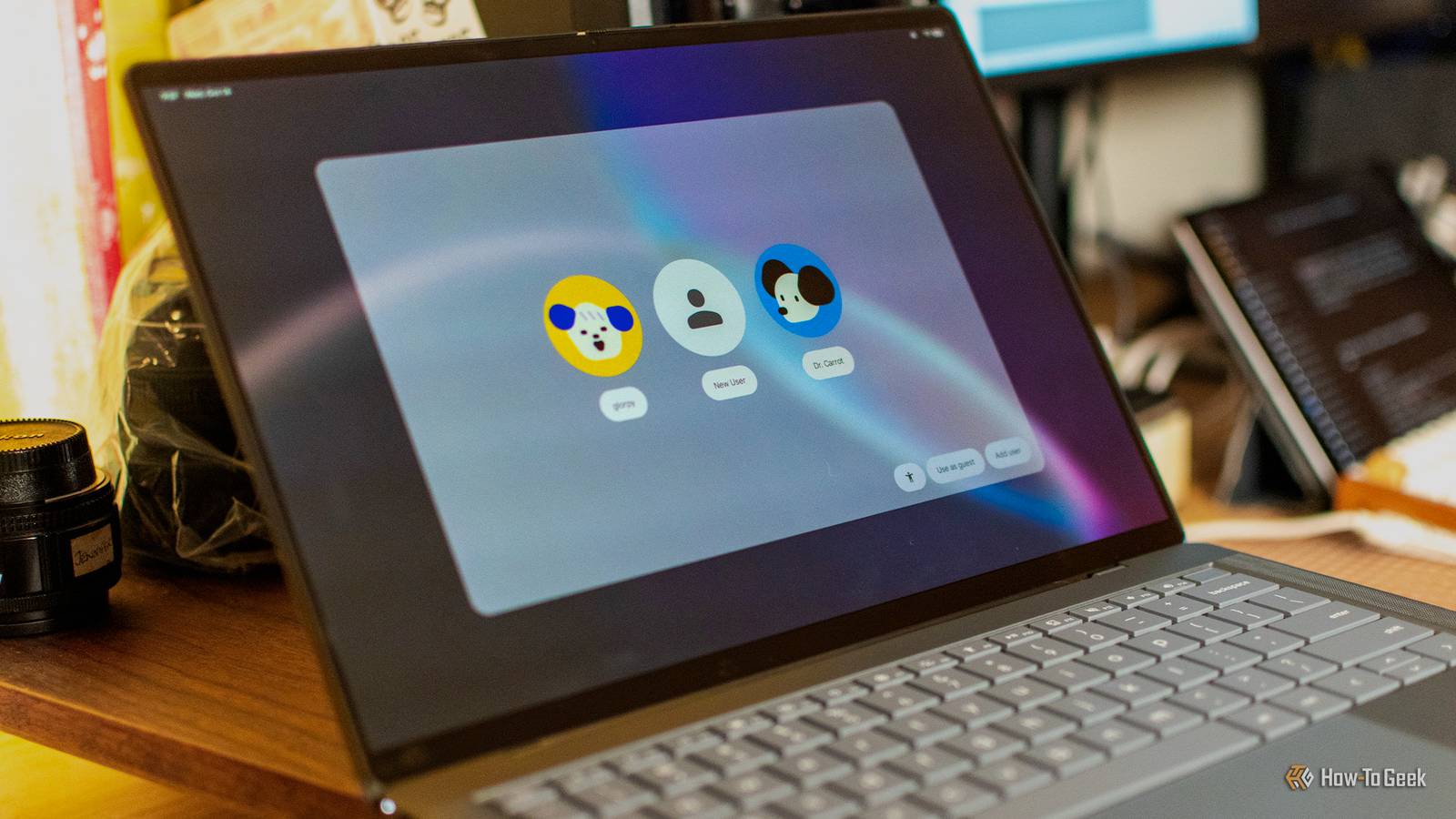
So, hit the power button (the fingerprint sensor) on your Googlebook's keyboard, then hit the "Sign out" button that appears at the top of the lock screen.If you're using an external monitor and cannot access the Googlebook's power button, click the battery icon in your status bar and tap the power icon that appears in the Quick Settings drop-down.Once you're on the GooglebookOS login page, tap the "New user" or "Add user" button (both perform the same function).
GooglebookOS will ask for a Google sign-in when setting up the secondary user profile.If you don't want to sign into a Google account, simply hit the "skip" button when prompted.User profiles that are not logged into Google cannot access the Play Store, perform backups, or utilize features that require a Google login, including Gemini features.
After setting up a new user profile, you can access it at any time by signing out of your active account through the lock screen or Quick Settings drop-down panel.Set up a new user profile from your Googlebook's settings You may need to do this if you've disabled the "Add a user" button on the lock screen Close If you don't see the option to add a user profile after logging out, then it's possible that you've disabled this option at some point in settings.Thankfully, there's another way to set up a new user profile.
Open your Googlebook's settings and navigate to the "System" tab in the sidebar.Then, click the "Users" option.This "Users" settings page lets you change some of Googlebook's default behaviors, specifically Guest mode and the "Add users from the sign-in screen" option.
It's also where you'll go to modify or delete user profiles in the future.But we're just setting up a new user profile.So, click the "Add user" button.
GooglebookOS will ask if you want to give the user admin privileges.Then, it will guide you through the normal user profile setup process.Related How to connect a Googlebook to a printer Printed documents and web pages are just a few clicks away.
Posts By Andrew Heinzman How to set up a child's account on a Googlebook Trust the process The option to set up a child's account on a Googlebook is hidden in the "Add user" setup process.Simply follow the above instructions to set up a new user profile, then click the "For my child" button when Googlebook asks who you're setting up the new profile for.Googlebook will ask for your child's name, birthday, and gender.
Because parental controls require two Google accounts: one for the parent, the other for the child.You'll need to enter both during setup.Googlebook will also give you the option to create a child's account if you don't have one already.
You can manage parental controls from a web browser or through the Family Link app, available on both the Google Play Store and Apple App Store.How to use a Guest profile on a Googlebook And how to log out of a Guest profile—it's less intuitive than you'd think Support for Guest profiles is enabled by default in GooglebookOS.To use a Guest profile, simply press your Googlebook's power button (or tap the battery icon at the top-right corner of your screen, then click the power icon) and tap "Sign out." Then, tap the "Guest mode" button at the bottom-right corner of the GooglebookOS login page.
If you don't see the Guest button on your Googlebook's lock screen, it's probably because you disabled the feature at some point.Log back into your profile, go into Settings, click the "System" tab, tap "Users," and toggle the Guest profile option.Guest profiles are temporary and cannot access any features that require a Google login or persistent file storage, such as Gemini functionality or the screenshot tool.
They're good for those moments when you need to share your Googlebook with someone but don't want to set up a new profile.Logging out of a Guest profile is the unintuitive part of the equation—pressing the power button won't pull up the lock screen.To exit Guest mode, click the notification icon in your status bar (the bell icon) and select "Exit Guest mode." Related How to share files between a Googlebook and Android phone using Quick Share Move images, documents, and more between your laptop and smartphone with Quick Share.
Posts By Zachary Boddy Sharing is caring The Googlebook's user profiles feature makes it easy to share your laptop without sacrificing customization or privacy.It's especially useful when you pair your Googlebook with an external monitor, effectively turning it into a desktop computer that your entire household can enjoy.That said, be sure to set up secure passwords or PINs for each user profile.
And if you're transitioning from a Chromebook, be sure to review your parental controls in the Family Link app, as some controls may not align between the Chromebook and Googlebook platforms.
Read More