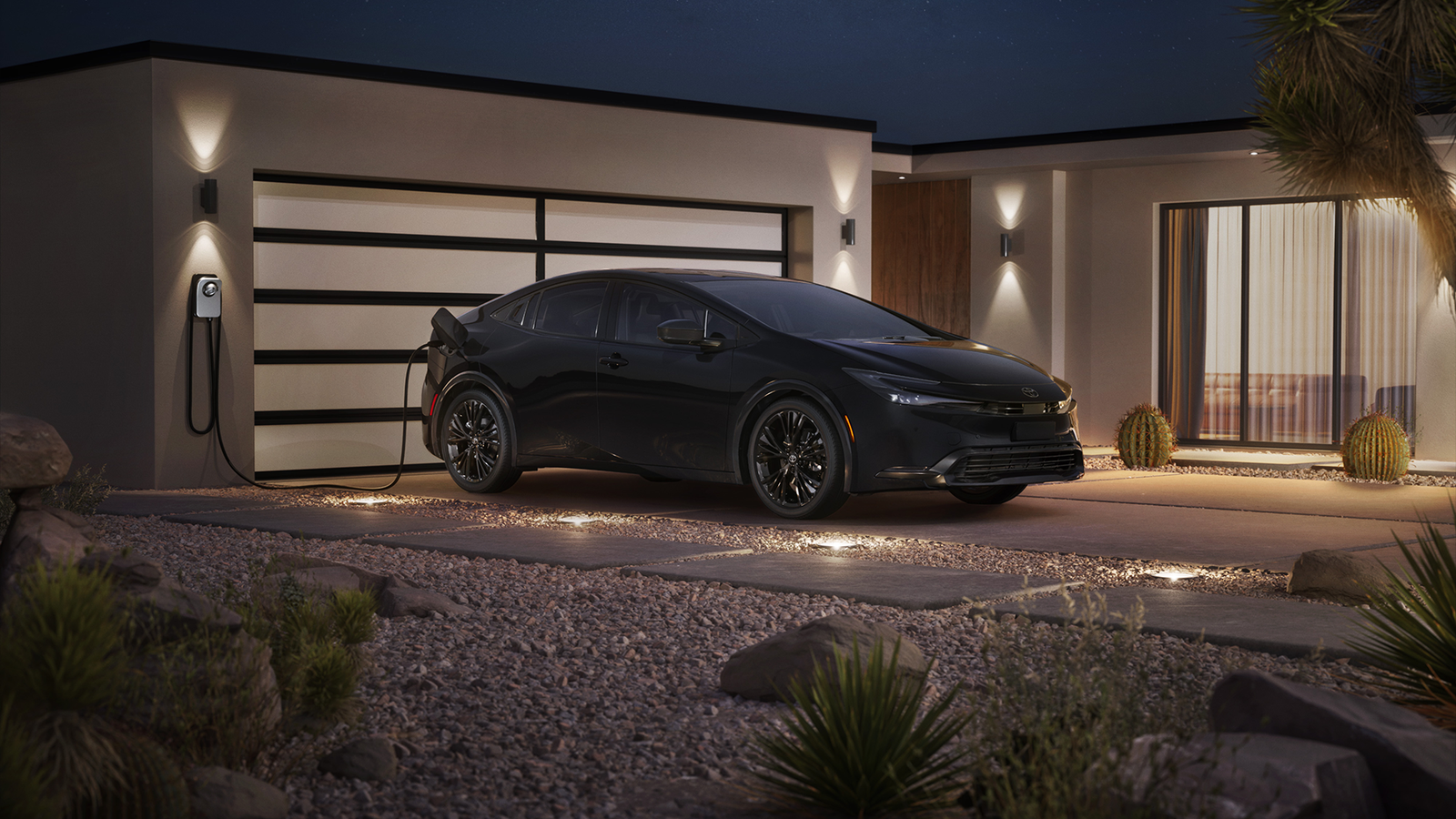
Toyota introduced a plug-in hybrid version of the Prius for the 2012 model year, giving buyers a way to drive on electricity alone for short trips while keeping the same hybrid safety net for longer ones.More than a decade later, that basic idea has not changed all that much, but the price of admission has.For 2027, the Prius Plug-in Hybrid costs thousands more than the standard hybrid, and it's not immediately clear whether it’s really the better choice when comparing them side by side.
I recently went through the standard 2027 Prius to find the smartest buy, which turned out to be the XLE trim level (I was, admittedly, surprised by that).Here, I wanted to compare the standard 2027 Prius against the Plug-in Hybrid version in terms of price, power, efficiency, and features to see which one makes more sense.Buyers should expect to pay around $5,000 more for the Plug-in Hybrid, regardless of the trim they choose.
As seen in the table below, the premium narrows slightly as you move up the trim ladder, but not by much.And narrow is the keyword here as the 2027 Toyota Prius Plug-in Hybrid fits a very specific type of buyer with a very specific driving routine.Every price below includes Toyota's $1,295 dealer processing and handling fee.
Standard Trim Starting MSRP Plug-in Hybrid Trim Starting MSRP Difference LE $30,050 SE $35,275 $5,225 XLE $33,495 XSE $38,525 $5,030 Nightshade $34,300 Nightshade $39,295 $4,995 Limited $37,065 XSE Premium $41,970 $4,905 Quicker, but not always more efficient The Prius Plug-in Hybrid lags behind in a key area Close Both Prius lineups start with the same core hardware.Toyota's fifth-generation Hybrid System pairs a 2.0-liter four-cylinder engine with electric motor-generators and a continuously variable transmission.Both rely on an Electronically Controlled Brake system to blend regenerative and hydraulic braking.
The Plug-in Hybrid uses a planetary-type CVT connecting two motor-generators (Toyota calls them MG1 and MG2), alongside a larger 13.6 kWh lithium-ion battery that provides extra power and electric-only range.Normal, Eco, and Sport modes let the driver adjust how eagerly the accelerator responds.Quiz 8 Questions · Test Your KnowledgeToyota PriusTrivia challengeFrom hybrid pioneer to pop culture icon — how much do you really know about the Toyota Prius?HistoryTechnologyPerformanceDesignMilestonesBegin 01 / 8HistoryIn which year did the Toyota Prius first go on sale to the public?A1999B2001C1997D1995Correct! The Toyota Prius launched in Japan in December 1997, making it the world's first mass-produced hybrid passenger car.
It was a landmark moment in automotive history that changed how the industry thought about fuel efficiency.Not quite.The Prius actually debuted in Japan in December 1997, beating many people's expectations of when hybrid technology would reach showrooms.It wouldn't arrive in North America and Europe until 2000 and 2001 respectively.Continue 02 / 8TechnologyWhat type of hybrid system does the Toyota Prius use?AMild hybridBSeries hybridCParallel hybridDFull hybrid (series-parallel)Correct! The Prius uses Toyota's Hybrid Synergy Drive, a full series-parallel hybrid system.
This clever setup allows the car to run on electricity alone, the gasoline engine alone, or a combination of both, optimizing efficiency across different driving conditions.Not quite.The Prius uses a full series-parallel hybrid system, branded as Toyota Hybrid Synergy Drive.Unlike simpler mild or parallel hybrids, it can operate in electric-only, gasoline-only, or combined modes, giving it exceptional flexibility and fuel economy.Continue 03 / 8MilestonesApproximately how many Prius units had Toyota sold globally by 2023?A2 millionB5 millionC10 millionDOver 20 millionCorrect! Toyota surpassed 20 million cumulative global Prius sales, a staggering figure that underscores just how influential the model has been.
The Prius family, including its variants, helped normalize hybrid vehicles for everyday consumers worldwide.Not quite.Toyota has sold well over 20 million Prius units globally by 2023, a number that includes the broader Prius family of vehicles.That milestone reflects decades of consumer trust and the car's role in pushing mainstream hybrid adoption.Continue 04 / 8DesignWhat distinctive design philosophy did Toyota use when shaping the third-generation Prius (2010)?ABox-shaped body for maximum interior spaceBTriangular silhouette for aerodynamic efficiencyCFastback rear to reduce turbulenceDCab-forward design inspired by minivansCorrect! Toyota engineered the third-gen Prius around a triangular silhouette, which contributed to its low drag coefficient.
Aerodynamics are critical to hybrid efficiency, and this wedge-like shape helped the Prius slice through the air with minimal resistance.Not quite.Toyota designed the third-generation Prius around a triangular silhouette intended to minimize aerodynamic drag.A low drag coefficient directly improves fuel economy, so the shape was as much an engineering decision as an aesthetic one.Continue 05 / 8PerformanceWhat is the EPA-estimated combined fuel economy (MPG) of the standard fifth-generation 2023 Toyota Prius?A42 MPGB52 MPGC57 MPGD62 MPGCorrect! The fifth-generation 2023 Prius achieves approximately 57 MPG combined, a significant jump over its predecessor.
Toyota's redesign focused heavily on efficiency gains alongside a much sportier look, proving that economy and style don't have to be mutually exclusive.Not quite.The 2023 fifth-generation Prius earns around 57 MPG combined according to EPA estimates.That impressive figure came alongside a dramatic visual redesign, making the latest Prius one of the most efficient and best-looking versions in the car's long history.Continue 06 / 8TechnologyWhich component allows the Prius to recover energy that would otherwise be lost during braking?ATurbochargerBRegenerative braking systemCContinuously variable transmissionDActive suspension moduleCorrect! The Prius uses a regenerative braking system that converts kinetic energy back into electricity during deceleration, storing it in the hybrid battery.
This recovered energy is then used to power the electric motor, reducing reliance on the gasoline engine and boosting overall efficiency.Not quite.The regenerative braking system is the key technology here.Instead of wasting kinetic energy as heat through traditional friction brakes, the Prius captures it and converts it into electrical energy stored in the battery — one of the core reasons the car is so fuel-efficient.Continue 07 / 8HistoryWhich famous internal Toyota development code was used for the project that became the Prius?AProject G21BProject AlphaCProject Eco-1DProject NHW10Correct! Toyota's hybrid car initiative was internally called Project G21, with the 'G' standing for 'Globe' and '21' referencing the 21st century.
The project was launched in 1993 with the ambitious goal of creating a car suited for the coming century's environmental demands.Not quite.The Prius originated from Toyota's internal Project G21, where 'G' symbolized 'Globe' and '21' pointed toward the 21st century.Launched in 1993, the project challenged engineers to dramatically improve fuel efficiency ahead of an environmentally conscious new era.Continue 08 / 8MilestonesThe Toyota Prius Plug-in Hybrid (PHV/PHEV) was first introduced for sale in which year?A2009B2012C2015D2018Correct! The Prius Plug-in Hybrid went on sale in 2012, offering drivers the ability to charge the battery via an external power source for a limited all-electric driving range.
It bridged the gap between traditional hybrids and fully electric vehicles, appealing to eco-conscious drivers wanting more EV capability.Not quite.Toyota brought the Prius Plug-in Hybrid to market in 2012.By allowing the battery to be charged from a wall outlet, it extended the Prius's electric-only range well beyond what regenerative braking alone could provide, making it a compelling option for short electric commutes.See My Score Challenge CompleteYour Score/ 8Thanks for playing!Try Again The Plug-in Hybrid's two motor-generators and 13.6 kWh battery pack deliver 220 net combined horsepower, with Toyota estimating a 0-60 mph time of 6.6 seconds.
The quickest standard Prius, the all-wheel drive LE, makes 196 horsepower and reaches 60 mph in an estimated seven seconds.The Plug-in Hybrid is quicker than any standard Prius that Toyota has, which could be a selling point for some.However, the extra weight of the battery and motor-generators works against the Plug-in Hybrid the moment it runs like a regular hybrid.
The standard Prius LE (the entry-level trim) with front-wheel drive returns an EPA-estimated 55 mpg combined, the best rating in the lineup.For the Plug-in Hybrid, the base SE returns an EPA-estimated 51 mpg combined, four mpg lower than the standard hybrid.Ideal for shorter trips around town The true selling point beyond acceleration Close The SE trim level of the 2027 Toyota Prius Plug-in Hybrid offers an EPA-estimated 44 miles of all-electric range, while every other trim is rated at 39 miles.
For a driver who works close to home and can plug in overnight, most daily errands and commutes could happen without burning any gasoline at all.The standard Prius has no comparable EV-only range.Its EV Mode exists mainly for slow, short-distance driving around a parking lot or small neighborhood, not for a real commute.
The difference comes down to battery size between the standard 2027 Toyota Prius and its Plug-in Hybrid counterpart.Toyota specifications show the standard Prius has a hybrid battery rated at 222 volts and 4.08 amp-hours, which works out to under one kilowatt-hour, just enough to power brief, low-speed electric driving.By contrast, and as noted a moment ago, the Plug-in Hybrid and its battery have a 13.6 kWh capacity, roughly 15 times the capacity.
That difference in capacity means some buyers will be able to make shorter commutes on all-electric power.One back at home, a 120V household outlet fully charges the battery in about 11 hours, while a Level 2 charger cuts that down to about four hours.Meanwhile, the standard 2027 Prius is available with all-wheel drive for about $1,400 more, which adds a rear-mounted electric motor that sends power to the rear wheels when conditions call for it.
The 2027 Prius Plug-in Hybrid sends its 220 horsepower to the front wheels only, with no all-wheel drive option across any of the four trims.Buyers who want all-wheel drive do not have a choice between the two Prius lineups.Only the standard hybrid offers it.
Related Toyota Connected Services: emergency help, stolen vehicle tracking, and teen driver safety Understanding the core pillars of Toyota’s digital suite.Posts 1 By Carl Anthony Solar roof trickle-charges the battery Nightshade trim level offers a more sporty look The base SE Plug-in Hybrid comes with a heated leather steering wheel, a feature the standard Prius does not offer until the range-topping Limited trim.However, both base trims share six-way adjustable front seats, an eight-inch touchscreen, and six USB-C ports.
The XSE Plug-in Hybrid adds an eight-way power-adjustable heated driver's seat and wireless phone charging, mirroring what the XLE offers on the standard hybrid.The Nightshade treatment looks nearly identical between the two lineups, with black wheels, badging, and trim throughout, though the Plug-in Hybrid also picks up gray stitching on the seats.At the top of the lineup, the XSE Premium has an available solar roof that can trickle-charge the battery while the car sits parked.
What I would pick here at How-To Geek and why For most Prius shoppers, the standard hybrid is still the smarter buy.It costs about $5,000 less at every trim level, gets better mileage once the battery is removed, and is the only Prius that offers all-wheel drive for winter weather.The Plug-in Hybrid earns its keep for a narrower type of buyer: someone with a short commute, reliable access to a home outlet or Level 2 charger, and no need for all-wheel drive.
For that driver, the SE trim level and its 44-mile electric range could cover most days on electricity alone.Outside of that specific situation, the standard Prius does more for less money, and it is the pick for most buyers cross-shopping the two.
Read More