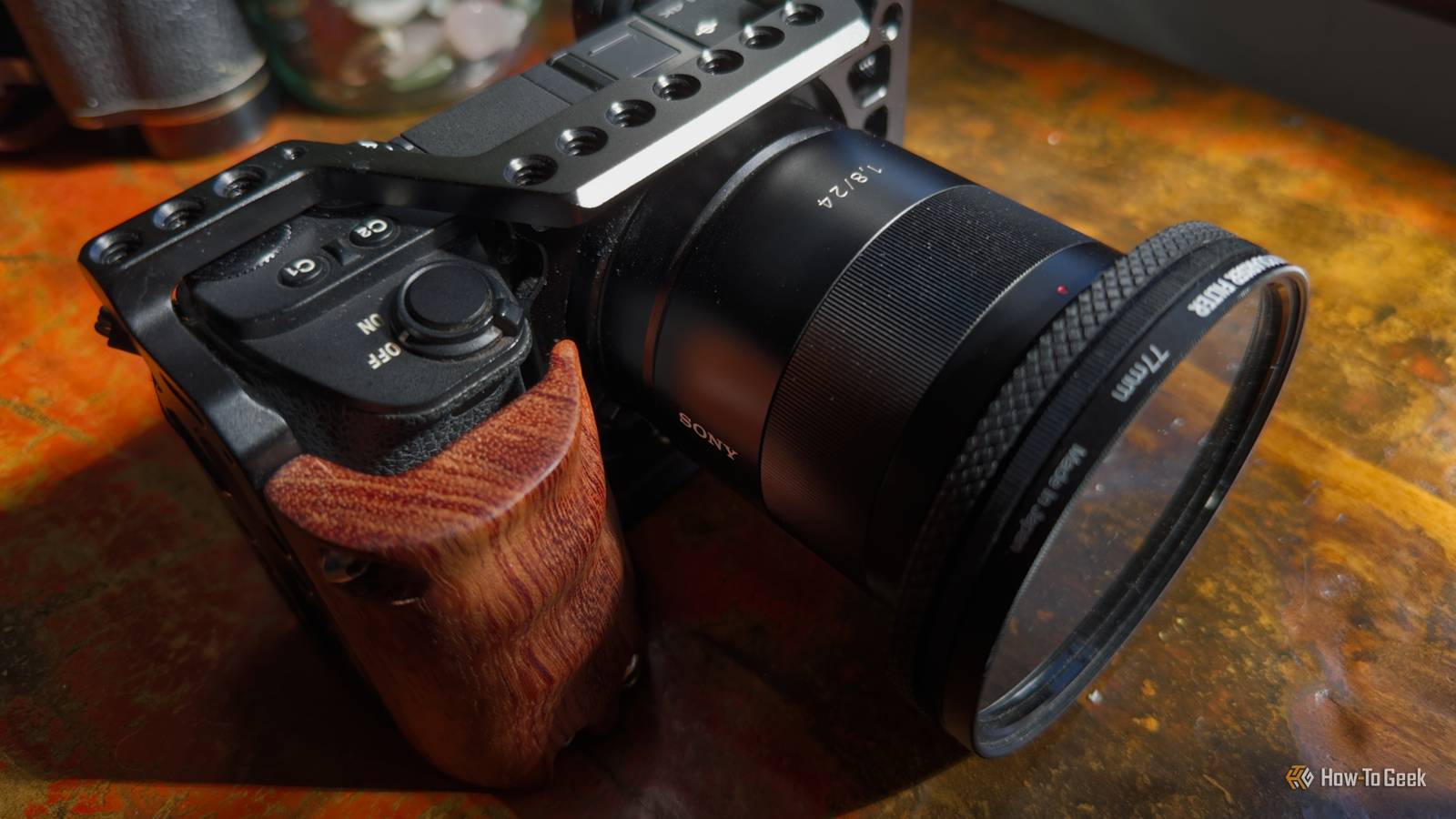
Photography can be a real money pit, even though it doesn’t need to be.Gear acquisition syndrome is real, and the pursuit of more lenses, bodies, and accessories haunts amateurs and professionals alike.That’s why I’m using my 3D printer wherever I can to save money (that I can then spend elsewhere).
3D-printed adapters open up a world of second-hand options Lenses and filters galore Close The first time I printed a filter adapter, I was amazed.It was the first time I’d ever tried 3D-printing a fine thread, and even with a standard 0.4mm nozzle, the print came out great.For a couple of cents, I had my hands on a 52mm to 49mm filter adapter that works perfectly to this day.
I now regret all the times I saw cheap sets of filters in thrift stores and passed up the opportunity based on the fact that they don’t fit any of my lenses.This has happened more times than I care to admit.You don’t even necessarily need to design the part for yourself given the huge number of models aimed at photographers on repositories like MakerWorld and Printables.
I’ve since discovered an even more interesting 3D print: lens adapters.I have been aware of the existence of lens adapters for a while, though they can be expensive bits of kit and come with considerable downsides.Generally speaking, you can kiss goodbye to autofocus and electronic aperture control, and even the pricier models that try to maintain this sort of functionality can be hit or miss.
That’s when I discovered a Canon EF mount to Sony E mount adapter that allows me to use an old 24-70mm Canon lens I picked up on my Sony mirrorless.I then printed a Nikon F mount to Sony E mount adapter to use my old Nikon lenses, too.Yes, I lose autofocus and need to manually control aperture, but I’m really not bothered considering these actually work.
If you’re looking for a specific lens adapter, I’ve had the most success with 3D printing model search engine Yeggi.Replacement parts that don’t cost the earth Have you seen the price of a lens hood these days? Most lenses come with hoods, but they’re easily lost and can break.They’re often missing when picking up lenses second-hand, and it’s not a one-size-fits-all affair.
Why pay over the odds for an officially branded lens hood when you can print your own at home? There are a huge number of these available, many mimicking the official design.Tripod plates are another thing that always seem to go missing.At the very least, it never hurts to have a few spares—especially if you have multiple camera bodies and are always swapping between them.
You can print everything from basic quick release designs to industry standards like ARCA Swiss plates.Lens caps (both front and rear) are always useful, and they’re one of the most common camera prints online.You only need to print the sizes for the lens you actually carry, too.
After printing the Canon adapter (above), I realized I couldn’t find a rear lens cap for my Sony lens, so I printed one up in about 20 minutes.You can even customize these with the size of the lens you’re using so you can easily grab and go from your camera bag or lens drawer.Lastly, weird little things like battery door covers and hot shoe mount protectors can break or go missing, and 3D printing is an easy way to replace them.
Experiments that only cost filament (and time) Trying out new ideas shouldn’t cost the earth Close Some photography experiments, like buying a fisheye or macro lens, cost more than others.While you can’t yet print your own glass, you can use your printer to make other experiments cheaper.One example I’ve been dabbling with recently is the bokeh lens adapter, and I was even able to make my own custom bokeh shapes by using the How-To Geek logo.
Camera sliders are typically used in videography, but if you’ve not used one before, then you might feel a bit lost.Thankfully, you can print your own motorized camera slider, which is modular in its design so that it can be expanded if necessary.There are many such designs online.
Other common designs are photography backdrops, lightboxes, and booths.These vary from totally enclosed systems to clips that hold up a piece of paper.They’re perfect for product shots, whether you have your own business or you’re listing on Facebook Marketplace.
There are also some serious camera rigs available for printing, from overhead designs to “just add rails” setups.You can also print some weirder objects, like mounts for lenses taken from disposable cameras to stackable extension tubes for macro photography.Photography isn’t the only pastime that gets better with printed objects.
Check out some of the best hobbies to combine with a 3D printer.
Read More