The additive manufacturing (AM) industry has become obsessed with the opportunity for drones, and there’s certainly good reason for that.But before drones, the big focal point in AM for defense was rocket motors: above all, solid rocket motors (SRMs).And, despite rising drone demand—or even because of it—companies involved in AM for defense need to keep paying attention to SRMs.
I should point out that what I write about is clearly biased towards what’s relevant to the AM industry in the US, so take that for what it’s worth.However, as I’ve mentioned previously, I think that the stakes characterizing global trade competition and global geopolitical conflict both suggest that, whatever country you happen to be based in, what’s going on with the US market (especially when it comes to defense) has a disproportionate impact on shaping AM industry demand on a worldwide scale.If for no other reason, then you need to pay attention to SRMs because the US domestic production environment needs to prove that it’s capable of delivering SRM components at scale, if we’re to take the idea of reshoring seriously.
The US has not devoted the better part of this decade so far to building up its AM capacity for drones.That’s a relatively new demand catalyst, at least in terms of explicit incorporation into the US military’s procurement landscape, of the (very limited) US domestic drone production capacity for small drones.On the other hand, SRMs have been a major use-case that the Pentagon has spent more or less the entire 2020s building up.
X-Bow Launch Systems has built its entire business essentially on this; the legacy primes have crowded the space — Northrop Grumman alone has invested “more than $2 billion…over the past several years” in SRM capacity, much of it on AM — and Ursa Major has made SRMs a major part of its mission since announcing its initial success with the Lynx motor back in 2023.Northrop Grumman’s SRM.Image courtesy of Northrop Grumman.
Ursa Major just got $137 million for two contracts from the US Navy for SRMs: one contract to develop and qualify SRMs for the Navy’s Compact Air-to-Air Missile (CAAM) Program (worth $91 million), the other for the Naval Modular Missile (NMM) program (worth $46 million).Ursa Major gets a lot of military contracts, but $137 million still moves the needle quite a bit, and it’s of course not the only money Ursa Major has gotten/is getting for SRMs.The company got these contracts by proving its competence on earlier contracts, including work based on a $25 million joint investment between the company, the Navy, and the Office of Strategic Capital (OSC), which it successfully finished back in February.
One interesting thing about SRMs is that, at least currently, the opportunity mostly has to do with the grain geometry of the propellant, which is made from polymer.From the standpoint of providing a “proof of concept” for the revitalization of domestic US defense manufacturing, I think that SRMs would still be relevant to drones regardless of the production method.But the fact that SRM propellant also has so much overlap with the materials and production technologies that are being most immediately prioritized in the drone buildup obviously adds to its relevance.
Controlling and optimizing propellant grain geometry with AM enables a more efficient burn rate, which also impacts thrust.Additionally, 3D printing can enable propellant manufacturing that’s safer than legacy processes.South Korea’s leading defense contractor, Hanwha Defense, actually cited safety considerations as a factor in its interest in AM, at the event where the company’s US subsidiary announced a multibillion-dollar investment in a propellant manufacturing facility at Pine Bluff Arsenal in Arkansas.
Hanwha Defense USA also recently made a bid to acquire Austal USA, which essentially means that Hanwha would be buying control of the US Navy’s AM program, so their opinion matters.Billions and billions of dollars in investment, years and years of R&D, countless hours of lobbying and publicity events, etc., all led to this moment, when global events have pushed demand for SRMs to the top of the US military’s procurement priorities.This is a situation akin to when a professional sports franchise’s fanbase is finally starting to run out of patience with the team’s front office, after years spent tanking for draft capital, remaking the coaching staff, and clearing cap space to lure top talent in free agency.
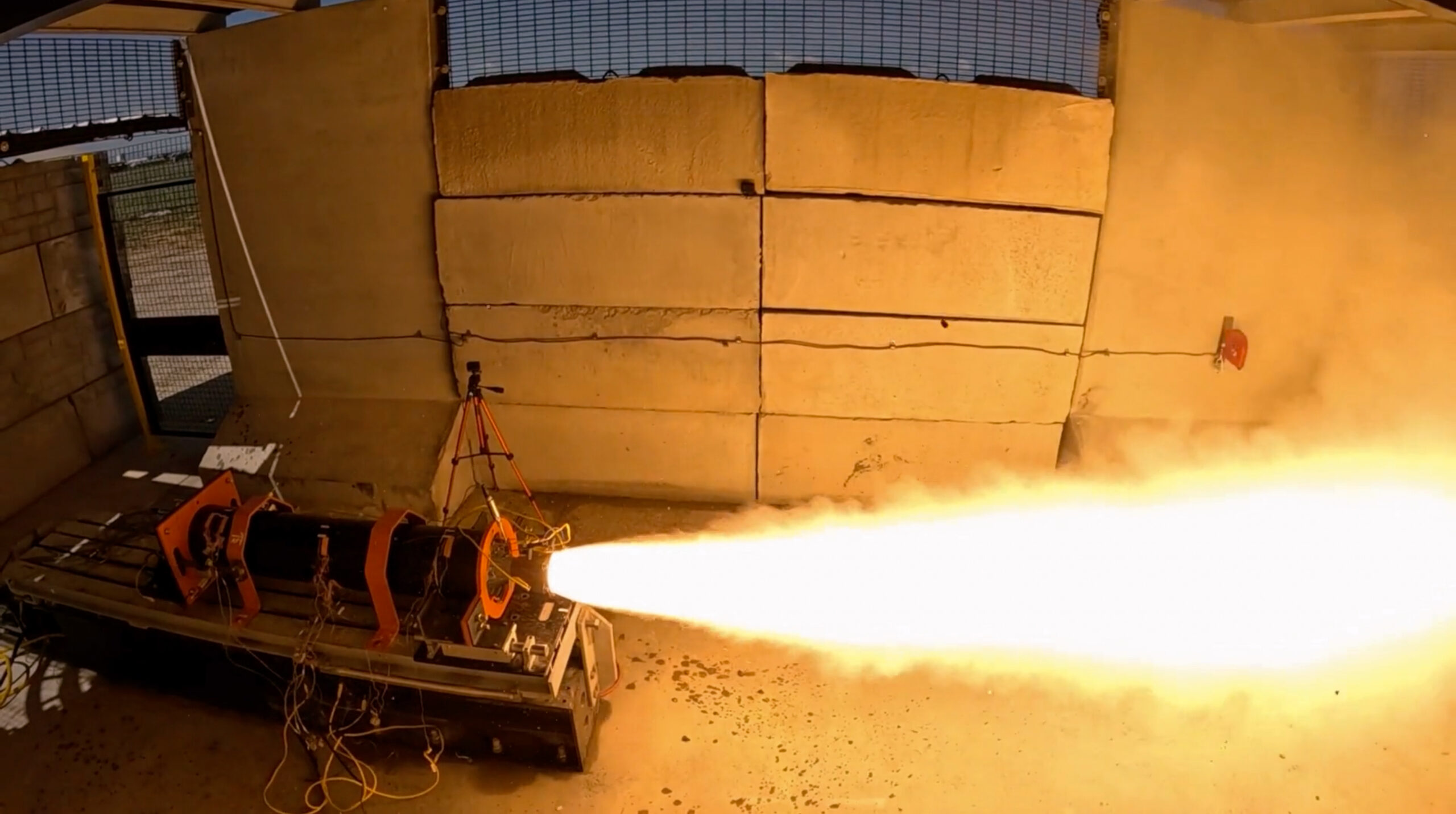
If you can make the playoffs, even if you exit in the first round, the fanbase’s patience renews and eagerly awaits the next season.But you still have to at least make the playoffs.Featured image: SRM prototype from Ursa Major Subscribe to Our Email Newsletter Stay up-to-date on all the latest news from the 3D printing industry and receive information and offers from third party vendors.
Print Services Upload your 3D Models and get them printed quickly and efficiently.Powered by FacFox Powered by 3D Systems Powered by Craftcloud Powered by First Mold Powered by Xometry 3DPrinting Business Directory 3DPrinting Business Directory
Read More