XREAL has been teasing its Android XR glasses for over a year, but now they're finally close to launch.I got to try them on ahead of their expected fall release, and in many ways they're extremely impressive — but also make the limitations of modern mixed reality (XR) wearables very clear.Everyone likes to draw comparisons between Project Aura and the Apple Vision Pro, and there's some merit to this after trying them.
Both are advanced XR wearables that rely on hand gestures and voice.Both have windowed interfaces that potentially replace your computer, not just a phone or tablet.And yes, both require an external pack to operate away from a wall outlet.
Here, XREAL's main advantage is lasting for a claimed four hours on battery versus Apple's three hours of video.Close However, it was clear from the moment I visited the home screen that the Project Aura and Vision Pro experiences are wildly different.Apple's headset is more powerful (it's basically an iPad Pro M5 on your head), but isolating.
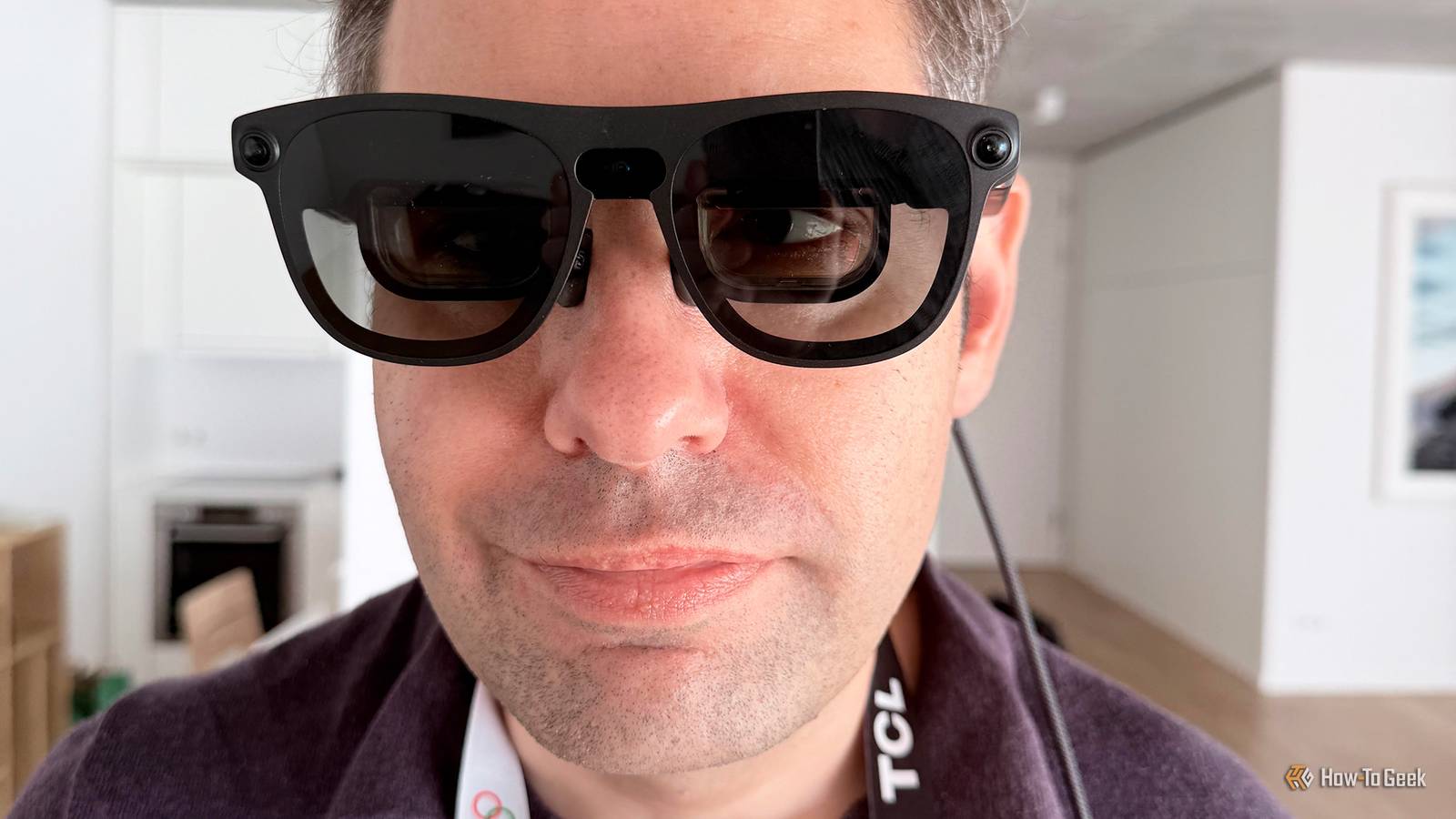
XREAL's glasses, however, are clearly meant to keep you grounded in real life by letting you see what's on the periphery.I could talk to people and otherwise feel connected, and that's frankly liberating.No one will mistake Project Aura for fashionable eyewear, or minimalist smart glasses like the Even Realities G2.
The lenses float in front of the twin 1200p micro OLED displays, and the cameras will make people (including British courts) nervous.The technology just isn't there yet to make XR hardware that's both powerful and elegant.There is an upshot: this makes it easier and cheaper to swap lenses (I was told it's easy to get them for around $50), so the Aura is more of a multi-user device than the Vision Pro.
It can barely fit over my conventional glasses in a pinch.Project Aura uses the new Snapdragon Reality Elite Platform where Samsung's Galaxy XR uses the older XR2+ Gen 2, and the performance improvement shows: the interface and apps feel noticeably smoother.XREAL's own X1S Spatial Coprocessor made the lag virtually imperceptible.
The slightly dodgy hotel Wi-Fi in the demo space was more of a hindrance than anything inside the glasses.Android XR: Powerful but unpolished A strong interface with limited use cases Android XR has been around for a while in the Galaxy XR, so I won't recap everything it can do.You can run multiple windows, pin them to physical locations, and use physical input methods like mice, keyboards, and six-degrees-of-freedom (6DOF) controllers.
It's called spatial computing for a reason: you really can get work (and immersive play) done in the right circumstances.With that said, the software is still rough around the edges, at least on a prototype Project Aura.The Google app crashed during my demo, the home screen gesture (holding your open palm toward you) was inconsistent, and third-party apps like the game would occasionally become unresponsive.
This isn't XREAL's doing — rather, it's that Android XR is still a first-generation operating system that poses a new challenge for developers.Related The first Android XR headset is one of the best VR headsets you can buy Working and playing in a galaxy that's all your own.Posts 2 By Bertel King That illustrates another issue: the lack of native apps.
While you can run anything from the Google Play Store, the list of Android XR apps is much smaller: over 100 at last check.Beyond Google's in-house apps, you'll find XR-native versions of apps like HBO Max, MLB's live sports coverage, and games like the virtual tabletop title .You won't, however, see your favorite social media app or otherwise get upgraded experiences for most mobile apps.
I went into the Project Aura demo knowing that the included apps largely represented what I'd use in a production model.Having said all this, Android XR can truly click in the right conditions.I could explore the inside of a New York City bakery in Google Maps, juggle multiple apps using only my hands, and play games that would be impossible with conventional devices.
I can see the ideal experience Google and XREAL want to create; it's just a question of getting there.Project Aura: When does it come out, and what's the future? The ideal all-day glasses are coming, eventually XREAL is sticking to its fall release window for Project Aura (there's still no final name), so I wouldn't expect to wait much longer.The company also continues to promise a price under $1,500.
That might not be easy given ever-higher memory prices, but it's safe to say they'll cost much less than the $3,699 you now pay for the Vision Pro.That makes Aura far easier to justify if you're willing to take a risk with emerging tech.If I found myself relegating the glasses to private video viewing or a virtual monitor, I at least wouldn't have spent as much as I would on a high-end laptop.
For that matter, the Galaxy XR still officially sells for $1,800 — why buy that when XREAL's glasses are more powerful, and Galaxy Glasses are coming? For that matter, XREAL is refreshingly honest about Project Aura's role in XR: it's a step forward, not the destination.As Global PR Manager Taylor Szabo tells me, there's currently a chasm between basic, wear-them-all-day devices (think Meta Glasses) and fast but short-lived spatial computers like Aura.The aim is to ultimately close that gap and produce powerful glasses that can replace conventional eyewear if you want.
I don't see that happening for years, but Aura puts that dream product on the horizon.
Read More