Are you putting up with pesky household problems? The ones you’ve almost forgotten about, but that make a massive difference to your quality of life when they’re finally fixed? If you own a 3D printer, there’s a good chance you can print your way out of this problem! Shims for wonky doors Stop doors from catching and straighten them up Close My house is nearly 100 years old, and I love it.One of the things you have to accept about older buildings (or even bits of furniture) is that they settle and move around.Things aren’t always as straight as they once were, and that means the doors have a bit of a wedge-shaped gap to them.
This doesn’t bother me all that much.I put it down to character, but there is one door that catches ever so slightly on a frame that I’ve been meaning to fix.The easiest way to do this is to use a shim beneath the hinge to offset the angle, so that the door is no longer out of plumb.
This is pretty easy to do with a 3D printed shim, and there are many designs available, from wedge shims to flat shims to shims designed specifically for doors with hole cutouts for the screws.Of course, with your measurements to hand and a few minutes in a simple 3D modeling tool like Tinkercad, you could design your own perfectly sized shim, download an STL, and send it to the printer.You should have no issues using PLA for this.
Even though it’s not the strongest material in the world, it stands up pretty well when compressed.Custom wall plugs Different holes require different plugs There’s an awning on the sunniest side of my house that is operated by a hand-cranked winch.Over time, the movement of the crank gearbox ate into the concrete, causing the screws to come loose.
This happened at different rates, with the holes at the top being significantly larger than those at the bottom.To solve this, I measured the diameter and depth of the hole with my trusty vernier caliper and then used a wall plug generator to make three different-sized plugs for the holes from PLA.I then replaced the screws, and the crank is now as solid as a rock.
I’m aware that my use of PLA might not be ideal here since the force will compact the PLA over time, but if that happens, I’ll just print another couple for a few cents and go again.Generally speaking, printing cheap parts like plugs at home isn’t particularly economical, but there are exceptions to every rule.Needing several differently sized plugs and being too lazy to go to the hardware store is one of them.
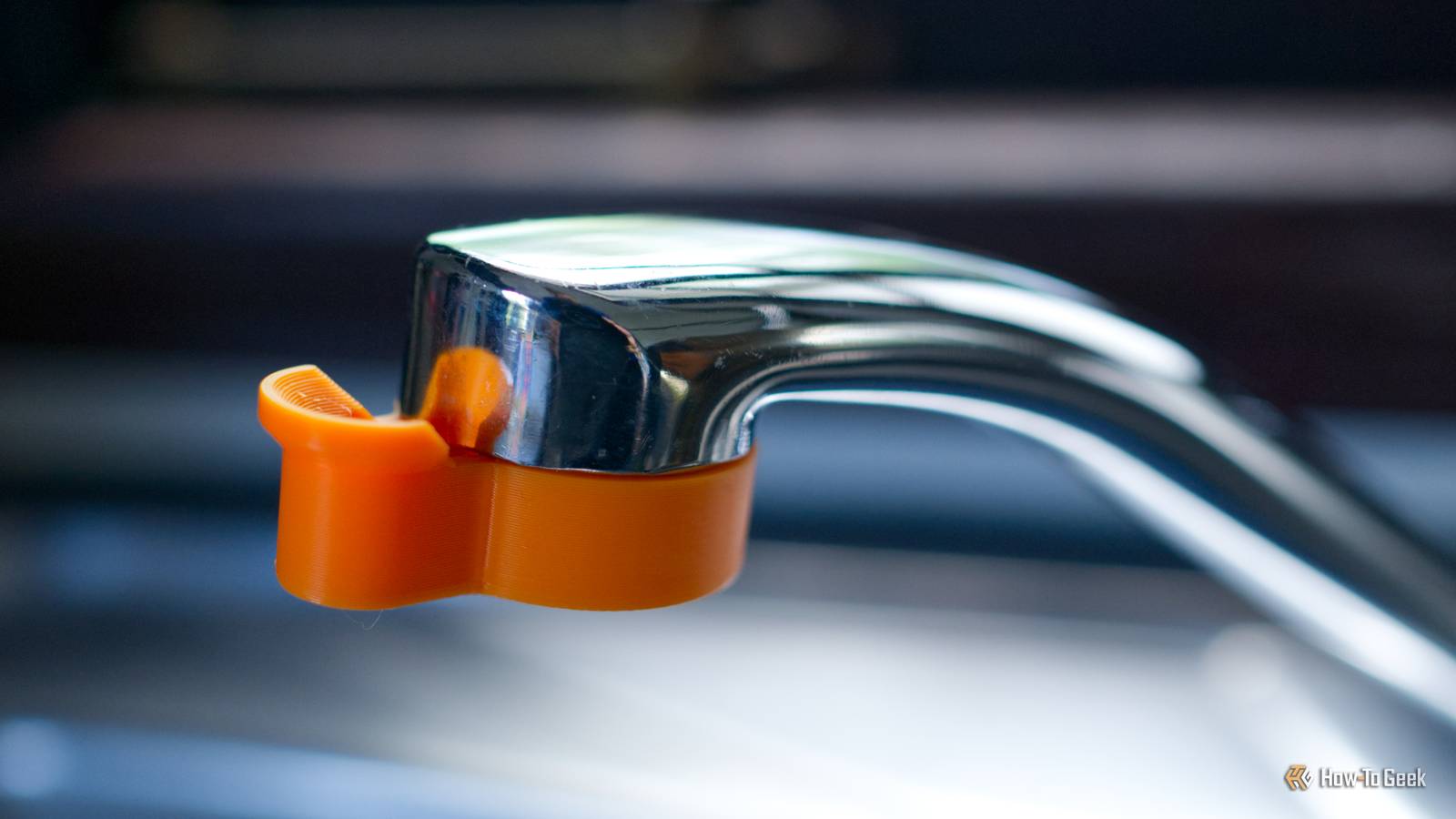
A faucet aerator descaler Limescale sucks Aerators sit on the end of the faucet and distribute your water into a nice bubbly jet.Unfortunately, limescale can cause these to become blocked (especially the cheap ones that come with most replacement sink hardware).Sometimes, you can’t get the aerator off the tap due to limescale buildup.
I found a tiny faucet descaler that sits tightly on the end of the faucet.Into this, you can pour a small amount of white vinegar and wait, which will help loosen the aerator so that you can remove it and clean or replace it.It works like magic! I printed mine from PLA because I was skeptical.
I’d recommend using PETG for this, since it has good resistance to acetic acid and liquids in general.A rubber band organizer Sort out that junk drawer once and for all We seem to collect the rubber bands that come off bunches of herbs and other purchases, which has led to a deteriorating situation in the kitchen junk drawer.Though I do my best to cull the number of bands that we keep “in stock” from time to time, having access to them is pretty useful.
That's why I printed one of the simplest things I’ve ever made on a 3D printer: a rubber band organizer.Would I buy this if I saw it in the shop? No.Am I glad I made it every time I use it? Absolutely! Kitchen cupboard pot lid storage Make better use of your kitchen storage This is one that I haven’t yet made but is absolutely on my list, because I’m constantly at war with the lids in my kitchen pot drawers.
Rather than attempting to stack lids inside pots (which means you can’t stack other pots inside pots) or wasting precious cupboard space, why not use all that vertical wasted space under your kitchen counters with a pot lid holder instead? You’re going to need to print holders that match the pot lids you have, plus you’ll want to be careful about how you fasten them.Don’t use screws that are too deep and poke through your cupboard doors! This is just one of many 3D prints that you can use to improve your kitchen.I’m also going to shout out 3D-printed GPU supports, which are now necessary since modern graphics cards are so hefty.
Read More