If you need something more resilient than PLA for 3D printing, then you’ll probably go straight for PETG.This is a solid choice that offers UV and moisture resistance while being relatively easy to work with and compatible with most printers.But there’s another option you might not have heard of, and it’s called PCTG.
Add How-To Geek on Google Add as Preferred Source Follow on Google Discover What is PCTG? Like PETG with a C Polycyclohexylenedimethylene terephthalate glycol-modified, or PCTG for short, is a “copolyester” that has a lot in common with PETG.Rather than ethylene glycol, PCTG uses cyclohexanedimethanol instead (hence swapping the E for a C).Sometimes described as a “next-generation” 3D printing filament, it’s suitable for use in many areas where you might turn to PETG over PLA.
It’s tougher, more resistant to the elements, with relatively few downsides.Durability is its main benefit, since PCTG is considerably better at absorbing impacts in situations where PETG may crack.The reason for this is simple: PCTG is more likely to bend than PETG, which is more brittle and thus more likely to break.
Some (like filament manufacturer SUNLU) claim that PCTG has superior Z-axis bonding, which would mean that your prints are likely to split along layer lines compared to those made with PETG.Another benefit of PCTG is that it is able to better withstand heat, giving you more heat resistance compared with PETG (around 30ºC more according to some tests), which already improves greatly on PLA.There are also different formulations, like PCTG-GF10 (which contains 10% glass fibers), that can push this even further.
The good news continues when it comes to chemical resistance, with PCTG able to better withstand oils, alcohol, bleach, and other contaminants compared with PETG.It’s also better able to withstand UV rays (though not to the extent of an engineering filament like ASA), and better at holding its color over time.You might expect PCTG to be considerably more difficult to print than PETG, but that isn’t necessarily the case.
It requires slightly higher nozzle temperatures of around 260ºC (higher when it comes to blends that contain glass or carbon).A bed temperature of around 80 to 90ºC is necessary, and the use of a release agent like a glue stick can help prevent the cooled part from destroying your build plate.PCTG isn’t without its downsides Two big things to consider Close PCTG’s strength comes down to its flexibility.
Rather than being brittle and snapping outright, the material is able to bend with the incoming force and bounce back into place when struck.While this is a good thing for durability in general, it means that objects printed with PCTG may be too flexible for your desired usage.If rigidity above all else is the most important thing, PCTG’s flexibility will likely be seen as a downside.
This might be the case if the object you’re printing doesn’t need to withstand impacts and should instead be as stiff as possible.In that case, regular PETG is a better choice.The other consideration is availability and price.
PETG is already somewhat niche compared with PLA.You can buy PLA in just about any color you can think of, in a range of finishes, including some oddball choices like silk and galaxy.PETG already narrows down the color and finish selection compared with PLA.
Since PCTG is even more niche, you’re probably going to struggle finding an exact color if you want something very specific.It’s worth considering the reason you’re choosing PCTG in the first place, and asking whether the color is really that important or whether you can live with a “close enough” print.Lastly, there’s the price.
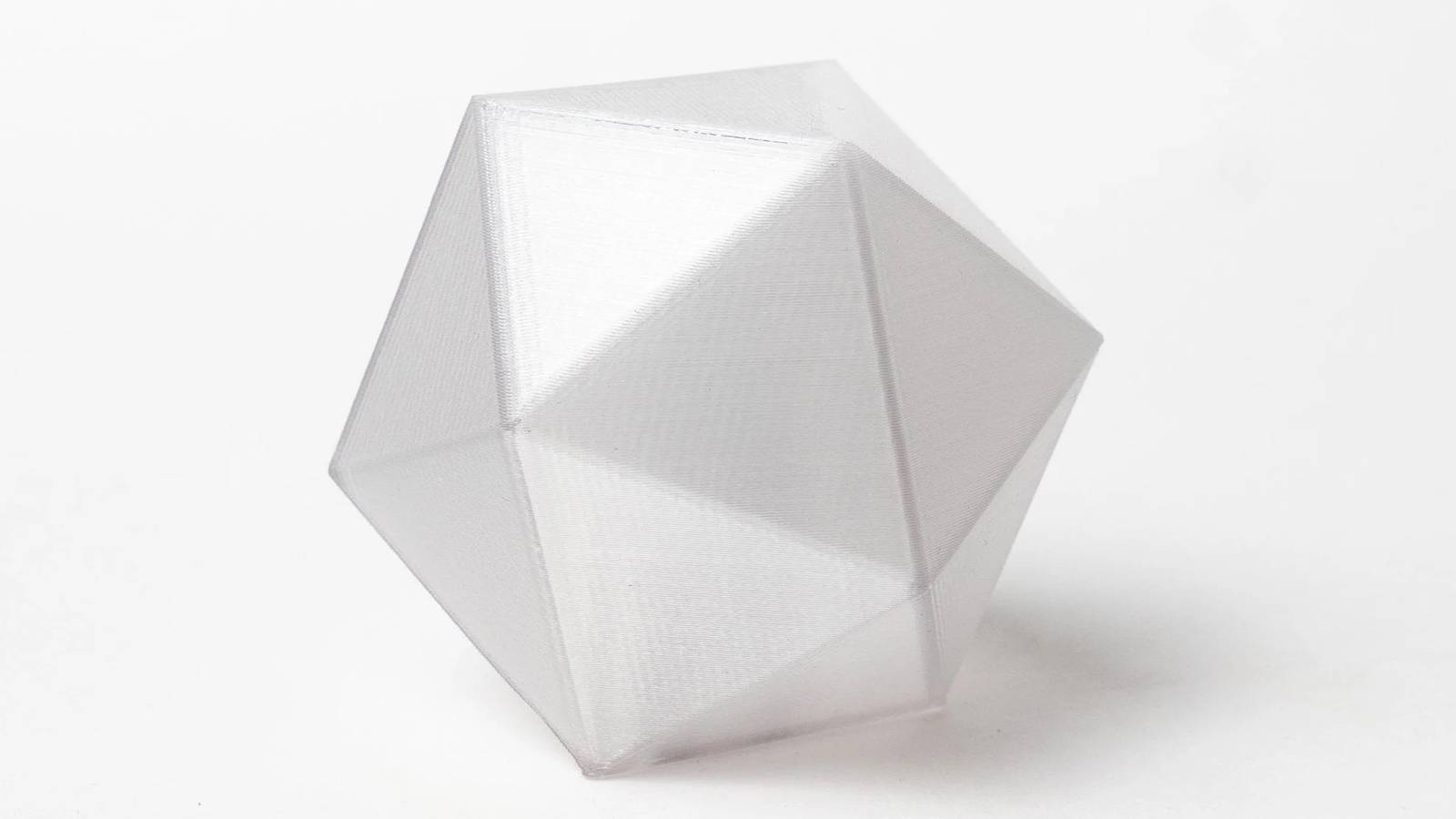
Expect to pay a little bit more for PCTG compared with PETG, though this can add up if you’re the sort of person who likes to bulk buy.Where to get it And how much to pay 3D-Fuel’s Pro PETG costs $24.95, while PCTG in the same color comes in at $28.95.Premium filament vendors like Protopasta has some fancy clear PCTG for $35 ($5 more than equivalent PETG), while Spectrum Filaments advertise a wide range but have only a handful of spools in stock.
Vendors like Bambu Lab and SUNLU had no PCTG for sale when I checked.Though most suppliers cut a deal for bulk shipment, none quite matched Bambu Lab’s generous 40% (or so) discount for large orders.If you’re preparing for a big project, or you just happen to print a lot of items, you might find that these costs really add up when compared to bulk-buy PETG.
One to consider for future prints PCTG is a good filament to keep in your back pocket, though I’m not letting go of PETG yet.I’d recommend you do the same, and get a spare roll of PETG for those occasional printing projects that push PLA beyond its limitations.
Read More