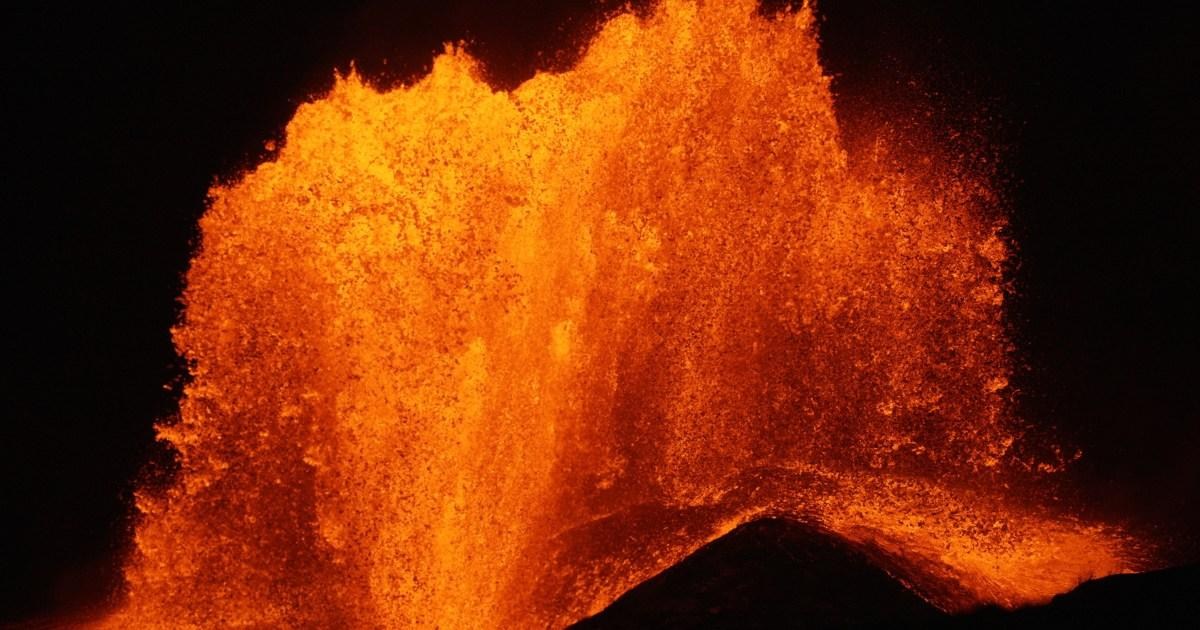
Scientists have found evidence of a vast supervolcano buried deep beneath eastern England.The volcano was so big that they believe it was responsible for one of the largest eruptions in Earth’s history which occurred 454million years ago, pre-dating the dinosaurs.Experts believe the new discovery may solve a geological mystery that has puzzled them for decades – the origin of an enormous layer of volcanic ash found across parts of northern and eastern Europe.
The volcanic system is centred beneath the Wash on England’s east coast.However, it is now deeply buried beneath the landscape and poses no threat of erupting again.Sign up for all of the latest stories Start your day informed with Metro's News Updates newsletter or get Breaking News alerts the moment it happens.
The findings were detailed in a recent study published in the Geological Society of America Bulletin.The research team, from the British Geological Survey and the University of Oslo, re-examined tiny zircon crystals recovered from boreholes in Lincolnshire and Norfolk more than 80 years ago.Zircon crystals form within molten magma before volcanic eruptions and can provide scientists with highly precise dates.
Researchers analysed traces of uranium and lead within the crystals, using the radioactive decay of uranium to determine their age.The results showed that crystals found at sites about 40 miles apart formed at almost exactly the same time, approximately 454.4 million years ago.Scientists believe this indicates that they were produced by the same enormous volcanic event.
The newly dated rocks closely match the age of the Kinnekulle tephra, a widespread layer of volcanic ash found in Norway, Sweden, the Baltic region, Belarus and Poland.Trending Now Andrew Mountbatten-Windsor 'accused of sex crimes in the US' US 22 hours ago By Barney Davis Death toll from Nepal floods tops 1,000 as rescue squads save 118 more survivors Dog walker 'distressed' after seeing man put carrot up his bum at nature reserve Is there going to be another heatwave in September? Here's the verdict Previous research by scientists at the University of Oslo had dated the Kinnekulle tephra to almost exactly the same period.The findings suggest that ash from an eruption in what is now eastern England travelled across an ancient body of water known as the Tornquist Sea before settling on the seabed of what is now Scandinavia.
Researchers estimate that it may have blasted several hundred to as much as 1,000 cubic kilometres of material into the atmosphere.Despite the scale of the eruption, there is little sign of the volcano at the surface today.Geophysical evidence suggests the ancient volcanic system is buried beneath the Wash, but may form part of a much larger network of volcanic calderas.
The wider system has beennamed Wash Igneous Complex.MORE: Wonky church which leans more than the Tower of Pisa saved from collapse MORE: The ‘scenic’ £7.70 sea train that’s just under one hour from London MORE: Mum denied £1,800 refund after ‘horrendous’ ordeal at UK holiday park Comments Add as preferred source News Updates Stay on top of the headlines with daily email updates.This site is protected by reCAPTCHA and the Google Privacy Policy and Terms of Service apply.
Your information will be used in line with our Privacy Policy HomeNewsTech Related topics DinosaursEnglandLincolnshireNorfolkNorwayPolandScandinaviaSwedenVolcanoes
Read More