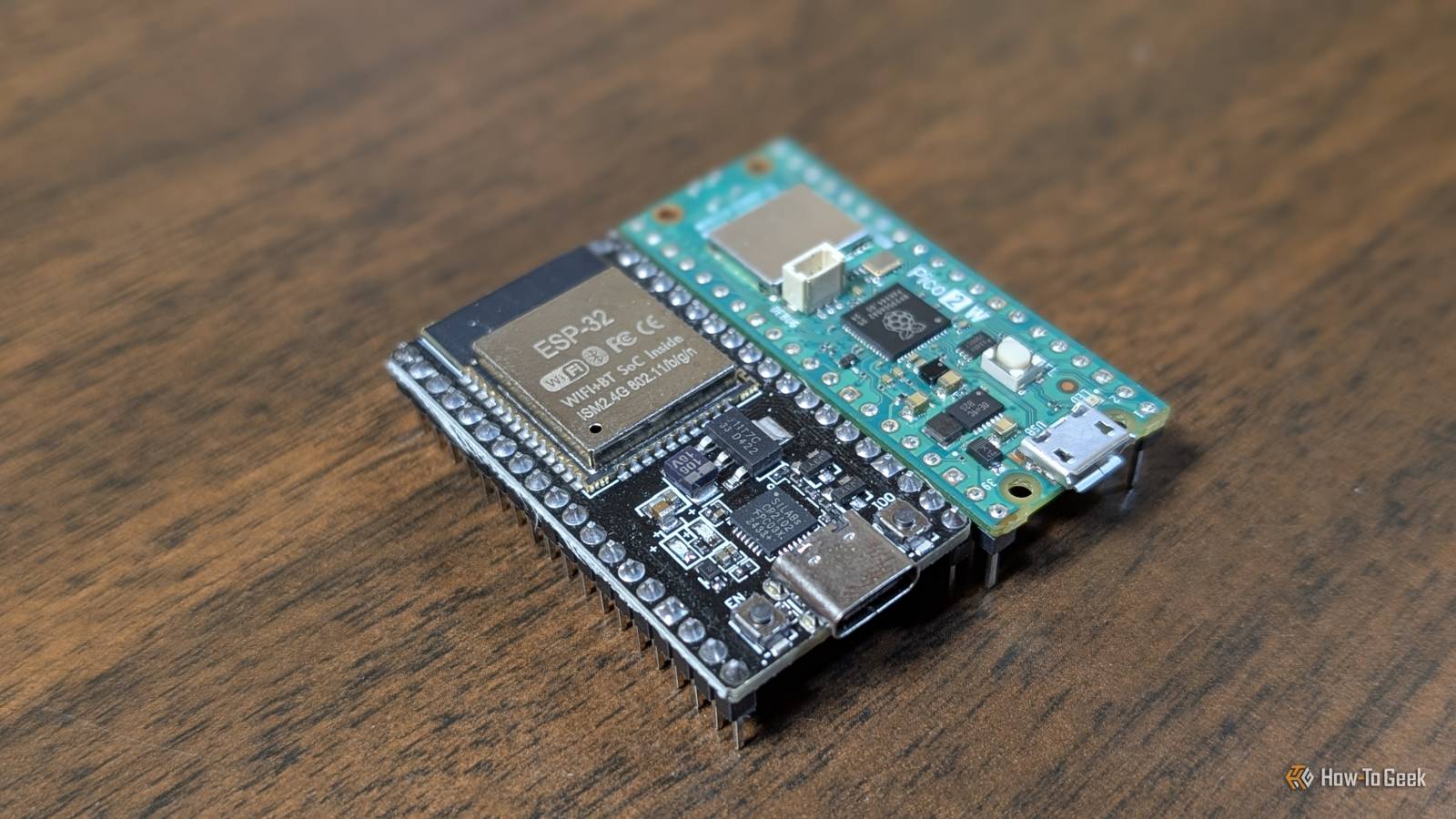
Who would have thought that cheap microcontrollers would become such a booming business? The ESP32 is the culmination of years of enthusiasts making awesome stuff with single-board computers and microcontrollers like those from the Arduino family, and now you can buy a fistful of powerful ESP32s for very little money.There are plenty of beginner-friendly ESP32 projects to get you into the game, but for me one of the most interesting uses for these little devices is in tandem with old and obsolete technology.Thanks to some nifty projects shared with the community as a whole, you can use an ESP32 to resurrect some of your old gadgets.
An old stereo or hi-fi receiver becomes a Bluetooth/Wi-Fi audio system You can't keep a good stereo down To be clear, you can buy Bluetooth receivers off the shelf that let you turn old audio gear into something that can receive Bluetooth audio.However, a $5 ESP32 and the bits and pieces you need for this project should still be cheaper than any of these worth buying.The image above is from a demo video by Grégory Paul based on his ESP32 Bluetooth Audio Receiver project.
Mr.Paul has been iterating on this project for a few years, and has used an Adafruit breakout to add an external antenna for additional range and reliability too.It's a neat project, because you get something you might actually use at the end of it all, and you'll have learned a few things along the way.
Much better than buying a $50 Bluetooth receiver, don't you think? An old wired game controller becomes a Bluetooth controller They don't make 'em like they used to I still have original PlayStation 1 and PlayStation 2 controllers that don't have drift or buttons that don't work, despite me thrashing them pretty hard.At the same time, I returned my first PlayStation 5 DualSense for a replacement within a month or two of getting it, and I've gone through several Xbox controllers on my PC over the years, all with stick drift.Sure, you can argue that new controllers perform better, have more features, and are more precise, but there's something to be said for the classics.
If you have an old wired USB controller, then it's pretty easy to use an ESP32-S3 as a USB host, which then in turn acts as a Bluetooth device from your PC's perspective.These boards have USB ports and wireless tech built in.The hard part is the software.
Luckily, Skorokithakis; GitHub bt-gamepad project has you covered.Colin Vauhgn's Intellivision Bluetooth Gamepad Controller project is also a very cool example.Here we don't have a USB controller, but an old-school retro controller.
Obviously, even with the software, you'll still need to do some wiring work to get these proprietary connections to work.A vintage clock or clock radio becomes an internet-synchronized smart clock Time stands still for no man There's certainly something magical about old timepieces.Whether it's a mechanical clock or early electronic, or electromechanical examples.
They sure look good on the wall, but unfortunately they also keep terrible time.While it's a very specific and niche project, while looking for cool ESP32 posts, I found an article on a blog called SMALLHACKS describing how the author used an ESP32 to connect an old "slave" mechanical clock from the 1960s to an internet time service.As they describe it, these clocks were used in large organizations to ensure they were in sync with a central clock.
The slave clocks receive specific electrical impulses to ensure they display the correct time.So I programmed an ESP32 connected to an internet time server to send the correct pulses to this old clock, and now it always shows the right time! A dumb wired doorbell becomes a smart doorbell Well, this rings a bell! I replaced my old dumb doorbell with a Ring model, and I have to pay a monthly subscription for the privilege, but if I didn't need the camera function, I might have simply followed one of these projects to turn a dumb wired doorbell into a trigger for Home Assistant.This one can be found on ESP32.co.uk, and you only need the bell you already have, a relay to trigger the existing chime, and the ESP32 itself.
The project also says you can use an ESP32-CAM if you want to take snapshots, but that does detract from the elegance of using your old bell as-is.After setting this up, you can have Home Assistant send you a notification when someone rings the bell.Ready to get started? Close These are undoubtedly cool projects, but before you can try any of this yourself, you'll need to know which ESP32 model to buy and what all the variants mean.
It's becoming clear that an ESP32 is the only microcontroller most people need, but that doesn't mean every ESP32 is right for every project!
Read More