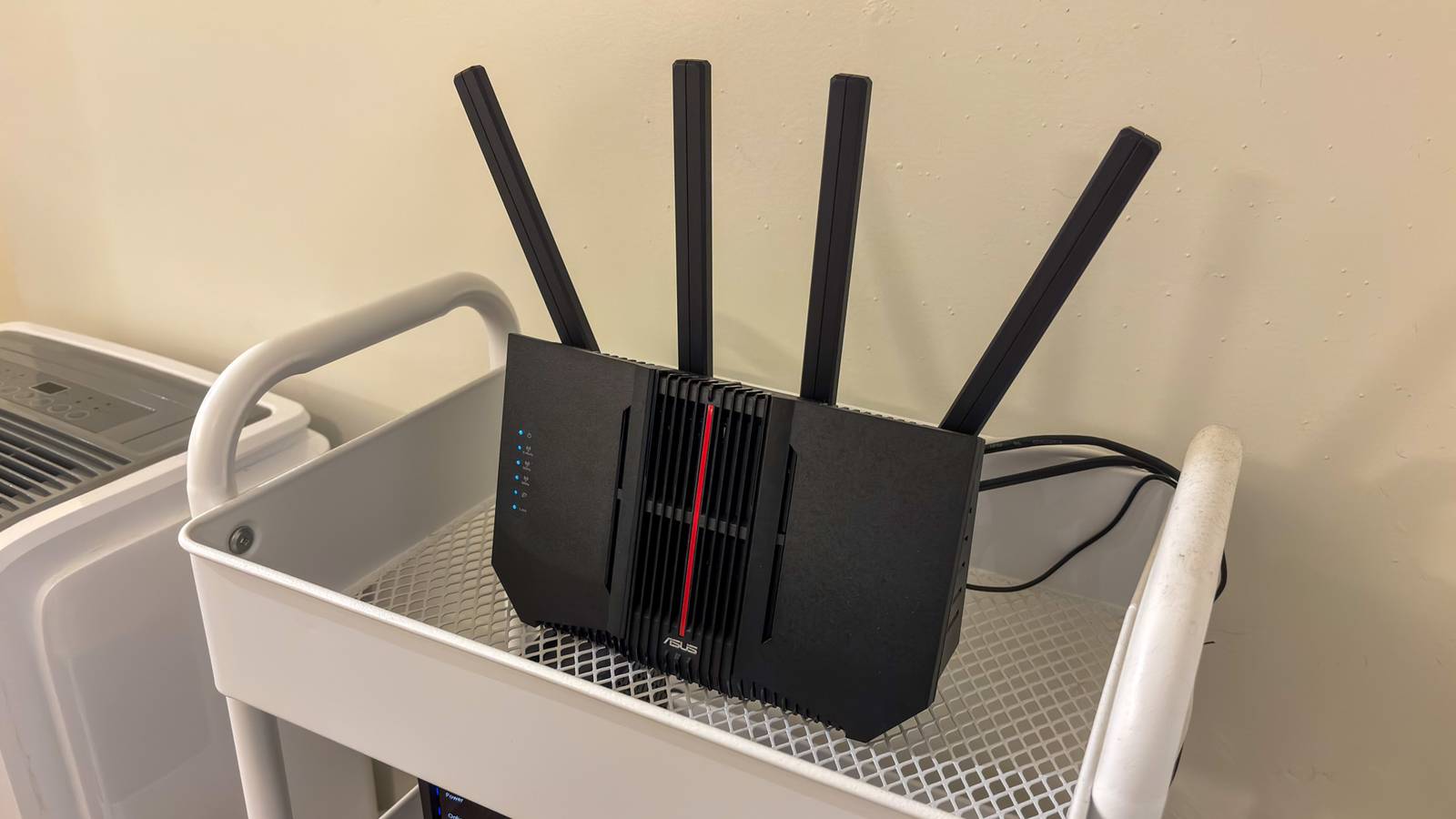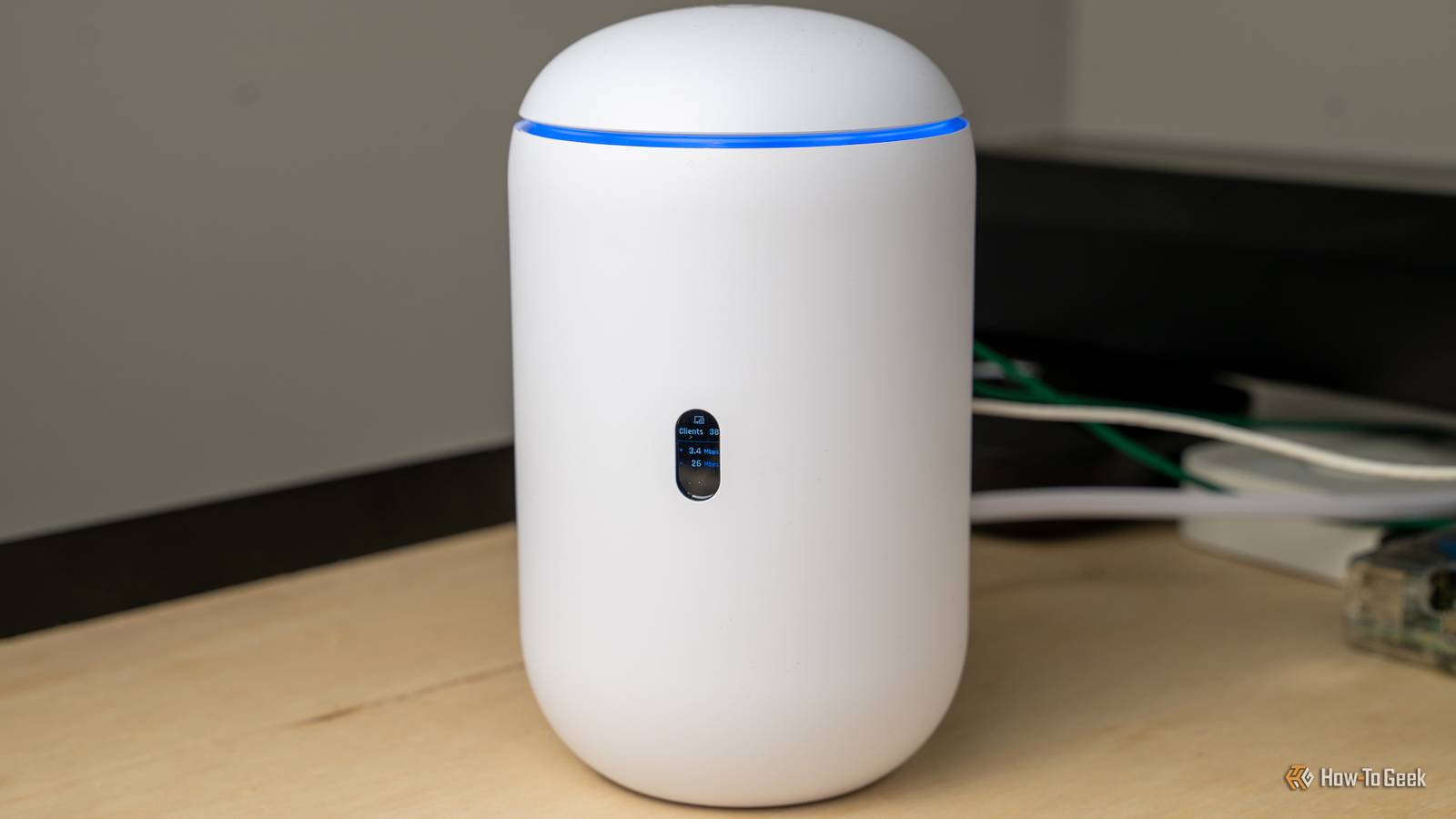
Router buttons are notoriously bad at making sense.It's not even that many people simply don't know what they're there for; it's that routers don't have one unified form factor the way laptops and desktop PCs do, so you may not even know what you're looking at.Most buttons are, obviously, quite harmless.
But there's one button that has a very specific job that could put your whole network at risk if you use it unknowingly.That little router button has a real job It was built to make Wi-Fi less annoying Alright, let's lift the veil of suspense: The button I'm talking about is WPS, which stands for Wi-Fi Protected Setup.Depending on your router, it might be labeled as WPS, shown as two arrows forming a circle, tucked away on the back, or combined with another button entirely.
That's part of the problem, unfortunately.Router makers don't always go out of their way to make this stuff super obvious.In simple terms, WPS is a shortcut for connecting devices to your Wi-Fi network.
Instead of going through the usual process of finding your network name, selecting it, and typing in the password, WPS lets the router and the device handle that connection more directly.You press the button, start WPS setup on the device you're trying to connect, and the two are supposed to find each other.That doesn't make the WPS button the general all-purpose "fix my Wi-Fi" button, though (although that'd be really nice).
It won't restart your router, boost your signal, make your internet faster, clear congestion, or anything else of that sort.It has one main job: helping a compatible device join your network.Quiz 8 Questions · Test Your KnowledgeWeird WiFi and networking quirksTrivia challengeFrom bizarre range tricks to hidden protocol secrets — how well do you really know your network?WiFiProtocolsHardwareHistoryFun FactsBegin 01 / 8Fun FactsIn 2012, a small village in Wales was mysteriously losing its broadband every morning at the same time.
What was the cause?AA faulty undersea cable that expanded in morning tidesBAn old TV emitting electrical interference when switched onCA neighbor's microwave running on a scheduled timerDMorning dew condensing on exposed copper telephone linesCorrect! An elderly villager's old television set was emitting a powerful electrical signal every morning when he turned it on, wiping out broadband for the entire village.Engineers used a spectrum analyzer to track down the source after years of complaints.It's a perfect example of how everyday electronics can wreak havoc on networking signals.Not quite! The culprit was an old television set that an elderly resident switched on every morning, sending out a burst of electrical interference that killed broadband for the whole village.
Engineers used specialist equipment to track it down after years of frustrating outages.Continue 02 / 8WiFiWhy does placing your WiFi router near a fish tank often degrade wireless signal quality?AThe metal frame of the tank acts as a Faraday cageBWater absorbs and attenuates 2.4GHz radio waves very effectivelyCFish produce bioelectric fields that interfere with radio signalsDThe tank's fluorescent lighting creates electromagnetic noiseCorrect! Water is a surprisingly effective absorber of 2.4GHz radio waves, which is the same frequency used by most WiFi routers.This is actually the same principle microwave ovens use to heat food — the frequency is tuned to excite water molecules.A large fish tank can create a significant dead zone behind it for WiFi signals.Not quite! The answer is water absorption.
Water molecules absorb 2.4GHz radio waves very efficiently — it's the same reason microwave ovens cook food at that frequency.A large fish tank can significantly dampen your WiFi signal, creating dead zones on the other side of it.Continue 03 / 8HistoryThe term 'WiFi' is often believed to stand for 'Wireless Fidelity', but what is the actual origin of the name?AIt was an acronym coined by the IEEE standards committee in 1997BIt was invented by a marketing firm as a catchy brand name with no true meaningCIt derives from the Japanese term 'Wi-Fai', meaning wireless connectionDIt was named after Wi-Fi pioneer Victor Fidelity HayesCorrect! 'WiFi' was coined by a branding consultancy called Interbrand in 1999, hired by the Wireless Ethernet Compatibility Alliance.It was designed purely as a marketable, memorable name — not an acronym.
The 'Wireless Fidelity' backronym was actually invented afterward to give the name a plausible meaning, and even the Wi-Fi Alliance has admitted the term has no real meaning.Not quite! WiFi was invented by a branding company called Interbrand as a catchy, memorable marketing term with no underlying meaning.The popular explanation that it stands for 'Wireless Fidelity' was actually created after the fact as a retronym, and even the Wi-Fi Alliance has acknowledged the name doesn't technically stand for anything.Continue 04 / 8ProtocolsWhat is the maximum theoretical speed of the original 802.11 WiFi standard released in 1997?A11 MbpsB54 MbpsC2 MbpsD10 MbpsCorrect! The original 802.11 standard from 1997 topped out at just 2 Mbps — barely enough to stream a low-quality video today.It feels almost laughably slow compared to modern WiFi 6E speeds that can exceed 9 Gbps in ideal conditions.
The jump in wireless speeds over just 25 years is one of the most dramatic improvements in consumer technology history.Not quite! The original 802.11 standard could only manage 2 Mbps — painfully slow by today's standards.The 11 Mbps speed came with 802.11b in 1999, which was a big deal at the time.Modern WiFi standards have improved speeds by over 4,000 times compared to that humble beginning.Continue 05 / 8HardwareWhich common household appliance is most notorious for interfering with 2.4GHz WiFi networks?AA refrigerator compressor motorBA microwave ovenCA plasma televisionDAn electric kettleCorrect! Microwave ovens operate at approximately 2.45GHz, sitting almost exactly on top of the 2.4GHz WiFi band.
When running, a microwave leaks enough radio frequency energy to noticeably disrupt nearby WiFi connections.This is one of the main reasons the 5GHz WiFi band became popular — it completely avoids this kitchen interference problem.Not quite! Microwave ovens are the biggest culprit.They operate at around 2.45GHz, almost identical to the 2.4GHz WiFi frequency band.
Even a well-shielded microwave leaks enough signal to cause noticeable interference.Switching to the 5GHz band on your router completely sidesteps this issue.Continue 06 / 8Fun FactsWhat unusual material was found to dramatically boost WiFi signal strength in experiments by researchers at Dartmouth College?AAluminum-coated wallpaperB3D-printed plastic reflectorsCGraphene-coated glass panelsDCopper mesh window screensCorrect! Researchers at Dartmouth College discovered that custom-shaped 3D-printed plastic reflectors, coated in a thin layer of metal, could dramatically focus and redirect WiFi signals throughout a space.The reflectors could boost signal strength in desired areas by up to 55% while simultaneously reducing signal in areas where security or privacy was needed.
It's a remarkably cheap solution using off-the-shelf printing technology.Not quite! Dartmouth College researchers found that 3D-printed plastic reflectors with a metallic coating could focus WiFi signals like a lens, improving signal strength by up to 55% in targeted areas.The approach also has a useful privacy angle — you can intentionally block signal from going outside your walls without expensive equipment.Continue 07 / 8ProtocolsWhat does the 'ping' command measure, and where does the name actually come from?APacket integrity — named after the sound of a sonar pulseBRound-trip signal time — named after the sound a submarine sonar makesCPort availability — it's an acronym for Packet InterNet GroperDNetwork bandwidth — named after the creator Mike Ping at MITCorrect! Ping measures the round-trip time for a data packet to travel to a host and back, measured in milliseconds.The name is inspired by sonar technology used in submarines — when sonar emits a pulse and 'hears' it bounce back, operators call that a ping.
The networking tool was written by Mike Muuss in 1983, and he explicitly confirmed the sonar analogy was intentional.Not quite! Ping measures round-trip latency — how long it takes for a packet to go to a destination and come back.The name comes from submarine sonar, where a sound pulse sent out and detected returning is called a 'ping.' Creator Mike Muuss confirmed this analogy in 1983 when he wrote the tool, though the 'Packet InterNet Groper' backronym was invented later.Continue 08 / 8WiFiWhat phenomenon causes WiFi speeds to mysteriously slow down when many neighbors are using their networks simultaneously, even if you're not sharing bandwidth with them?AIP address collisions caused by overlapping DHCP poolsBChannel congestion from competing radio signals on the same frequencyCDNS server overload from too many simultaneous lookup requestsDMAC address flooding causing router memory overflowCorrect! WiFi operates on shared radio frequency channels, and nearby routers broadcasting on the same channel compete for airtime even between separate networks.This is called co-channel interference, and it causes routers to 'take turns' transmitting more often, reducing effective throughput.
Using a WiFi analyzer app to find the least congested channel — or switching to the less crowded 5GHz or 6GHz bands — can significantly improve speeds in dense neighborhoods.Not quite! The culprit is channel congestion.WiFi channels are shared radio spectrum, and when many nearby networks use the same channel, they all have to take turns broadcasting — slowing everyone down even though no one is stealing your bandwidth.A WiFi analyzer can help you find a quieter channel, and moving to 5GHz or 6GHz usually helps escape the congestion.See My Score Challenge CompleteYour Score/ 8Thanks for playing!Try Again WPS is useful because Wi-Fi passwords are annoying Convenience is the whole point To be fair to WPS, it exists because connecting things to Wi-Fi is the worst.
(I'm only mildly exaggerating here.) This is especially true when you're dealing with devices that don't have a real keyboard, like printers, smart TVs, security cameras, and various gadgets.Typing in that jumbled mess of letters, numbers, and special characters, with the caps lock on and off, using a TV remote ...that's no fun.
At all.That's where WPS can genuinely come in handy.Instead of hunting for your Wi-Fi network and slowly, painstakingly typing in the password one character at a time, you can use WPS to make the connection process that much faster.
The important thing is that you have to use WPS deliberately.You press it because you're actively trying to connect a specific device (that you're well aware of).It's not something to fiddle with because you find it on your router and want to see what it does, simply because WPS is a shortcut into your network, and that's not always a good thing.
TP-Link BE3600 Wi-Fi 7 Travel Router $99 $140 Save $41 Range 1800 sq.ft This fairly unassuming, yet powerful travel router is currently discounted, so now's a good time to pick it up for $41 in savings.Wi-Fi Bands 5 GHz $99 at Amazon Expand Collapse The security issue comes from what WPS is allowed to do Easy pairing has a tradeoff The problem with WPS isn't that pressing it once automatically throws your network open to the whole world.It's more that WPS exists to make joining your Wi-Fi network easier, and anything that makes network access easier needs to be treated with some degree of caution.
The best-documented WPS security problem involves the PIN method, not necessarily the physical push-button method by itself.The WPS PIN system can be vulnerable to brute-force attacks because of the way the PIN is checked in pieces, making it much easier to guess than an eight-digit PIN should be.CISA warned that an attacker within radio range could brute-force the WPS PIN on a vulnerable router and potentially obtain the Wi-Fi password.
So, a short WPS button press usually opens a temporary pairing window, which is very different from permanently getting rid of your Wi-Fi password.Still, it's a feature designed to let devices join your network without manually entering that password, and that makes it worth locking down when it's not being actively used.The safest approach is to avoid using WPS unless you're deliberately connecting a device.
Avoid the PIN method entirely if your router still offers it, and disable WPS in your router settings if you don't need it.You probably don't need WPS most of the time Passwords and QR codes are safer habits The WPS button is easy to confuse with the reset button, but obviously, they both handle different jobs.Pressing the reset button can wipe your router back to its factory settings.
The worst part is that some routers put these functions on the same physical button, where a short press might trigger WPS or a long press might reset the router.Subscribe to the newsletter for practical router safety Want clear, practical guidance on router tips like WPS and home-network safety? Subscribe to the newsletter for straightforward explanations, security best practices, and actionable steps to protect your Wi-Fi and devices.Get Updates By subscribing, you agree to receive newsletter and marketing emails, and accept our Terms of Use and Privacy Policy.
You can unsubscribe anytime.The confusion and a weird mix of convenience and inconvenience are why WPS feels less necessary than it used to, and indeed, not all routers have it.For most devices, typing in the password or scanning a Wi-Fi QR code can be a better habit.
It's a nuisance, but in home networks, it happens rarely enough that most of us can deal with it (begrudgingly, in my case).WPS can still be handy for awkward devices with terrible input methods, though.Press it only if you know what will happen WPS isn't a villain, not exactly.
Accidentally pressing it once isn't going to make your entire network go up in flames.But it's also not a random mystery button to poke at without knowing what it does, as you could accidentally expose your network to something you don't want it to be exposed to.Amazon eero Max 7 Mesh Wi-Fi Router $450 $600 Save $150 The Amazon eero Max 7 mesh Wi-Fi router is currently on a rare sale, down $150 (25%).
If you're looking to upgrade your setup, now's the time.Buy on Amazon Expand Collapse
Read More