While Windows, Mac, and maybe Linux are the dominant OSes today, there are others that never made it.Here are some of my favorite OSes that never had a chance in the marketplace.NeXTSTEP Steve Jobs' other creation After leaving Apple in 1985, Steve Jobs founded another computer company, NeXT Computer.
While the company's line of computers came out to wide acclaim a few years later (even if sales were less impressive), it was the software that made the company's reputation.NeXTSTEP had a slick interface and allowed developers to build custom GUI apps quickly, as seen in an early '90s promotional video pitting it against its workstation maker rival, Sun Microsystems.(An open source X11 window manager based on the NeXTStep look, Window Maker, serves as a stand-in in the above screenshot.) During the "bake-off" the NeXTSTEP programmer was able to finish a complete customer service app and even get in a game of electronic pool on the computer despite a last-minute change request, while the Sun programmer never made it past the prototype stage.
The NeXTSTEP environment was impressive enough for John Carmack that he used it to develop .NeXT discontinued the hardware but changed the name of the system to OpenSTEP after porting it to x86.Despite its acclaim, NeXTSTEP was never a success in the marketplace, but when the company was acquired by Apple, a lot of the technology, including the Interface Builder, was adapted into what became the modern macOS.
Rhapsody An Apple OS that was too much even for Mac fans Rhapsody was an early version of what became Mac OS X.It was the result of Apple's decision to acquire NeXT.What's interesting about Rhapsody is that it ran on PCs as well as Macs.
This was before Apple announced that it was transitioning to Intel processors.The value proposition of Rhapsody was that not only was it a much-needed overhaul of the Mac operating system, but that developers would be able to target Macs and PCs with just one development platform.The system included the "Yellow Box," which was effectively the rebranded NeXT development environment, and a "Blue Box" compatibility layer for older Mac applications.
Unfortunately, what made Rhapsody innovative also made it a tough sell to the Mac community.The Mac clones introduced a few years before cannibalized the Mac market.Mac fans were likely wary of a product that was not exclusive to Apple.
Developers weren't interested in committing to a new OS after years of declining Mac sales.Faced with the cool reception in the tech press and among developers, Apple changed its strategy.It would be easier to port existing Mac apps to the new OS, and Mac OS X, when it arrived, would only run on Macs.
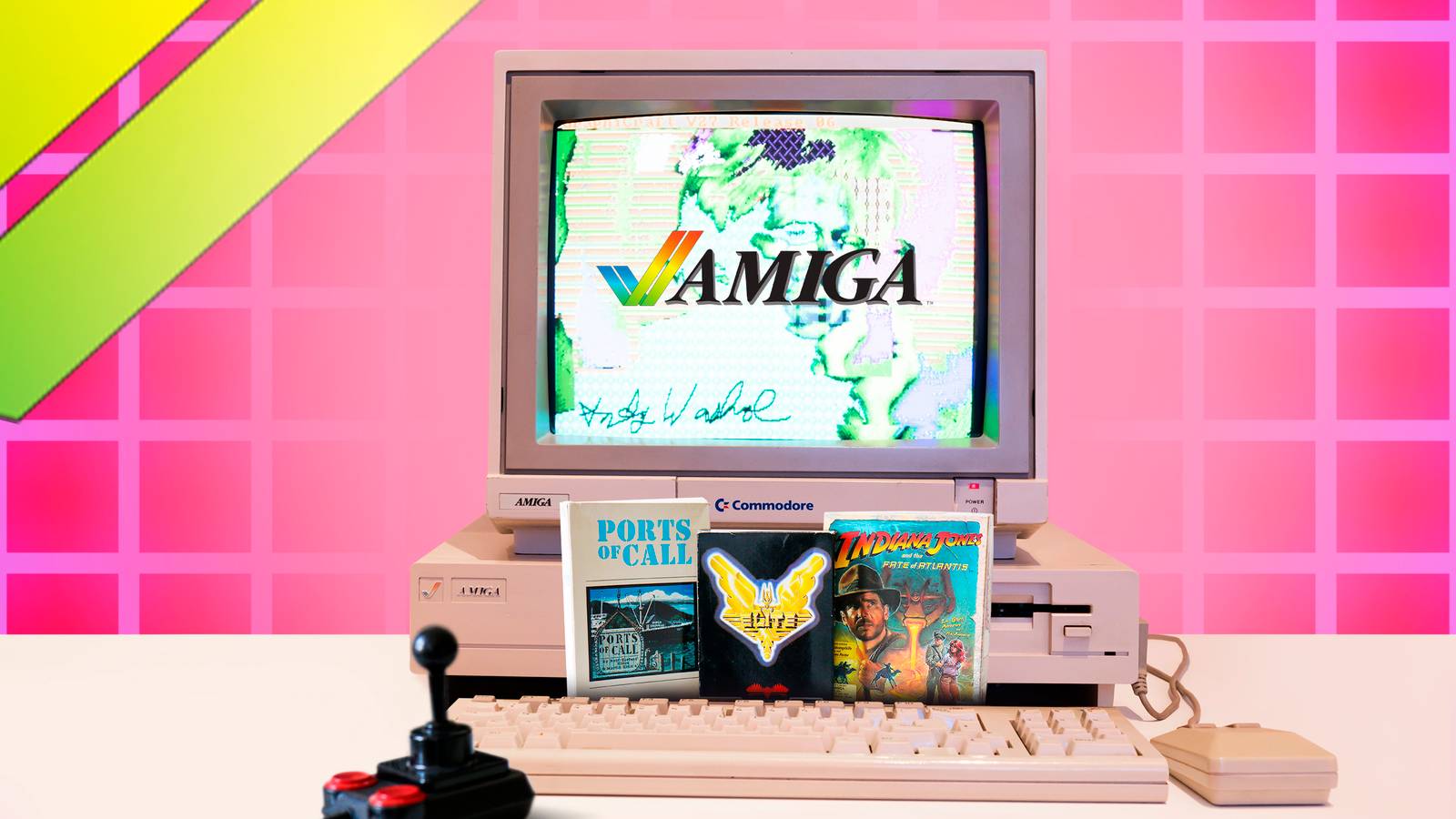
Still, Rhapsody is an interesting case of "what might have been." If it had been widely available on PCs, it could have seriously challenged Linux as the alternative OS on x86 hardware.AmigaOS The machine that went "boing!" in only 256K of RAM Close The Amiga was another platform that was (in the US) a commercial flop but attracted a cult following.The Amiga, in terms of capabilities, blew other machines out of the water with its Motorola 68000 CPU and custom graphics and sound chips.
The Amiga became popular in video and music production, and a popular game platform in Europe.The Video Toaster enabled anyone with a video camera and a couple of VCRs to edit their own videos.It was a predecessor to the do-it-yourself media environment we live in.
The software was ahead of its time as well.It was the first consumer OS to feature multitasking.The famous "boing ball" demo became emblematic of the platform, but the way that it was possible to do other things while it was running astonished people.
This was in an era of single-tasking computers like the Apple II or Commodore's own venerable 64.The Amiga OS did all this in 256K of RAM.Even after later models with more memory came on the market, AmigaOS still had a small memory footprint.
I never got to experience the Amiga firsthand, but the operating system's efficiency is one reason I like lightweight desktop environments on Linux.Despite Commodore's bankruptcy in 1994, AmigaOS lives on, though it will likely never be a market force again.Hyperion Entertainment markets it for PowerPC, and AROS is an open-source reimplementation on the PC, similar to the relationship between Linux and the original Unix.
Atari ST TOS/MiNT A favorite of musicians, and one of the first open-source OSes In the late '80s and early '90s, the Amiga's main rival was the Atari ST platform.Like the Amiga, the ST was a Motorola 68000-based machine intended as a successor to the company's earlier 8-bit platform.It came out in the wake of Atari's purchase by former Commodore head Jack Tramiel, following the crash of the video game market in 1983-84.
Where the Amiga had an affinity for video, the ST was popular among amateur and professional musicians for its integration of the then-new MIDI standard, with built-in ports.It was also one of the first machines to have an open-source Unix-like OS written for it, MINT.MINT was eventually released by Atari as the official OS for the Falcon 030 in 1992, the last of the ST line.
This was one of the first commercialized open-source projects.FreeMINT, intended to be a modern successor for ST hardware, exists but its last update was over 10 years ago.BeOS Support for multicore systems before it was cool If there's one OS that might have been too far ahead of its time, it's BeOS.
This operating system was created by Be Inc., founded by former Apple executive Jean-Louis Gassée.First appearing on the company's own BeBox computer, followed by PowerPC-based Macs and PCs, the system was one of the first desktop OSes to support multiple CPUs at a time when most PCs only had a single CPU.Unfortunately, it wasn't a business success.
Be's strategy seemed to hinge on being acquired by Apple as a replacement for the aging Macintosh operating system.When NeXT was picked up, Be was forced into the arms of Palm.The open-source Haiku, even as it's still in beta, is a spiritual successor and appears in the above screenshot.
These OSes are gone, but not forgotten These OSes might have been too different from what was going on around them to have much success, or to remain successful when things changed, but they've left an impression on the computing world.We see the echoes of them in modern systems, whether we realize it or not.
Read More