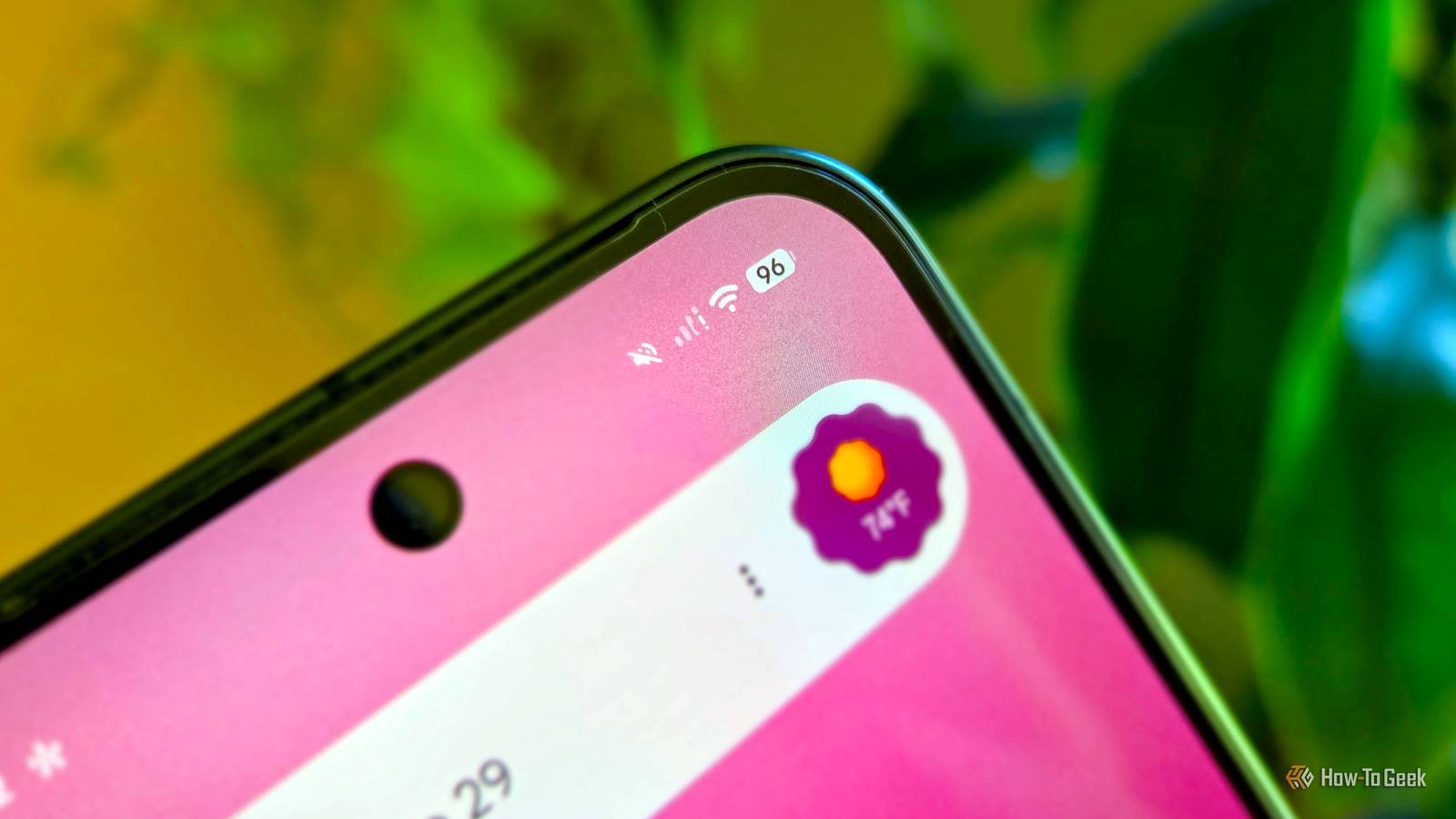
You're driving through the countryside, or you're in an office surrounded by concrete, and for some reason your Google Pixel seems hotter than usual.Not only that — your battery has drained! What gives? Take a look at the signal bars in the top-right corner of your screen.If your phone is struggling to hold on to one bar, that may just be your culprit.
Maintaining cellular service is a complicated process There's more going on than you might think We've been talking on phones outside our homes for decades, long enough that it's easy to take for granted.Sometimes we forget our smartphones are actually phones.We spend more time scrolling through feeds and sharing photos than making calls, but both of those tasks require access to the internet.
Surely they're more demanding on our phone than the act of connecting to the internet in the background.Right? Well, yes and no.Cable Internet enters the home via a wire.
It connects to a router, which converts the data to a wireless signal that our devices can connect to.Cellular Internet, such as 4G LTE and 5G, reaches our devices via distant towers that can be many miles away.Establishing a connection is a two-way street.
The tower emits a signal, but a smartphone has to seek it out.The farther you are from a tower, the harder your phone has to work to find a connection.If you're riding in a vehicle, then your Pixel is regularly switching from one tower to the next.
This isn't just a challenge in rural areas.As many city dwellers know, poor reception can strike right in the middle of densely populated areas.Your phone is competing with a million other devices to connect, and it may be trying to communicate through thick concrete walls or from an underground area.
When your phone works hard, it may not get sweaty, but it does get hot.Why your phone gets unexpectedly hot What exactly is generating all of that heat? When the cellular signal is weak, your phone has to send stronger radio signals to find a connection.This extra effort is what you're feeling, but it's not the only contributing factor.
Searching for a signal is a more intensive task than maintaining an existing one.Your Pixel has to cycle constantly, checking again and again to see whether a connection is available.These tasks may not necessarily drain your battery as quickly as streaming video, but they can be, surprisingly, more intensive.
Various components inside your phone are actually working harder.The cellular modem is a physical component, generating heat separate from the GPU or the battery.Virtually all phones are passively cooled.
A gimmicky few gaming phones have fans, and some flagship phones now have liquid cooling, but for the most part, nothing cools a phone when it gets hot.This means when a component generates heat, you feel it in the palm of your hand, and all you can do is wait.Should you be concerned? Are you or your phone in danger? Close Heat isn't good for electronics.
It's not good for your modem any more than it's good for your battery or your CPU, and prolonged heat is particularly bad.Your Pixel may heat up for an extended period if you are consistently without signal.That said, the risk of any danger to you is exceedingly low.
Most phones don't get dangerously hot from poor reception alone, but it is in your best interest to take steps to preserve your device's long-term health.If you know you're going somewhere with poor reception, and you don't actively need a connection, then put your phone in airplane mode.If you can avoid charging your device, which also heats up your phone, then save that task for later (though make sure you use the right charger when you do).
Don't insist on streaming that video that keeps buffering.Chances are you can watch it later.Ultimately, if you feel your phone getting toasty, put it down and let it rest.
Then double-check if there are other background processes also causing it to overheat.After that, if you really want to do your phone a solid and reduce the risk of overheating, then it's worth taking steps to improve your reception.What you can do to improve your cellular signal If you're consistently in a place with poor cellular reception, it may be worth changing carriers.
When I drive the 100 miles to my parents' house, Verizon can hold a phone call for the entire drive, whereas there are long stretches where I can't place a call with T-Mobile.If all carriers struggle to cover your area, then you can invest in a phone signal booster.These can pick up a cellular signal and amplify it, so the booster can do the work of finding the nearest tower instead of your phone.
Read More