Do you have more than one power tool brand in your garage or shop? It's fairly common to start with one brand, like Ryobi for affordability, then branch out to Milwaukee, Makita, or DeWALT.Now, you have a mix of tools, battery packs, and chargers, and none of them work together.That's why battery adapters are so popular.
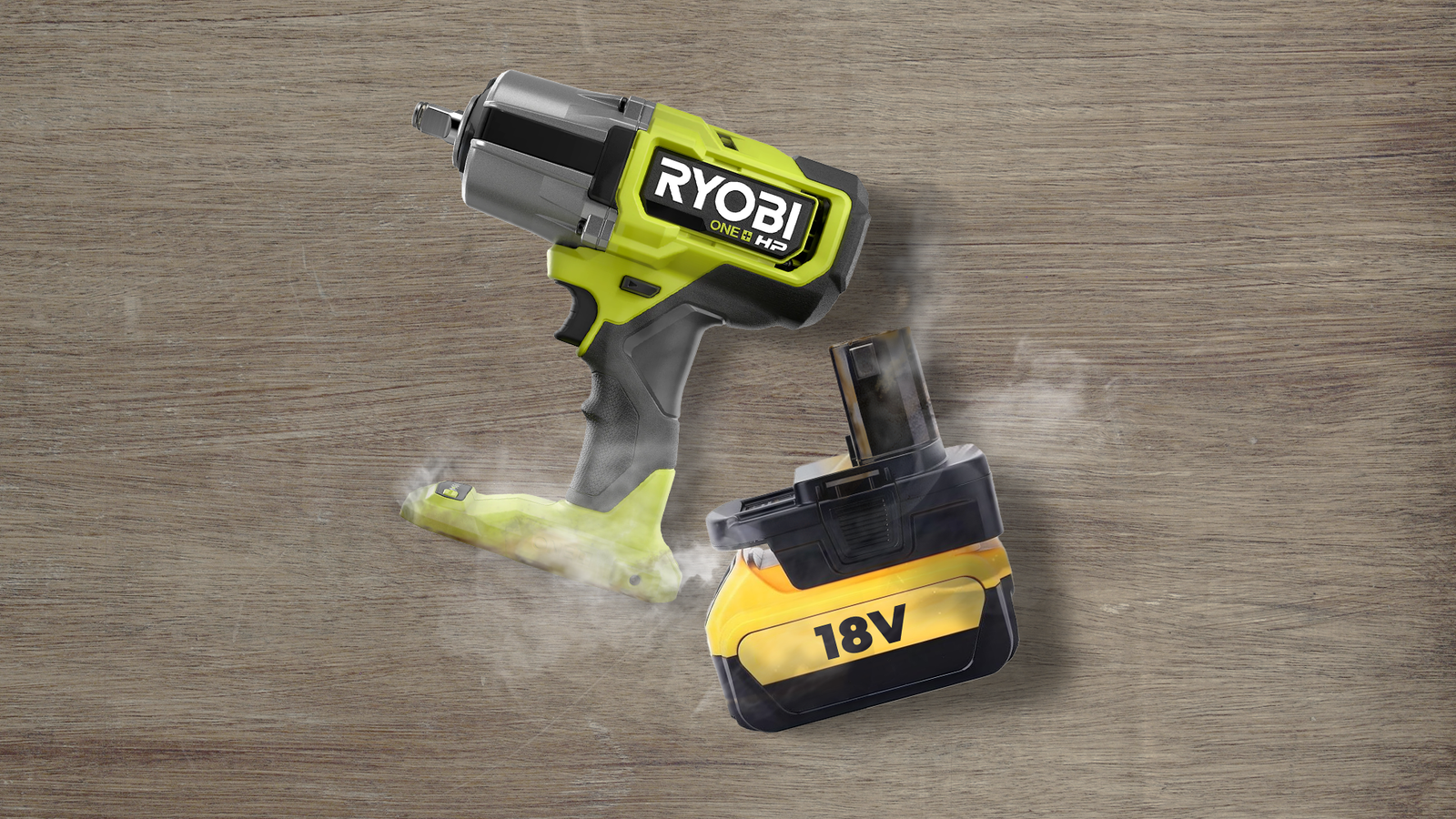
But will that battery adapter ruin your tool? As many of you know, manufacturers like Milwaukee, DeWALT, and Ryobi try to lock you into their ecosystem.For example, any of Ryobi's 18V ONE+ battery packs can power over 350+ different tools.It's a big reason people stick to one brand, not just for convenience, but because starting over is expensive.
Out of the box, you cannot mix and match power tools and the battery packs with other brands.Naturally, you've probably seen power tool battery adapters all over Amazon or in use by creators on YouTube and social media.Are they safe, or will they kill your battery or power tool? Here's what to know.
How to use any power tool battery with a different brand What to know about power tool battery adapters If you want to use a Ryobi battery pack with a Milwaukee or DeWALT tool, there's a way to do so.You can easily use one brand's tool with another brand's battery by getting a cheap adapter, but it's not recommended.One quick search on Amazon will find dozens of power tool battery adapter options that make everything interchangeable.
You can get an adapter that connects to a specific battery on the bottom and your preferred tool brand on the top.Better yet, some of these adapters are fairly universal, aside from Ryobi models that use a unique stem design in the battery pack.A new power tool battery can be extremely expensive, with many Milwaukee, Makita, and DeWALT models costing over $100.
But if you have a few batteries from another brand lying around, you can go get a cheap $10 adapter on Amazon.Aikeec DeWALT and Milwaukee Battery Adapter Power Milwaukee tools using a DeWALT battery pack with this affordable adapter. See on Amazon Expand Collapse Sounds great, right? What's the catch? Well, there are a few potential risks and factors to consider before you throw a cheap plastic adapter on your $300 power tool or $200 battery.Whether you use these power tool battery adapters is up to you.
Using something like this will naturally involve some inherent risks, but at first glance, there's nothing necessarily wrong with them.A power tool adapter shouldn't ruin your tool or battery, but it could.For starters, all power tool battery adapters come from random third-party sources, as it's not something you'll find from a big name like Milwaukee or RIDGID.
Most of them are cheap plastic and made in China, not to mention they don't have any safeguards in place like a tool or a battery does.All the reasons you shouldn't buy off-brand power tool batteries also apply here.I'm talking about battery types, designs, components, voltage, and output power.
And that's before even mentioning all the built-in safety features employed by power tool companies.Related Why You Shouldn't Buy Off-Brand Power Tool Batteries If it sounds too good to be true, it probably is.Posts Every power tool and battery pack from the same brand has internal chipsets to communicate.
This helps prevent under-voltage or low-voltage situations, manage temperatures, and provide overload protection.Using the right battery with the right tool also ensures the correct power delivery and voltage.These systems can protect your battery from being discharged too far, causing premature failure and battery degradation.
On the flip side, tool voltage and temperature controls can protect those fancy brushless motors and other internal components.When you use a power tool battery adapter, all of that goes out the window.And while I've used one in the past and had zero problems, if you use the wrong adapter, it could be a recipe for disaster.
If you're doing intensive tasks or using a power tool heavily, it could overheat, damage the motor, or, worse, melt the adapter and ruin both the tool and the battery.Subscribe to the newsletter for safe battery-adapter tips Want clearer guidance on adapters, batteries, and tool ecosystems? Subscribe to the newsletter for in-depth coverage of compatibility risks, safe adapter choices, official exceptions, and practical buying guidance to help you decide.Get Updates By subscribing, you agree to receive newsletter and marketing emails, and accept our Terms of Use and Privacy Policy.
You can unsubscribe anytime.Power tool battery adapters send raw power from the battery to the tool instead of communicating with it as intended by the manufacturer.This can lead to the failures or problems mentioned above, as well as unusual tool behavior or operation, unstable oscillations, power fluctuations, and more.
And finally, beyond everything mentioned above, these adapters are clunky and unbalanced, making tools frustrating to use.And don't forget that it'll surely void your warranty.Personally, it's not worth the risk.
A few exceptions to the rule In closing, it's worth noting that there are a few exceptions, but they're rare.For example, DeWALT offers an official FLEXVOLT-to-POWERSHIFT battery adapter, along with a DeWALT 20V MAX slide battery adapter for its older 18V tools.Another potentially safe option is some of Makita's 36V and 40V adapters, but those are niche situations most regular users won't encounter.
DeWALT Battery Adapter 18V to 20V DeWALT is one of the few power tool brands that makes an official 18V to 20V battery adapter for its tools. See on Amazon $39 at Home Depot Expand Collapse
Read More