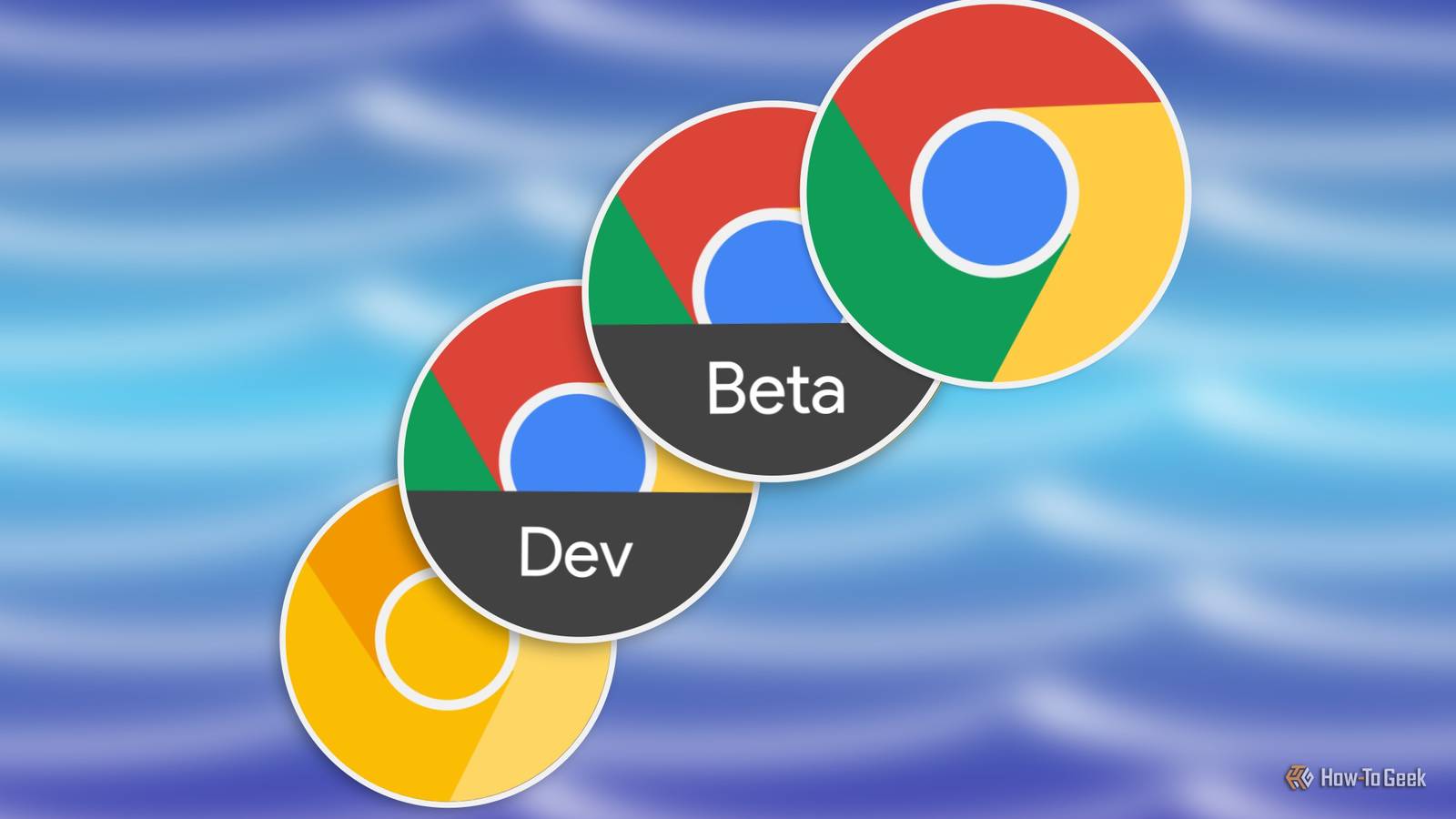
If you're an Android user, there's a good chance you're reading this in Chrome.It comes preinstalled, and most people don't have a reason to switch.But Chrome for Android actually comes in four flavors, and the other three have specific purposes.
You can even run them all together.Add How-To Geek on Google Add as Preferred Source Follow on Google Discover The Chrome release cycle Four channels, one browser To understand why there are four different versions of Chrome in the Play Store, we have to talk about Google's development process.New Chrome features move through a series of "channels," each one a little more polished and, admittedly, less exciting than the last.
Code starts at the least stable end (Canary) and gets more testing as it moves toward the final release.Each channel is a separate app with its own icon, so you can install all four on the same phone.They don't overwrite each other, and each keeps its own tabs, history, and settings.
You can still sign in with the same Google account to sync your bookmarks and passwords across them.Chrome Canary The bleeding edge Close Let's start with Chrome Canary, the bottom of the ladder.It's named after the canary in a coal mine, because it's the first to find out when something isn't working as it should.
Canary receives almost daily updates, and Google doesn't do much testing before they go out.Sometimes a build will have a bug that makes the whole app crash — it's labeled "Unstable" for a reason.Canary is where you'll find experimental features that may never see the light of day.
Some of them are super cool; others are half-finished ideas that barely work.It's a fun playground if you like trying out bleeding-edge tech and getting a taste of what could be next.However, you shouldn't use the Canary build as a primary browser.
Chrome Dev Where things start to get more real Close Next up is Chrome Dev, which is a solid step up in stability.With updates roughly once a week, it's not quite as bleeding edge, but new features often show up here several months before they reach the final stable build.The long lead time is proof that things are still far from finished in the Dev build.
As the name implies, this version is mainly intended for developers to test their websites against upcoming changes.Again, you'll often find features in the Dev build that never go any further.It's not as rough as the Canary build, and probably fine as a secondary browser, but I wouldn't trust it as my main one.
Chrome Beta A preview with training wheels Close Chrome Beta is where new features really start to get polished up and ready for the big time.It's updated every two weeks.Nothing is ever promised, but it's usually a pretty good look at what's coming to the final build in the near future.
By the time a feature lands here, most of the major bugs and quirks have been ironed out.The Beta build is the best option for people who are curious about new Chrome features.You can think of it a little bit like "Chrome+" — it's pretty reliable, and you get some bonus features.
You still might run into the occasional bug, but it's certainly usable as a primary browser.Chrome (Stable) The one you already have Close Last — or first, depending on how you look at it — is the good ol' stable Chrome build.It's the version that has passed through every other channel, and has been tested by tons of people in the process.
New stable builds are typically rolled out every four weeks.The stable version comes pre-installed on millions of Android devices.It should rarely ever crash, break a website, or do something strange.
If Chrome is the browser you rely on for banking, work, and everything else, this is where you want to be.There's no real downside, except that you'll wait a bit longer for new features.But as you'll see below, that doesn't have to be a downside.
Which one should you use? Here's how I'd break it down: Stable: Use this if you don't really care about trying new features.It's the one for most people.Beta: Use this if you want to see new features ahead of time without much risk.
Dev: Use this if you want to test upcoming changes and can tolerate a few hiccups.Canary: Use this if you want the bleeding edge and don't mind a minefield of bugs.As mentioned, these are all separate apps, so you don't actually have to choose just one.
The stable version can be your primary browser, and you can play around with the other versions as well.It's a good way to try out new features without risking anything happening to your data and preferences.Related Chrome for Android has windows, and they're better than tab groups for multitasking A secret multitasking super power.
Posts 1 By Joe Fedewa
Read More