Google finally unveiled its own answer to the AirTag, and on paper, you'd think the Pixel Tag will dominate, given Android's install base.That's far from a given, though.In practice, there are four major problems that will likely keep it from being the category leader it was hoping to be.
There's already tons of competitors Moto Tag already does this job cheaper Close When the Pixel Tag launches in November for $29, it will enter a market that was already crowded, and Google has already helped build most of it.Motorola's Moto Tag and its recently updated Moto Tag 2 are the most direct comparison: a four-pack runs $69.99, it already includes UWB and Bluetooth Channel Sounding, and it uses the same round, AirTag-matched shape that plugs into years of existing third-party accessories (it also doesn't help Google's case that the Pixel Tag has its own unique shape).Chipolo and Pebblebee have also been selling trackers built for Google's Find Hub network for a while now, often at a lower price than Google's own hardware, and without requiring buyers to bet on a brand-new first-party product with no track record.
That overlap is what will make the Pixel Tag's arrival strange.Google won't be filling a gap in its own ecosystem so much as stepping directly into competition with hardware partners it has spent the past year promoting.Ask people who already own a Moto Tag 2 why they'd switch, and the honest answer, echoed across early reactions to the announcement, is that there isn't a clear one.
Same network, same core finding features, and in several cases, a worse price and a less proven track record.Apple never had this problem with the AirTag, because Apple controlled its network from day one, and while third-party trackers using the Find My network are relatively common, AirTags are still first-class citizens.Google took the opposite approach, opening the Find Hub network to partners early, which built goodwill and got the network more tags faster, but also meant there was no clean lane left for Google's own product to stand out in.
Fragmented UWB support Precision finding depends on hardware most phones lack Precision finding, the feature that turns a rough "somewhere nearby" ping into an actual arrow pointing at your keys, depends on Ultra-Wideband paired with Bluetooth Channel Sounding, and neither is guaranteed on the phone in your pocket.UWB requires a dedicated radio, and Google still hasn't made it standard across its own phone lineup.The base Pixel 11, the phone announced alongside the Pixel Tag itself, doesn't include UWB, so the feature Pixel Tag is built around isn't even available to everyone buying a current-generation Pixel.
Zoom out to Android as a whole, spanning dozens of manufacturers with wildly different component budgets, and UWB support becomes the exception rather than the rule.That's a different situation than the one Apple built AirTag on top of.Apple standardized its U1 chip across iPhones starting with the iPhone 11 in 2019, so precision finding has worked consistently across the bulk of Apple's active install base for years.
Android has no equivalent mandate because Android isn't one company's hardware; it's a shared specification that individual manufacturers implement however they see fit, and UWB has consistently lost out to cost-cutting on all but flagship-tier devices.Google rarely forces hardware features on partners, and when it has, it has given pretty generous timelines to make sure everyone can do it without rushing.The practical result is that the Pixel Tag's headline feature only fully works if the phone doing the finding happens to have UWB, which, even within Google's own current lineup, isn't a given.
Everyone else falls back to plain Bluetooth, close enough to get you into the right room but not close enough to spot a tag buried under a couch cushion.Google can't patch this from the software side, since the bottleneck sits in hardware decisions made phone by phone, generation by generation, across a fragmented ecosystem it doesn't fully control.Network density and aggregation rules A network that never asked most people to join The entire premise of the Find Hub network is that nearby Android phones anonymously relay a lost tag's location back to its owner, and that only works if enough phones near the tag are actually participating.
This is where the Pixel Tag will run into one of its biggest issues: the network isn't opt-in by default, and most people are never prompted to turn it on.What's worse, the system appears to require multiple phones to confirm a location before it reports anything back.If you lose your keys in a friend's car, they could very well go fully undetected until they're found at a car wash.
That's a different situation from what Apple built.Apple enrolls every iPhone in its Find My network automatically, so any Apple device passing by, regardless of whether its owner has ever thought about the feature, contributes to the mesh.Google took a more cautious, deliberately opt-in approach, likely as a genuine attempt to limit misuse, but the tradeoff shows up immediately in coverage.
A network with over a billion Android devices, in theory, only helps if a meaningful share of those devices are actually switched on and reporting, and right now, most aren't.This isn't really a hardware problem or a fixed law of privacy math; it's a rollout and communication problem.Google could close much of this gap by defaulting more users into participation or making the opt-in prompt harder to miss, the same way Apple made participation automatic rather than optional.
We're hoping it eventually happens as Android trackers mature further.But until that happens, the Pixel Tag's practical reliability depends heavily on where you live and how many opted-in Android users happen to be nearby, which is a much shakier foundation than "over a billion devices" suggests on its own.Restricted ecosystem A new shape that locks out half a decade of accessories The most immediate complaint from people considering the Pixel Tag has nothing to do with software; it's the shape.
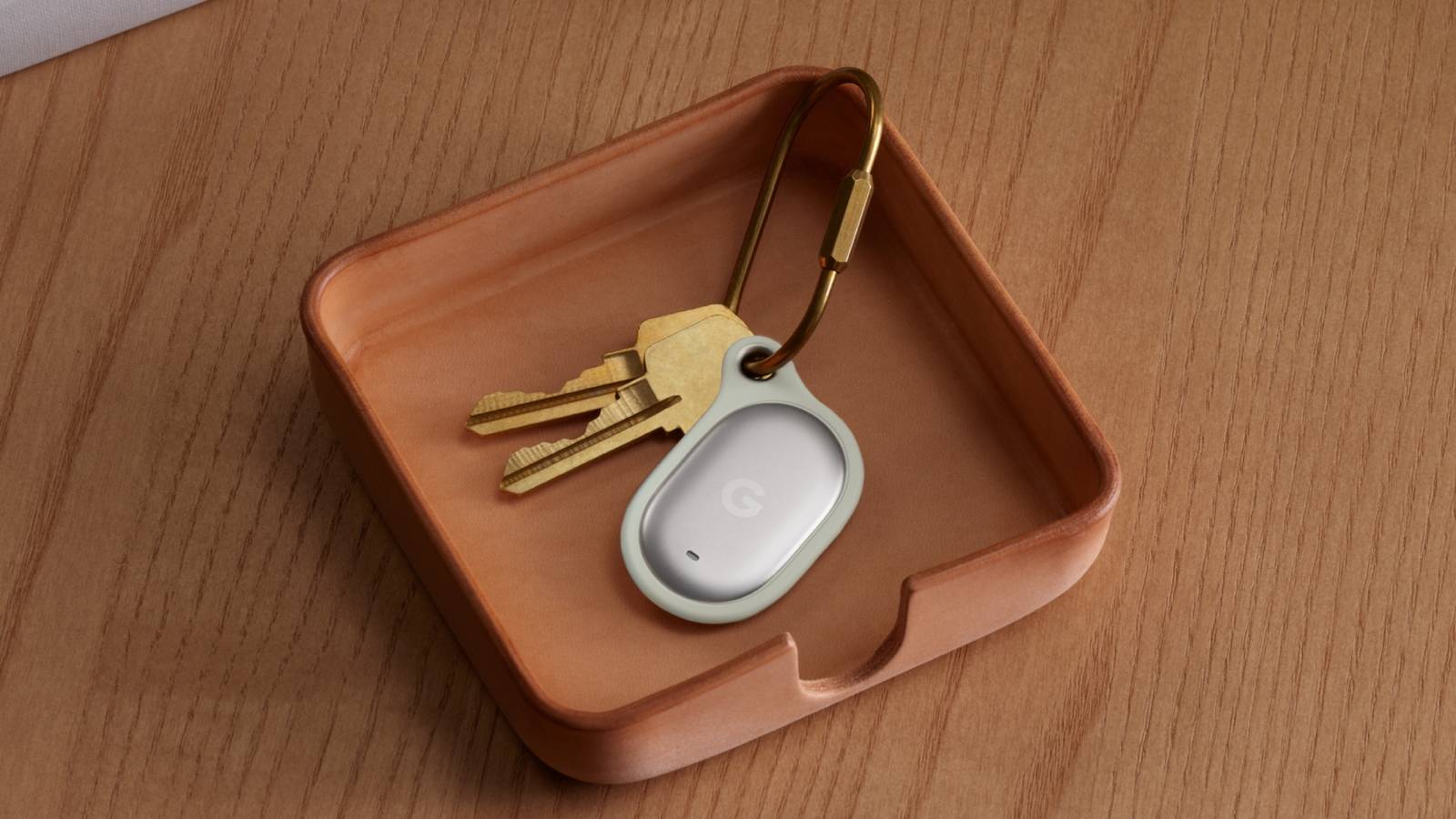
Instead of matching the round, coin-style form factor that Apple's AirTag popularized and that Motorola deliberately copied for Moto Tag, Google gave the Pixel Tag a thin, elongated, card-like body.That decision cuts the Pixel Tag off from years of third-party cases, keychain loops, bike mounts, and luggage tags built around the AirTag's dimensions, an ecosystem that Moto Tag can tap into simply by sharing the same shape and size.It gets more restrictive from there.
The Pixel Tag ships with no built-in keyring hole and no case or clip included in the box, meaning anyone who wants to actually attach it to keys, a backpack, or a collar needs to buy a separate accessory before the tag is usable the way most people expect a tracker to be.Google has said a loop accessory will be available at launch, but that's still an extra purchase and an extra step compared to competitors that either include an attachment point or work with accessories already sitting on store shelves.Taken together, this is a narrower kind of restriction than the platform-level fragmentation people usually associate with Android, but it's arguably more immediate.
A shopper comparing the Pixel Tag to the Moto Tag 2 isn't just weighing network coverage or UWB support; they're weighing whether they'll be able to actually put the thing on their keys without ordering something else first.Google built the Pixel Tag as a first-party flagship product, but by breaking from the form factor its own competitors settled on, it locked itself out of the accessory ecosystem that makes trackers genuinely convenient to live with day to day.This is not a particularly weird thing, as Google really likes going proprietary with its hardware—the Pixel Watch famously uses a proprietary latch/unlatch mechanism for bands, for one.
In the case of the Pixel Tag, though, it could really hurt it.A first-party tag is still finding its footing The Pixel Tag isn't a bad idea—I personally think a Google-made tracker is long overdue.But it's a product boxed in by decisions Google made on shape, opt-in defaults, and hardware rollout.
Until those catch up, the Moto Tag 2 probably remains the safer buy for most Android owners.
Read More