The modern hypercar has become a numbers game.More horsepower, quicker acceleration, faster lap times, higher top speeds, and of course bigger price tags.These are the measurements many manufacturers use to grab the attention of the public and potential customers.
Making 1,000 horsepower doesn’t raise any eyebrows nowadays.You can go to your local Chevy dealer and pick up a Corvette that makes more than that.So, hypercar manufacturers are pressing for more, more, more.
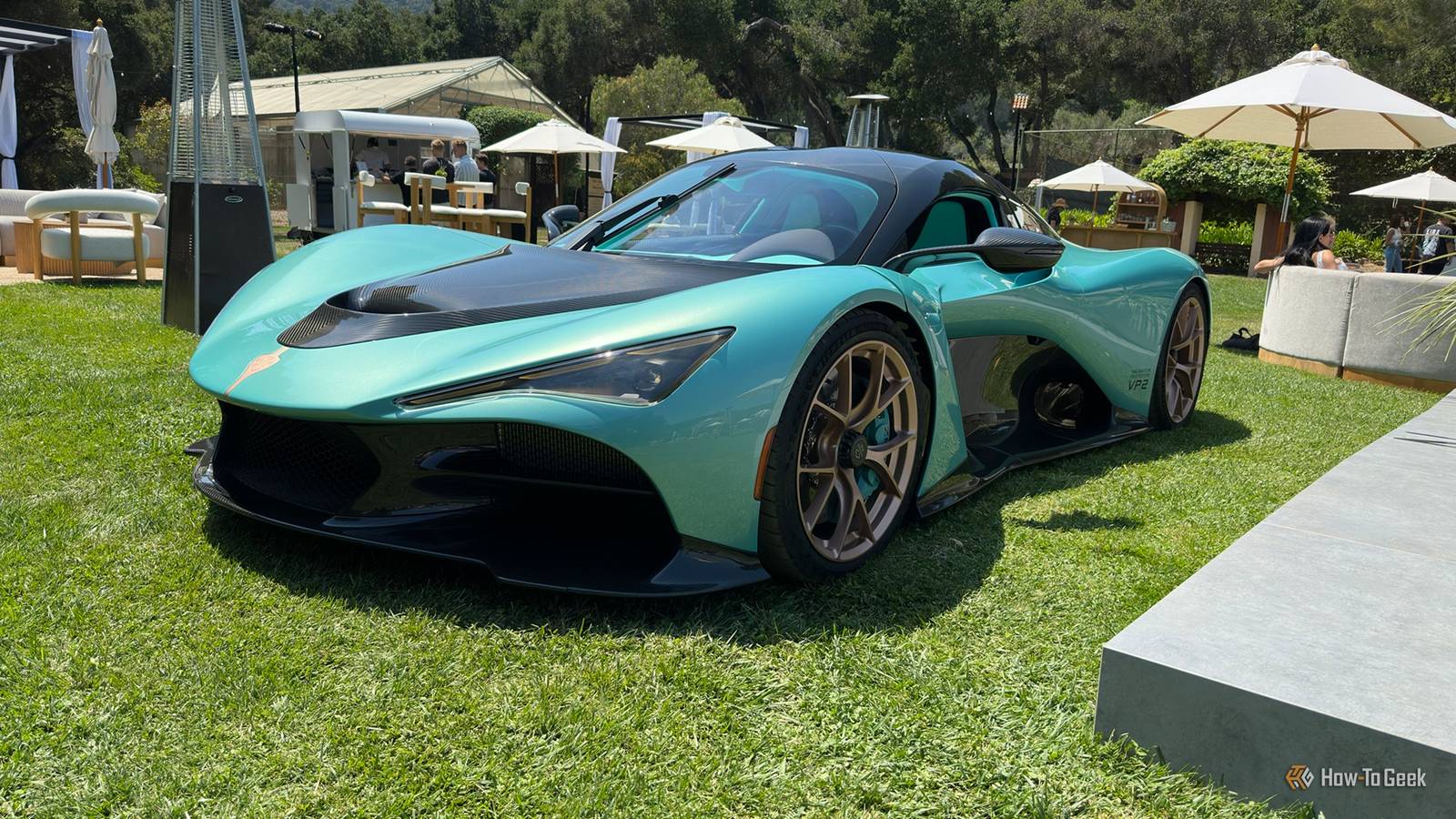
Zenvo Automotive isn't ignoring those numbers.The upcoming Aurora Tur produces a staggering 1,850 horsepower and will cost you at least $3 million.But the Danish company doesn't believe those numbers should define the car.
In fact, they don’t believe any number should define the car.It should be all about the experience.During Monterey Car Week, I visited the Zenvo House, located on a bucolic estate in Carmel Valley.
During my visit, I got up close with the new Aurora Tur and Agil models.More importantly, I heard Zenvo Executive Chairperson Jens Sverdrup and CEO/CTO Jon Gunner speak about the company's philosophy and future.The conversation wasn't dominated by acceleration times or theoretical top speeds.
Instead, we talked about something that seems almost mundane in the hypercar world: actually using the car.Related This 1,115-horsepower hypercar uses an engineering trick that saved WWI pilots More than a century later, Hispano Suiza is addressing a similar problem in the modern hypercar.Posts By Carl Anthony Zenvo wants a hypercar that's fun at any speed The automaker isn't interested in winning a spec-sheet war Close For Sverdrup, the Aurora project is effectively the answer to all of the “I wish” statements that manufacturers make about exotic and hypercars.
“I wish we weren't limited,” Sverdrup told the small group of automotive journalists.He explained that the Aurora project aimed to remove as many compromises as possible.That doesn't simply mean giving the car more power.
Zenvo wants its next generation of hypercars to be exciting, usable, reliable, serviceable, and enjoyable whether you're attacking a canyon road or simply driving through town.In other words, Zenvo wants its hypercars to function as cars.It sounds almost ridiculous to say that horsepower isn't the point when discussing a machine with 1,850 horsepower, but that's exactly what makes Zenvo's approach interesting.
The company never set out to build the world's fastest production car, according to Sverdrup.Instead, Zenvo focused on creating a broad spectrum of capability.“If it is not fun to drive slow, it doesn't matter,” Sverdrup said.
“If it is not fun on the canyon road, it doesn't matter how fast it is.” Earlier this year, I wrote a piece about how future sports cars won't be defined by 0-60 mph times.Instead, it will be more about cars with personality than outright speed.And that is the exact approach that Zenvo is taking.
It's rare to hear a company talk about making a car fun to drive slowly (they often want to brag about g-forces instead).But Zenvo gets it.You need a car that is fun at 50 mph because you'll spend much more time at that speed than at 200 mph.
All the theater, without all the suffering You should be able to take a road trip in your hypercar Close Sverdrup compared the hypercar to a graphic equalizer.Instead of pushing one slider, speed, to its maximum while accepting compromises everywhere else, Zenvo wants to push the entire spectrum upward.That includes performance, but also comfort, usability, reliability, serviceability, and ownership experience.
Plenty of exotic cars are spectacular when everything is working perfectly.The problem is that living with one can sometimes feel like maintaining a piece of temperamental industrial equipment.Sverdrup acknowledged that reality.
“A lot of hypercars are finicky and unreliable,” he said.“It has to function as a car.If you can't drive it for a three-day road trip, what's the point?” That might be the most important statement behind the entire Aurora project.
However, Zenvo isn't trying to turn the Tur into a luxury sedan.It remains an extremely serious performance machine.But the company wants owners to use it for more than the occasional Sunday morning drive or trip to a concours.
That philosophy influenced details as basic as making the car easy to get into and out of.It might not generate the same headlines as 1,850 horsepower, but anyone who has climbed over an enormous carbon-fiber sill while attempting not to embarrass themselves in front of a crowd can appreciate why it matters.I am not as young as I used to be, and I had no problem getting in and out of the pre-production cars that were on display.
Zenvo wants the Aurora to deliver the theater expected from a hypercar without requiring its owner to suffer for the privilege.Related Hennessey reimagined the world's fastest spy plane as a $2.5M hypercar Naturally aspirated, manual-transmission hypercar named after the Lockheed SR-71, with elements of the Bell X-1 woven in.Posts By Carl Anthony Designed with the next 30 years in mind Built to be maintained, not just admired Close Serviceability isn't easy, especially in this part of the market.
Yet the Aurora program baked it in from the beginning, with Sverdrup saying the cost of ownership was an important consideration from day one.The car was deliberately engineered to make maintenance and repairs easier rather than treating service access as something for technicians to figure out later.One example is the clutch.
According to Sverdrup, a clutch can be changed in approximately four hours.That's an impressive claim for a car this complex, but it also illustrates the larger philosophy.Hypercar owners may be wealthy, but that doesn't mean they enjoy watching their cars disappear into a service department for weeks while technicians dismantle half the vehicle to replace a wear item.
A hypercar that's easier to service should spend more time being driven.That's ultimately what Zenvo wants.The Aurora isn't a one-off engineering exercise either.
The Tur and Agil are just the beginning.“Everything is brand new,” Gunner explained.“Not a single component has been carried over from Zenvo's previous cars.” That investment makes more sense when you understand Zenvo's longer-term ambitions.
Gunner said the company already knows where it wants to go over the next decade and what vehicles it intends to build from this new platform.That roadmap lets the engineering team make decisions today that can support cars that won't arrive for another few years.In fact, Sverdrup hopes the Aurora will still be viewed as an icon three decades from now.
Horsepower alone won't define the Aurora Creating something that people still care about decades later is considerably harder than building a car that is appealing in 2026.Zenvo believes build quality will be at the top of its game by the time customer cars enter production, and its emphasis on serviceability and long-term ownership could prove just as important to the Aurora's legacy as its extraordinary powertrain.If the Aurora can be exciting at low speeds, thrilling on a canyon road, comfortable enough for a multi-day trip, relatively straightforward to service, and still feel special 30 years from now, its 1,850 horsepower may ultimately be one of the least interesting things about it.
Read More