After years of overpromising, the next phase of AM growth will be won by companies that consistently deliver what they say.When I entered additive manufacturing in 2014, after 15 years in the plastics industry, I heard repeatedly that AM was on a path to replacing injection moulding.I did not believe it then, and 12 years later, I still don’t believe it now.
What I did see, though, was a credible business opportunity and real potential for this niche industry to grow quickly.Key patents were expiring, creating room for more competition and lower costs, helping drive the technology forward.I saw a production method that could grow and earn its place alongside injection moulding, machining and extrusion.
That opportunity is even stronger today.But if we are to capture it, we must continue rebuilding and protecting customer trust.Why this time is different After a flat 2024, the industrial 3D printing market returned to growth in 2025, and the conditions for further expansion are improving.
10-15% compound annual growth is now forecast through 2030 as new demand from aerospace and defence accelerates capacity building and adoption.AM production expertise and experience are maturing in sectors including automotive and healthcare.The industry has gone through significant consolidation, equipment and workflows are more reliable – and above all else, cost per part is falling, which is unlocking new applications.
To some extent, this is what ‘The Experience Curve’ concept predicts.As cumulative output rises, manufacturers learn, standardise and automate, creating opportunities to lower unit costs.In AM, additional capacity and production experience should continue to reduce cost per part – provided we convert that activity into better, repeatable processes.
Some may ask what happens if today’s aerospace and defence demand eventually slows.My view is the capacity and production experience being built now should leave the AM industry more efficient, with lower costs and more mature processes.That, in turn, can unlock the next generation of applications.
Whether they come from robotics or sectors we’re not even thinking about yet, time will tell.Whatever happens, growth must never be taken for granted.Additive manufacturing has created its own credibility problems before, and we must learn from those mistakes.
Can we learn from the past? Since moving from the chemicals and polymers sector, I have seen two cycles of heavy investment in industrial 3D printing: 2014–15, and again during the 2019–21 investment boom.In the frenzy to raise funds and win customers, many AM companies made exaggerated claims – about productivity, economics and the speed at which AM could replace established processes such as injection moulding.Inflated expectations led to inflated valuations.
Then, sure enough, when production performance failed to match prospectus promises, companies disappeared and investors got burned.In its early years in AM, HP was not immune to that optimism.We also spoke too readily about replacing injection moulding and overestimated the speed at which AM would grow.
We stayed in the market and continued supporting our customers, but that does not change the lesson – ambition must be backed by evidence.When costly equipment fails to deliver what its marketing promised, or a supplier goes out of business, it’s easy for customers and investors to see it as an industry-wide issue rather than relating to a single company – and conclude that additive manufacturing itself is unreliable.Even now, some customers remain wary of investing in high-end AM equipment.
Some have had bad experiences from buying equipment that failed to live up to expectations.Others simply don’t know if the supplier will still be around in five years’ time, to provide the specialised service and maintenance these systems require.These concerns are understandable in such a fragmented market.
AMPOWER’s latest technology landscapes identify more than 600 supplier listings across metal and polymer additive manufacturing.The ten largest generated 78% of the segment’s revenue.In a global industrial AM market worth €11.33 billion across equipment, materials and services, customers are right to ask which vendors will still be able to support their systems years from now.
For context, the European plastics and rubber machinery trade body says it has around 500 manufacturer members, with the wider European plastics sector generating €398 billion in turnover in 2024.Ultimately, I learned from these experiences that when an AM company makes a claim, it speaks for more than itself.If that claim fails in production, the reputational damage extends across the sector and can last for years.
Production is where claims are tested A practical response is to adopt what I describe as ‘the production mindset’: say what you can do, do what you say, and prove it in production by delivering qualified parts consistently and economically at scale.Launch specifications and demonstrations are only the beginning of the process, rather than evidence of success.Production is a very different discipline to prototyping.
Manufacturers need qualified parts, repeatable output across builds and machines, transparent economics, dependable uptime and responsive service.Achieving reliability from batch to batch and printer to printer takes investment, process knowledge and learning alongside customers.Credible suppliers should be open about that complexity.
Production is not as simple as pressing ‘print’, and we cannot afford to claim otherwise.Meaningful production innovation is also about more than replacing injection-moulded parts.The AM applications that scale tend to offer something different – a digitised workflow, mass personalisation or a new production model.
Clear aligners helped transform orthodontics through digital treatment planning and mass customisation, with additive manufacturing playing a central role in production.The breakthrough was never about making conventional braces faster or cheaper; it was about creating a different treatment and the means to produce it.I believe orthotics and prosthetics are beginning a similar journey.
The work ahead Our job as equipment makers is to continue reducing total cost of ownership and cost per qualified part – and we know it will take an ecosystem to achieve it.Materials providers, production partners, software companies, post-processing suppliers, designers and end manufacturers all have a part to play.More automation is needed across build preparation, material handling, finishing, inspection and quality control.
We also need stronger design for additive manufacturing (DfAM) capability, so applications are designed for AM from the outset, rather than converted after the key decisions have been made.And suppliers need to be transparent about where AM works and where another process remains the better choice.Most people in AM will say they support credible claims.
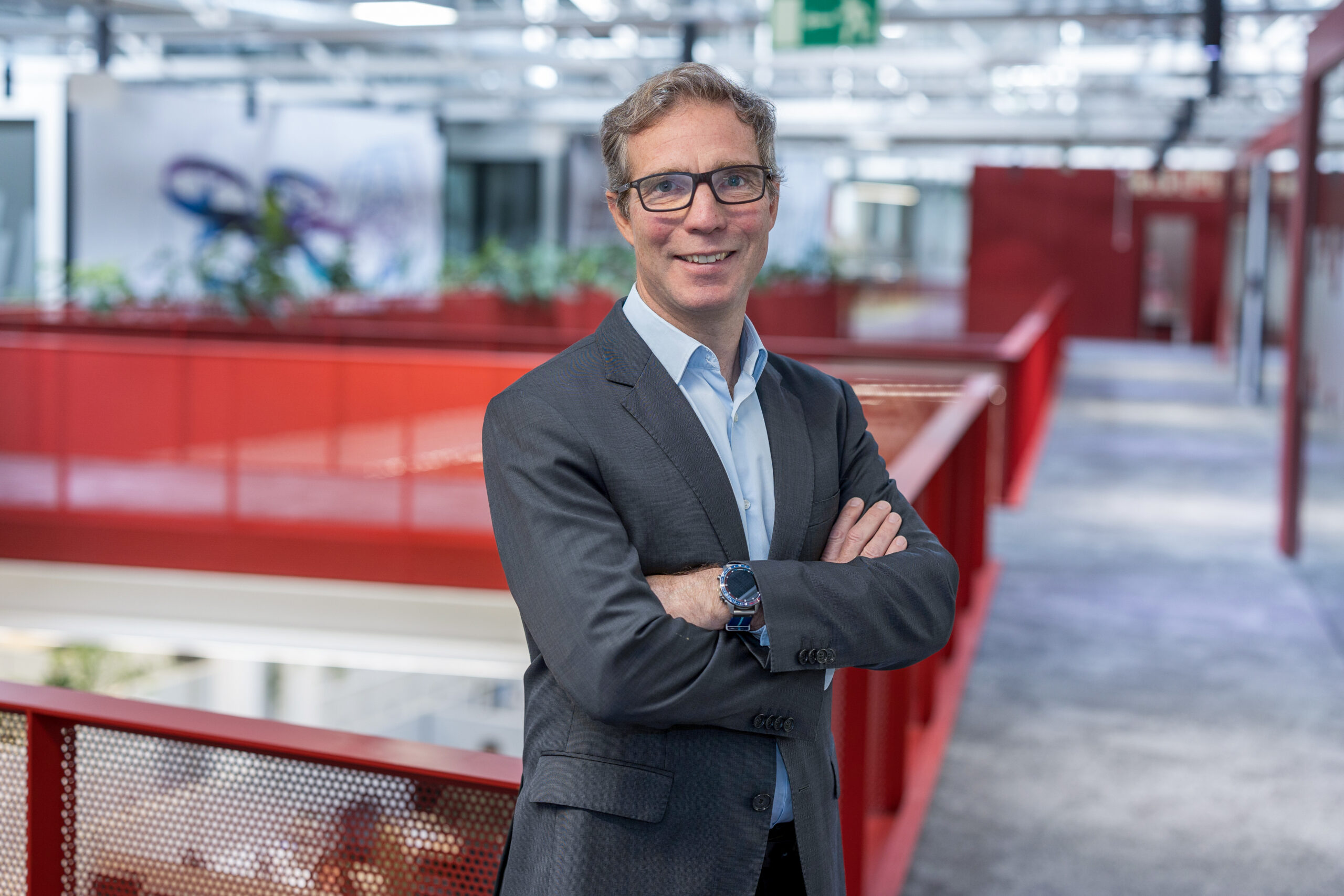
The test is whether we act accordingly when the pressure is on to win new business.The next phase of growth in this industry will belong to companies whose claims about performance are matched by their delivery in production.About the author: François Minec is Global VP Sales & Business Development at HP Additive Manufacturing Solutions.
His responsibilities encompass leading Global sales teams, Segment focused Business development, Sales Enablement, Application Engineers and Business Operations, overseeing the ongoing operations and performance of existing business activities and guiding the launch of innovative products into the market. François Minec, HP François has over 25 years of experience in business development within the specialty chemicals and plastics industries.He transitioned to his current role at HP after having spent 3 years heading the 3D Printing Polymers Business Unit.Prior to being at HP, he spent 10 years as the CEO of VELOX, a European distribution company for specialty plastics and chemicals.
He also founded Advanc3D Materials and was a shareholder and President of Setup Performance, which specialized in developing and producing innovative 3D printing materials.Both companies were acquired by BASF in 2018, after which François spent 3 years as CEO of BASF Forward AM, showcasing his extensive experience and industry knowledge.François is an advisor and board member of startups and mid-sized companies and is part of the founding members of Leading Minds, a consortium of AM leaders with the collective commitment to reshaping the future of manufacturing through the transformative power of 3D printing. With a Master’s degree in Chemical Engineering and an M.Sc.
in Polymer Science, François has also earned an Executive MBA from ESCP Europe.Fluent in English, French, German, and Spanish, François has an international mindset and has lived in various countries, including France, Belgium, Canada, South Africa, Spain, Germany, Switzerland, and the UK.A keen sportsman, François is passionate about skiing, snowboarding, sailing and biking.
Subscribe to Our Email Newsletter Stay up-to-date on all the latest news from the 3D printing industry and receive information and offers from third party vendors.Print Services Upload your 3D Models and get them printed quickly and efficiently.Powered by FacFox Powered by 3D Systems Powered by Craftcloud Powered by First Mold Powered by Xometry 3DPrinting Business Directory 3DPrinting Business Directory
Read More