Most everyone who’s concerned with the scarcity of industrial materials is focused on rare earths, and rightfully so.But aside from the direct impact resulting from tighter supplies of rare earths themselves, you could also look at rare earths as a stand-in for a host of other materials that fit the same profile…like tungsten.That profile entails a supply context characterized by extreme concentration within a single point of origin, combined with a demand context in which catalysts are coming from multiple different strategic sectors, simultaneously.
With rare earths, for instance, China dominates output (a common theme amongst many, though not all, of the relevant scarce materials), while demand is rising due to increasing manufacturing activity for defense, energy, semiconductor manufacturing, EVs, etc.Thus far, this overall scenario has been a mixed bag for the additive manufacturing (AM) industry.In abstract terms, the supply-demand balance should increase demand for production methods that can conserve materials whose costs are rising and which are more and more difficult to source.
But since this puts a cap on economic activity in general, while also leading to greater caution from the types of customers required to accelerate uptake of new workflow philosophies, a situation of increasingly expensive and scarce materials is likely a major factor in limiting the rate of AM adoption.The famous “inflection point” of which everyone speaks may simply come when AM’s technical maturity is less of a concern than is the inability of suppliers using legacy methods to keep up with the pace of demand.And that may in fact be on the horizon rather imminently, as suggested by China’s AI infrastructure buildout and the evolution of the Pentagon’s AM strategy.
These are just two key indicators that global manufacturing stakeholders are comfortable enough with AM and desperate enough vis-a-vis existing supply chains to take a leap of faith.With that in mind, while AI infrastructure and defense are currently focused on more conventional materials that, historically, AM users have had the most experience with, the main event for widespread AM adoption in production environments is almost certainly going to be everything that serves as a solution to the growing list of materials in the shortest supply.Tungsten is a perfect example: one of those materials which China dominates the output of, and which has experienced a record rally in prices due to increasing demand from defense, machine tool manufacturers, the semiconductor sector, and so on.
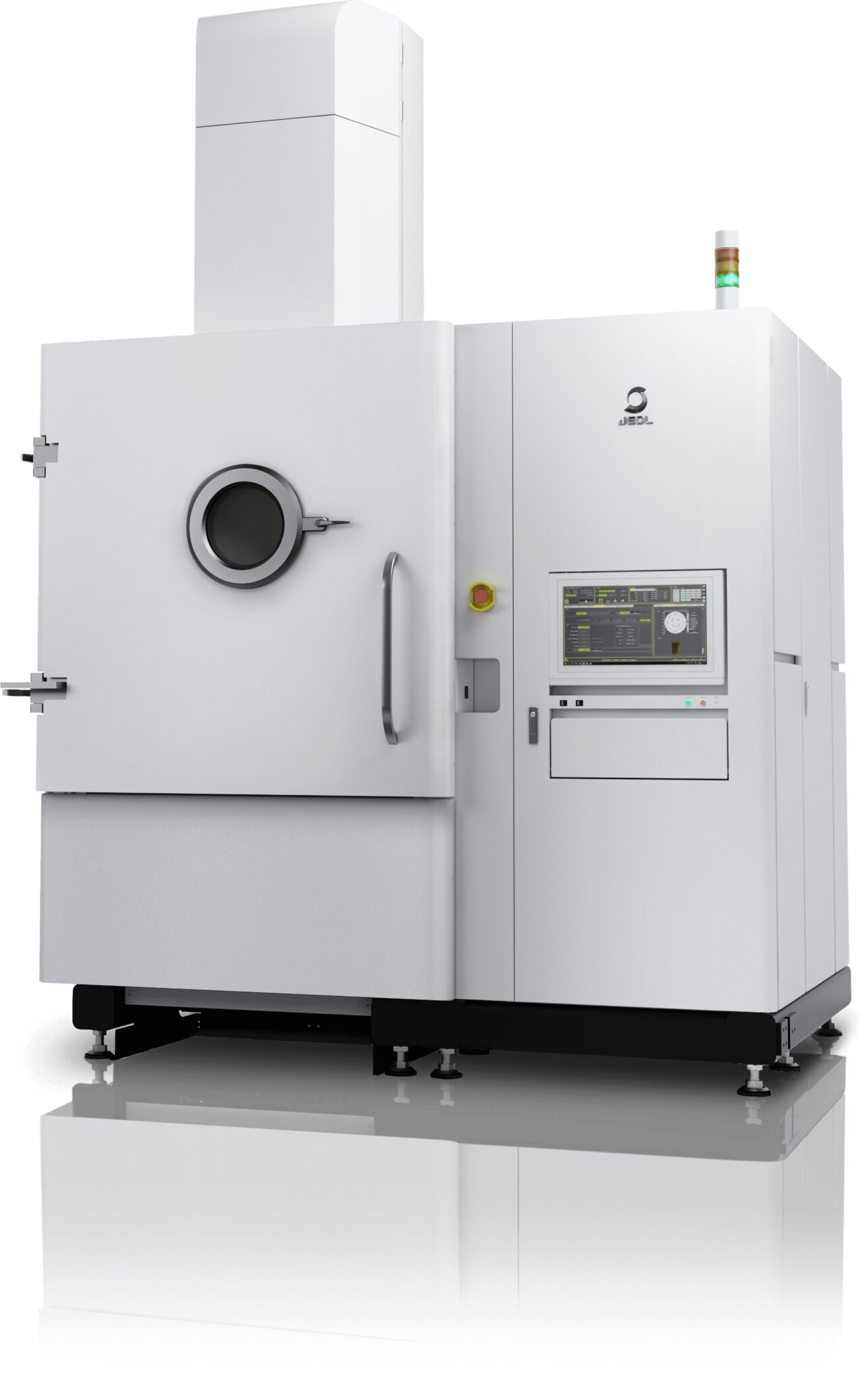
NC State nuclear engineering undergraduate Olivia Mehalick inside the DIII-D vacuum vessel during installation of the 3D printed tungsten tiles.Image courtesy of NC State It’s certainly not impossible that nuclear fusion could eventually become a commercial reality, but my take is that the most valuable thing about fusion R&D is material characterization.This is what I think matters most about a new case study involving North Carolina State University (NCSU), Oak Ridge National Laboratory (ORNL), and Japan’s JEOL Ltd., a leading manufacturer of precision instruments.
According to an NCSU press release, “A team from North Carolina State University, Oak Ridge National Laboratory (ORNL) and JEOL Ltd.has 3D printed full-size tungsten tiles for the inside wall of a fusion device, finished them to tight tolerances and tested them in the DIII-D National Fusion Facility in San Diego.The tile surfaces were directly exposed to 74 plasma discharges with significant heat and particle flux, and came through intact.” Notably, as the press release follows up, “The project went from invitation to installed hardware in about eight months,” which is especially impressive because the research team used an electron beam (EB)-based method (from JEOL) to produce the components.
Back in August, the US Commerce Department imposed a one-year ban on exports of tungsten scrap, following China’s own export restrictions on tungsten set last year.While you can still import tungsten from China, only 15 companies are allowed to export it, which is of course especially problematic for any business that doesn’t have an existing relationship with one of those companies.According to Dr.
Michael Kirka from ORNL, “Tungsten is currently the material everyone wants in a fusion reactor, but it is extremely difficult to manufacture into complex shapes.” That itself would cast doubt on the potential for nuclear fusion to scale commercially in the present environment; however, again, it demonstrates why fusion research is worthwhile regardless of the commercial potential.It’s a moonshot! In fact, considering how much closer to becoming a commercial reality traveling to the moon is by comparison with nuclear fusion, we might as well change the phrase to a “fusion shot,” although it would admittedly become far less catchy.Meanwhile, it’s also very reassuring to see a university, a research lab, and a private company (and a major one at that) collaborating on the project.
As I’ve repeatedly emphasized over the last few months, these are the sorts of research projects that should be prioritized.I could’ve written another post about the same case study titled “AM Demand Signals: Public-Private-Academic R&D”, because we’re seeing it happen more and more.When research partners come from all three of those spheres at once, everyone involved gets the most bang for their buck, and the R&D tends to have the most immediate value for commercialization efforts.
Image courtesy of US Department of Energy Referring back specifically to critical materials, everything that has happened with tungsten can be assumed to be on the table for anything else, at any time, that is considered a critical material.Helium, for instance, just got designated as a critical material by the US government, and, while you can’t 3D print helium, there are many contexts where 3D printing can help manufacturers reduce their dependence on helium in their production processes, including 3D printed electronics.Here are the materials that the US government has put in the critical category.
The list is generally valid, as well, for the nations partnering with the US to address their own supply chain gaps related to critical materials, including the nations that comprise the Pax Silica initiative.The idea should be to take all the most general lessons you’ve learned from building up familiarity with more easily accessible materials, and use those lessons to design a multi-partner R&D effort that emphasizes the speed of the path to commercialization.Featured image courtesy of JEOL via NCSU Subscribe to Our Email Newsletter Stay up-to-date on all the latest news from the 3D printing industry and receive information and offers from third party vendors.
Print Services Upload your 3D Models and get them printed quickly and efficiently.Powered by FacFox Powered by 3D Systems Powered by Craftcloud Powered by First Mold Powered by Xometry 3DPrinting Business Directory 3DPrinting Business Directory
Read More