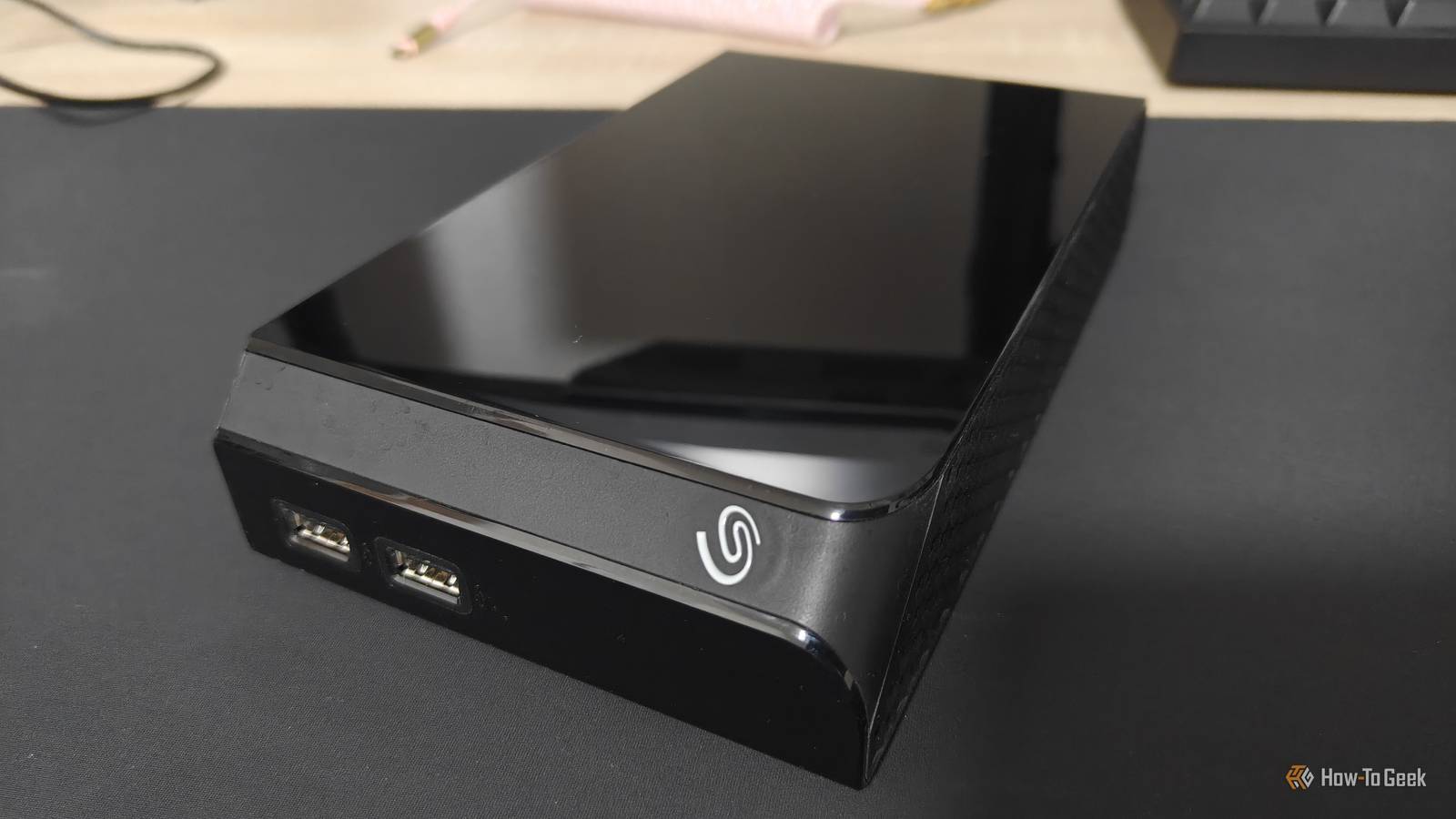
HDDs are generally seen as super reliable.Their external variants are perceived as both reliable and optimal for cold storage.Fair—both of those things are generally true.
But the problem is that when something goes wrong, it goes wrong, and shockingly fast.A recent Secure Data Recovery study, based on a sample of nearly 3,500 failed external HDDs, reveals that when they do fail, it can happen really fast.In 60% of cases, the drives didn't even make it to a year of use.
The 60% figure comes with one very important catch I don't mean to alarm you too much Close The headline number is, frankly, brutal.It reminds you why it's important to never trust a single backup, because out of the 3,453 external HDDs that were sent to Secure Data Recovery for repairs and data restoration, a lot of them were still almost new.Well, in the grand scheme of things.
I definitely consider an HDD with less than a year of powered-on hours to be fairly new, at least.These drives suffered either mechanical failure, physical damage, or both.Out of that near 3,500 sample size, 2,101 of them, or 60.8%, had logged fewer than 8,760 power-on hours when they failed.
And nearly half of the entire sample, 49.6%, hadn't even reached 4,380 hours.Some drives met their demise very early on: 76 HDDs had less than 24 hours on the clock.In other words, a huge chunk died surprisingly early.
So are external HDDs incredibly unreliable? Nope.This is the caveat I mentioned up above.It's not that your external HDD has a bit less than a coin flip's chance of survival; it's that Secure Data Recovery only gets the drives that actually fail.
Similarly, the company found that half of failed internal HDDs didn't make it to a year of operation, revealing a worrying trend that looks less bad when you consider the big picture.By focusing on drives that failed, the study only highlights the drives that already failed badly enough to end up at a professional data recovery company.It doesn't take into account drives that never failed, or those that failed after 10 years and were simply replaced with another model.
Another thing to keep in mind is that power-on hours don't mean "age," exactly.An external HDD may sit plugged in 24/7 (although that'll make it a lousy backup), in which case those hours will add up to a year exactly, but most drives don't live that way.If you just plug yours in now and then to back things up, reaching 8,760 hours will take several years.
Related 3 copies, 2 formats, 1 big problem: Why modern backups fail The '3-2-1' backup rule is finally outdated - here's what to do instead Posts 8 By Monica J.White The median and average being so far apart might be the most interesting bit Some drives died almost immediately; some kept on going Moving on, this data brings more interesting insights for us to dig into.The average failed drive in the study had logged 15,961 power-on hours, which works out to around 665 days of continuous (or total) operation.
But the median was just 4,559 hours, which is just 190 days, and significantly less than the average.What's up with that discrepancy? It's all in the data, and again, it's tied to the fact that these HDDs all failed.Plenty of drives failed with relatively little runtime, while a much smaller number kept spinning for years and pulled the average upward.
This created a wide spread of HDD lifespans that makes it hard to judge whether a brand new external HDD is a risk or not.Some of the outliers only serve to highlight that point.One 80GB external drive from 2002 managed to rack up 124,292 power-on hours before it landed at the recovery lab.
First of all, kudos to the owner of this ancient drive for not just saying "eh, whatever" and giving up on the drive.Second, that drive alone made a huge dent in all that data.The study, while useful, tells us one thing: you never know when your HDD might fail, so that's why you should always that it will.
Another interesting finding reveals just how little warning you might get before your HDD kicks the bucket.SMART can tell you a lot, but it's not a fortune teller More than a quarter failed with zero pending sectors Just like SSDs can fail at 100% health, so can HDDs.The study reminds us of that fact in a big way.
Secure Data Recovery specifically looked at Current Pending Sector Count, or SMART attribute 197, which tracks sectors that the drive has struggled to read reliably and may eventually need to remap.It's one of those values that can give you a very good reason to start worrying about the drive, copy your files over while you still can, and jump ship before the HDD fails on you.The problem is that a lot of these failed drives didn't wave that red flag before anything went wrong.
27.2% of the failed external HDDs in the study had zero pending sectors.That doesn't promise that there were no warning signs, because they may have still acted up outside of SMART data, but it does leave that important piece of the puzzle out entirely.Can you trust your external HDD? The findings in the study are pretty grim, but looking at the data through a wider lens shows us that it's really not that bad.
Many HDDs simply never fail; in fact, I've only ever had one drive die on me in the last 20 or so years.The bigger lesson to learn here is that you should always keep your data safe and store two-three copies of it if it's important to you, as you never know what happens next when it comes to HDDs, external or otherwise.Related Your unpowered SSD is a ticking time bomb Long-term cold storage on an SSD could be a risky business.
There are better options.Posts By Monica J.White
Read More