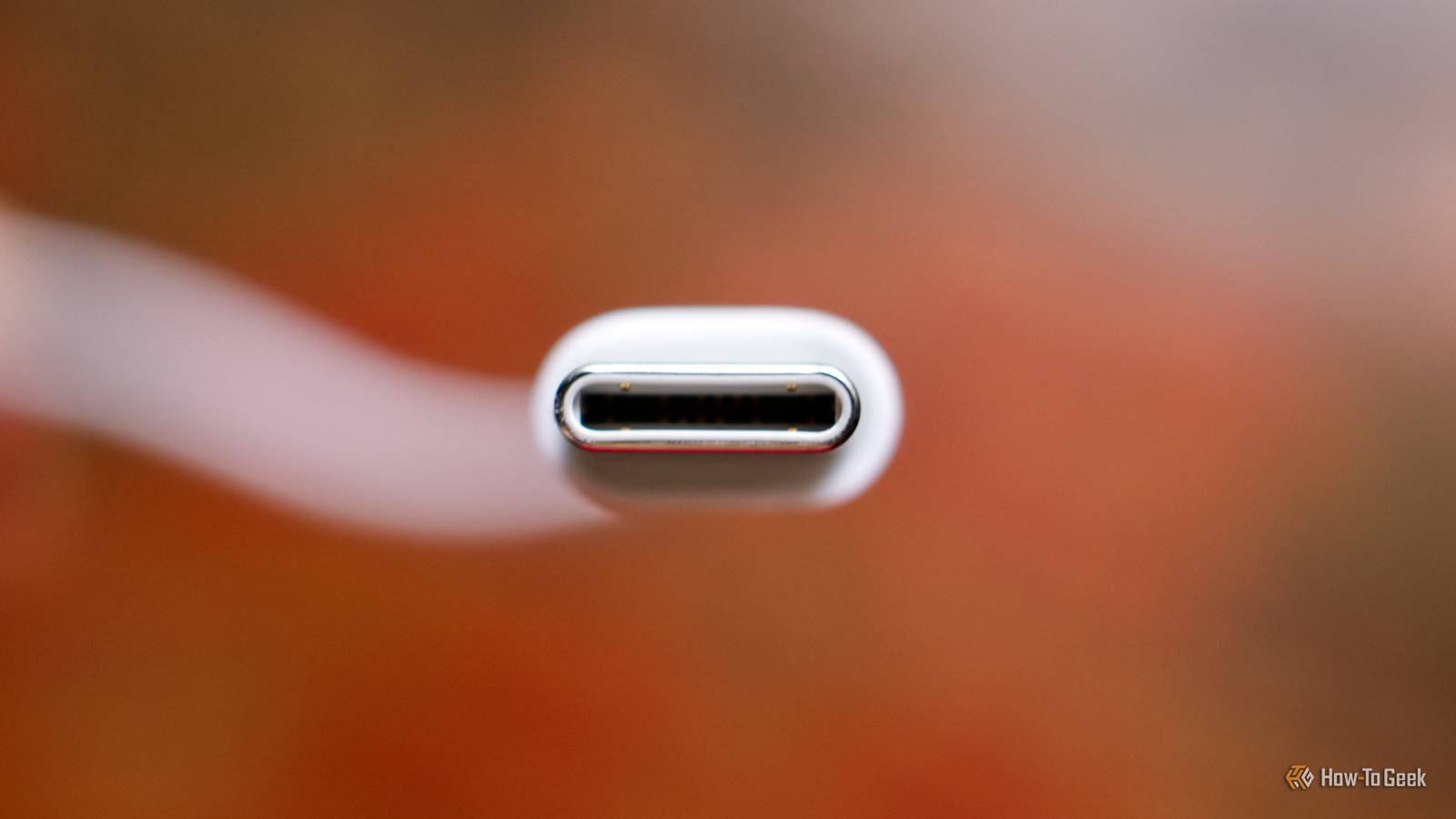
Magnetic USB-C cables (the kind that use a dongle to connect) sound like the perfect convenience hack for ultra-fast wired charging, especially if you're not on the wireless charging bandwagon or if we're talking about a device that doesn't support it, like a laptop.However, these snappy cables carry a very real risk of potentially ruining your expensive device—there’s a reason no major tech company has ever released a magnetic USB-C cable.Rest assured, the small amount of time you save by not having to plug a cable into your device is absolutely not worth the catastrophic risk these cables carry.
Magnetic USB-C cables can actually fry your device It's happened many times Before we dive in, I want to clarify what I mean by "magnetic USB-C cables." I'm not talking about MagStack cables with magnetic sleeves that prevent tangling.I'm also definitely not talking about official (non-USB) proprietary standards that use magnetic connectors like Apple MagSafe cables or Microsoft Surface Connect, which are proprietary systems that use special pin designs to handle power and data safely.Instead, the topic of discussion today is those magnetic USB-C cables that use magnetic dongles to attach the connector to a phone, tablet, or any other device with a USB-C port to charge devices.
Related USB-C was supposed to be simple—it's actually a total nightmare You can "C" the issues clearly.Posts 14 By Sydney Butler These are made and sold by all kinds of third parties—from random manufacturers on Amazon to Kickstarter brands like Volta and Chargeasap, whose entire product line revolves around magnetic charging cables.The premise is simple—instead of constantly tripping over the charging cable and knocking your expensive phone, laptop, or handheld off the desk, these fancy cables use a magnetic dongle with a special gold-plated connector and a cable that attaches magnetically, so the instant you pull on it, it disconnects to save your device from falling.
Sprinkle in some fancy-sounding specifications on top, like 240W PD fast charging, ultra-fast 20 Gbps data transfer, a braided cable, and 4K display support, and you've got yourself the world's best cable that the big tech companies don't want you to know about.Oh, and let's not forget that the dongle is not just convenient; it prevents wear and tear on your USB-C port.Needless to say, all these promises fall apart in reality, because these cables carry numerous inherent risks.
The biggest one that I've already hinted at is that these cables can literally kill your device in an instant if they're not disconnected the exact right way, like this unfortunate Redditor found out the hard way.This is because USB-C cables use a (reversible) pin layout to establish a connection between your device and a charger or another device.Magnetic adapters also have multiple pins carrying power, ground, and data, and if, even for a fraction of a second, the pins that aren't meant to touch bridge, they can create a massive voltage spike that fries your device's internals.
Redditor DifficultEstimate7 has found a couple of sources in German—one is a general warning about using non-certified USB-C cables, and the other about popular retailer TEDi issuing recalls on magnetic charging cables due to them being a fire hazard.Yikes! Even if the powerful magnetic cable fails to start a fire or kill your device, you still risk losing your data.Magnetic cables are notoriously unreliable.
Even if you don't touch anything, they can randomly disconnect or get affected by electrical noise, and all of your precious data will get corrupted if you were doing a file transfer at the time.Related How to Stop Your Phone's Charger Cables From Breaking Do your phone's charger cables keep fraying and breaking? Here's how to protect them, whether you're using an iPhone or Android phone.Posts Magnetic dongles are a literal shortcut to a short-circuit Living the dongle life can be dangerous You thought I was done? Magnetic USB-C cables are really just the start of the dangers they carry—the dongles you plug into your devices are just as risky.
A massive part of the appeal of these cables is that you can use a single cable for charging or transferring data across multiple devices, whether they use micro-USB, USB-C, or Lightning.Unfortunately, keeping a magnetic dongle with exposed pins is an easy way to damage your device without even attaching the magnetic cable—there's a reason charging ports have been recessed since the dawn of phones and laptops.First and foremost, those strong magnets can attract tiny metallic debris and even larger items like staples and needles, which can bridge the connection between two pins on the dongle.
Even if this doesn't cause any damage outright, once the cable connects, your device can fail in an instant.Another hidden danger is actually static electricity.USB-C ports have a metal shroud that shields the pins from static, but the pins on a dongle leave the port exposed to the outside world.
Something as inconspicuous as picking up your phone with your pinky on the dongle after walking on a carpet can send a strong surge of electricity through the port and damage it.static electricity Protruding dongles turn minor bumps into permanently broken ports And no one wants that A major selling point of magnetic USB-C cables is that the dongle is fairly slim and hardly protrudes, especially if you have a case on your phone.However, it doesn't matter how slim the dongle is; having something permanently plugged into your USB-C port is still a major physical vulnerability.
Subscribe for clear safety coverage on magnetic USB-C risks Get the newsletter for in-depth coverage of magnetic USB-C cable dangers, practical safety checks, product warnings, and tips for protecting your devices - subscribe to receive expert coverage you can trust.Get Updates By subscribing, you agree to receive newsletter and marketing emails, and accept our Terms of Use and Privacy Policy.You can unsubscribe anytime.
Even a minor drop can cause the dongle to snap off and damage the internals of your port.Moreover, the dongle itself acts as a lever, and regardless of how you hold your phone, there will be instances where you put unnecessary physical pressure on the dongle, which in turn slowly bends the tiny pins inside your phone's USB-C port, eventually causing them to fail.Magnetic wireless chargers are a much safer way to get the convenience Slow and steady wins the race If you want the convenience of magnetic charging, you don't have to risk your phone by using a magnetic USB-C cable.
Just grab a decent Qi2 magnetic wireless charger or power bank that attaches to your phone with a MagSafe case, and you get all the convenience with none of the danger.Unfortunately, this convenience doesn't extend to laptops and other devices that use USB-C.You should continue using regular USB-C cables, ideally certified ones like the one that came with your device.
The small bit of convenience that magnetic cables might provide just doesn't outweigh the risks.Ugreen MagFlow 2-in-1 Magnetic Wireless Charger $50 $60 Save $10 8 Brand Ugreen A 2-in-1 Qi2 magnetic wireless charger capable of 25W charging speeds for modern iPhone and Android phones, 5W charging for AirPods, and a 5W USB-C port.It can be folded into a cube for portability.
Output 25W (iPhone, Android), 5W (AirPods), 5W (USB-C) Input USB-C Maximum Power 35W Color Silver Cable included Yes Weight .49 pounds Dimension 2.36 x 2.36 x 1.67 inches (folded) Operating Temperature -10°C to 35°C Qi-Certified Qi2 Adapter Included No $50 at Amazon $60 at Ugreen Expand Collapse
Read More