A smart long-term car isn’t flashy—it’s dependable, efficient, affordable to maintain, and strong on resale.That’s the stuff that actually matters once the new-car smell wears off.Plenty of brands have built reputations around that formula, from Honda and Subaru to Hyundai and even Tesla.
Low depreciation, reasonable upkeep, and solid reliability tend to separate the smart buys from the impulse purchases.Still, one name keeps coming up when longevity is the goal: Toyota.The brand has a track record of cars that rack up serious mileage without drama, and among its current lineup, one hybrid in particular stands out as an especially savvy long-term bet.
In order to give you the most up-to-date and accurate information possible, the data used to compile this article was sourced from Toyota and other authoritative sources, including CarEdge, the EPA, IIHS, iSeeCars, J.D.Power, Kelley Blue Book, NHTSA, RepairPal, and TopSpeed.Related 10 Reasons Why the Toyota Camry Hybrid Outsells the Corolla Hybrid The Toyota Camry Hybrid outsells the Corolla Hybrid with more power, space, and comfort—making it the better choice for most buyers.
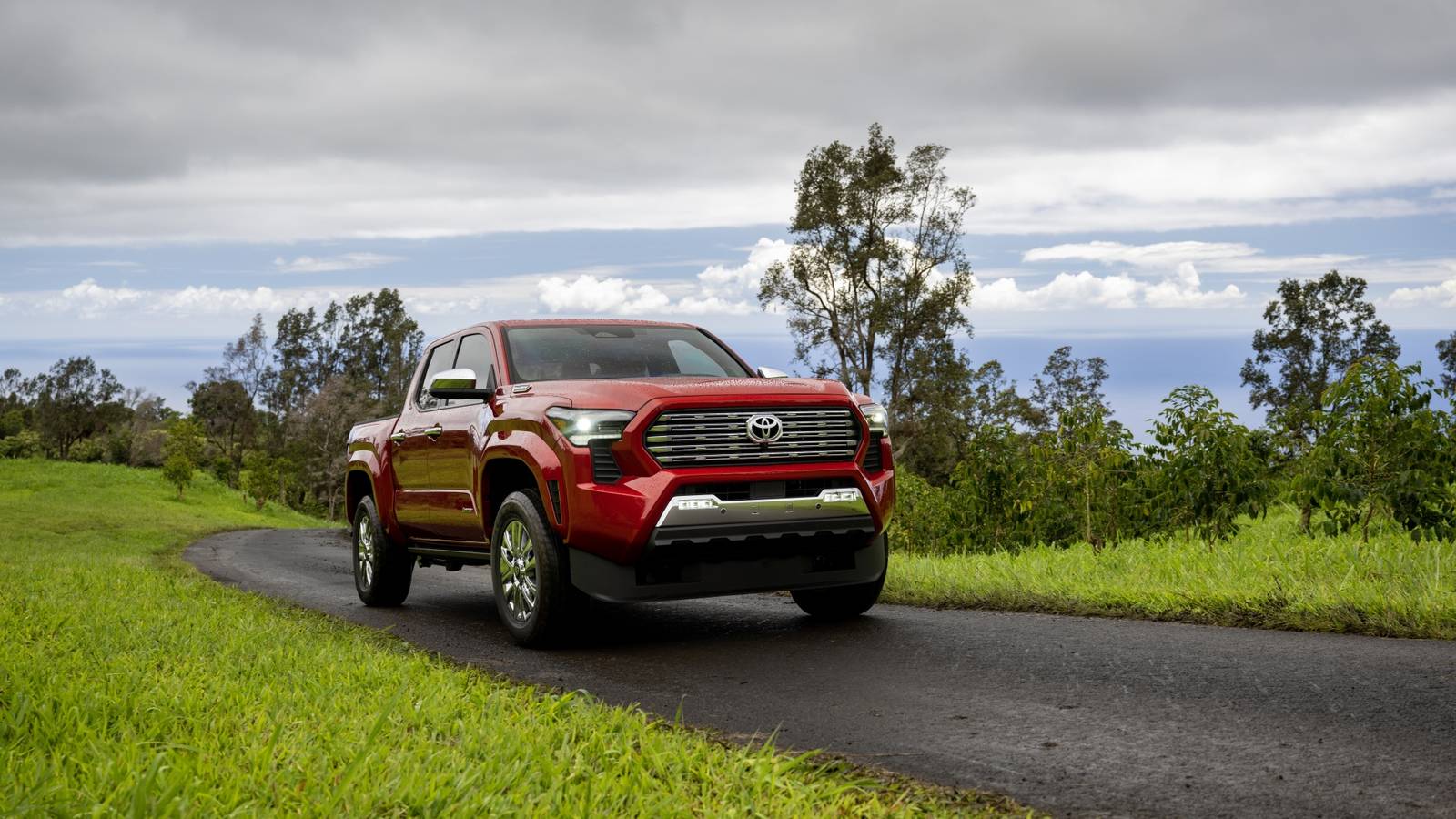
Posts By Tyler Dupont The Toyota Prius is hard to beat long term Efficient, reliable, and built to hold its value The Toyota Prius has always been built with the long game in mind.It’s the kind of car people buy once and then just keep driving—year after year, mile after mile.Since it showed up in the U.S.
back in 2001, it’s gone through five generations and built a serious reputation along the way.There are owners who’ve pushed theirs well past half a million miles, which says a lot about how these things are put together.Now the 2026 model keeps that streak alive, pairing its proven hybrid setup with a price that still feels reasonable.
It’s practical, dependable, and set up to be one of those cars you hang onto for the long haul.The 2026 Prius starts at a price that makes sense If you’re shopping for a smart long-term car, you probably aren’t chasing a rare collectible or weekend toy.You want something that starts at a sensible price and makes sense from day one.
That’s exactly where the 2026 Prius lands.It comes in four trims—LE, XLE, Nightshade Edition, and Limited—with prices kicking off at $28,550 and topping out at $35,565, which feels pretty reasonable for what you’re getting.2026 Toyota Prius trims and MSRP LE $28,550 XLE $31,995 Nightshade Edition $32,800 Limited $35,565 There’s also a plug-in version of the Prius if you want more electric range.
The Prius SE starts at $33,775, the XSE at $37,025, and the XSE Premium tops out at $40,470.Stack it up against something like the 2026 Honda Civic Hatchback hybrid and the standard Prius actually comes in a bit cheaper, with the Civic Sport hybrid sitting around $30,595.The plug-in Prius does cost more, but over the long haul, the extra electric range and Toyota’s track record could make that premium easier to justify.
Strong resale is part of the Prius appeal The Prius has built a loyal fan base for a reason.It’s been around for decades, earned a reputation for sticking around even longer, and that kind of track record helps it hold value surprisingly well.According to , the Prius is expected to depreciate about 36 percent over five years and roughly 54 percent over 10.
That puts it among the stronger hybrid bets for long-term value, meaning a $35,565 Prius Limited today could still be worth around $16,300 a decade from now if trends hold.doesn’t have much to say about the plug-in version, but gives the Prius PHEV a solid 8.8 out of 10 for value retention.That lines up with real-world pricing, too.
Take a 2022 Prius Prime Limited, which originally stickered at $35,545.It’s still averaging around $21,800 on the used market, which is pretty respectable for a plug-in hybrid—especially in a segment where values can drop fast.Related This 10-Year-Old Hybrid Is More Reliable Than Brand-New Rivals This decade-old hybrid outshines new models in reliability, proving that durability and efficiency don’t always come with a hefty price tag.
Posts 3 By Tyler Dupont A hybrid setup designed for the long haul Strong mpg, low upkeep, and proven durability Some Prius models have built almost boringly good reputations for reliability.The latest model year hasn’t been scored by yet, but this is still a Prius—and Toyota doesn’t exactly have a history of cutting corners.Older generations proved these hybrids can take a beating and keep going, and the current lineup sticks to that same formula.
The 2026 Prius runs a 2.0-liter M20A-FXS hybrid four-cylinder, while the plug-in version adds a 13.6-kWh lithium-ion battery and electric motors to the mix, giving you more electric range without reinventing the wheel.2026 Toyota Prius 2026 Toyota Prius PHEV Engine 2.0-liter inline-four hybrid 2.0-liter inline-four plug-in hybrid Transmission e-CVT e-CVT Power 194 hp 220 hp Torque 139 lb-ft 139 lb-ft If there’s one thing the Prius was built for, it’s stretching a gallon of gas as far as possible.According to the , the all-wheel-drive version manages up to 54 mpg combined, while the front-wheel-drive model can hit 57 mpg combined, making it one of the efficiency champs this year.
The plug-in variant pushes things even further, delivering up to 114 MPGe.No matter which version you pick, the whole point is the same: fewer fuel stops and lower monthly gas bills.You’re not buying a Prius for tire-shredding performance.
You’re buying it for smooth, low-stress driving, minimal fuel costs, and a hybrid setup that’s already proven it can go the distance—and that’s exactly why it makes so much sense as a long-term play.Maintenance and reliability that rival simpler cars On paper, the Prius backs up its reputation.gives it a 4 out of 5 for reliability, scores it 8.1 out of 10 and estimates an average lifespan of around 176,000 miles, and owner reviews rate it 4.9 out of 5 for dependability.
For a hybrid, that’s about as reassuring as it gets.The Prius has a track record of being the kind of car you fuel up and forget about, not one that’s constantly back at the shop.A big reason for that is Toyota’s approach.
Instead of reinventing the wheel every few years, it refines what already works, and in the Prius’ case that means a well-sorted Hybrid Synergy Drive system paired with the proven M20A-FXS Atkinson-cycle engine—a combo that’s been polished over time rather than rushed to market.The engine itself is designed to take it easy on its own components.Its long expansion stroke helps keep cylinder pressures and temperatures down, while dual VVT-i and a cooled EGR system fine-tune timing and manage heat so nothing is working harder than it needs to.
Even the transmission setup is built with longevity in mind.The Prius uses a planetary power-split system instead of a traditional belt-driven CVT, which means fewer wear-prone parts like clutches and shift mechanisms grinding away over time.That said, owning a hybrid does mean budgeting for a battery replacement eventually.
Swapping a Prius battery can run anywhere from $2,000 to $8,000, but most are expected to last 10 to 15 years, which softens the blow over the long haul.Low five- and ten-year costs seal the deal For a car to truly make sense long term, it can’t just be reliable—it has to be affordable to live with.The Prius checks that box, too.
According to , which gives the Prius an “A” for value, owning a new one for five years will cost about $35,934 in total.That breaks down roughly like this: Depreciation: $12,670 Insurance: $12,330 Fuel: $4,055 Interest: $5,443 Maintenance: $1,437 Stretch that out to 10 years and the numbers still look manageable.estimates around $4,360 in maintenance over a decade, about $18,900 in depreciation, and roughly $8,110 in fuel.
Those figures line up with other sources, too.pegs average annual maintenance at about $408, while the estimates yearly fuel costs at around $800 for the AWD model and $750 for the FWD version.Over five years, that efficiency can add up to serious savings.
Compared to the average modern vehicle, the Prius is estimated to save you roughly $4,000 to $4,250 in fuel alone.Overall ownership costs also stack up well against familiar alternatives.For example, a Honda Accord is estimated to run just over $37,200 across the same five-year stretch, putting the Prius comfortably ahead in total cost of ownership.
Related 10 Used Hybrid Vehicles That Are Solid Investments These 10 used hybrid vehicles offer reliability, efficiency, and strong resale value, making them smart long-term investments.Posts By Tyler Dupont Comfort and usability are part of the Prius appeal A hybrid that works just as well on road trips as it does in traffic The Prius isn’t just a smart long-term buy because it saves money—it’s also easy to live with day in and day out.There’s solid space up front with 38 inches of headroom and 43.2 inches of legroom, while rear passengers get 36.4 inches of headroom and 34.8 inches to stretch out, plus a handy 60/40 split-folding rear seat.
It’s not the biggest small car out there, but it strikes a nice balance between usable interior space and compact, city-friendly dimensions at 181.1 inches long and 70.2 inches wide.With the seats up, you get 23.8 cubic feet of cargo space and 91.2 cubic feet of total passenger volume, which is more than enough for groceries, gym bags, or a weekend trip.Subscribe to our newsletter for smart hybrid buys Join our newsletter to get deeper hybrid ownership analysis—clear breakdowns of resale projections, maintenance costs, fuel efficiency and real-world comparisons to help you judge long-term value for the Prius and other hybrids.
Subscribe By subscribing, you agree to receive newsletter and marketing emails, and accept our Terms of Use and Privacy Policy.You can unsubscribe anytime.The cabin doesn’t feel stripped down either.
Every Prius comes standard with wireless Apple CarPlay and Android Auto, six USB-C ports, and a high-mounted driver display, while an 8-inch touchscreen is standard and the Limited trim upgrades to a 12.3-inch display with navigation and a JBL premium audio system.To round things out, the interior gets a few thoughtful upgrades that make daily driving nicer.Available SofTex-trimmed seats, heated fronts on higher trims, wireless charging, and an eight-way power driver’s seat give it a more polished feel than you might expect at this price point.
The new Prius already looks sharp, and while tech trends will shift over the next decade, it sticks to the fundamentals.If you want a hybrid that gets the basics right and keeps things comfortable while doing it, this is an easy one to recommend.The safety credentials you’d expect from a Toyota hybrid Safety has quietly become one of Toyota’s biggest selling points, and the Prius keeps that trend going.
While the latest model hasn’t been rated by yet, it earned a Top Safety Pick+ from the , which puts it among the safer new cars on sale right now.Every 2026 Prius comes standard with Toyota Safety Sense 3.0.That means lane departure alert, automatic high beams, proactive driving assist, adaptive cruise control, and road sign assist are all baked in, with options like blind-spot monitoring, a panoramic view monitor, and safe exit assist available as well.
It also gets Toyota’s Star Safety System as standard, covering stability control, traction control, ABS, brake-force distribution, smart stop tech, and brake assist.Whether you’re driving it today or still commuting in it a decade from now, the Prius is loaded with the kind of safety gear most buyers actually want.Owners consistently rate the Prius highly There isn’t a mountain of feedback yet on the 2026 Prius, but early signs are strong.
On , owners rate it 4.1 out of 5 overall, with especially high marks for value, styling, reliability, performance, and quality—and about 90 percent say they’d recommend it.Older models tell a similar story.The 2024 Prius scores a 78 overall from with an 87 for reliability, the 2020 lands at 77 overall and 81 for reliability, and even much older versions still post impressive scores.
There’s a reason the Prius has stuck around this long.It’s known for being tough, efficient, easy to maintain, and surprisingly good at holding its value, and while other hybrids might chase flashier tech, the Prius keeps winning by getting the basics right.Related This Japanese SUV Offers Luxury and Bulletproof Reliability This small SUV offers exceptional comfort without sacrificing your peace of mind.
Posts By Tyler Dupont Other hybrid models that also make smart long-term buys A few more efficient picks worth considering Picking the smartest long-term hybrid isn’t as simple as it used to be.The market keeps expanding, and just about every brand now has at least one gas-electric option in the lineup.While we’d still give the edge to the Prius, it’s far from the only hybrid that makes financial sense.
The 2026 Kia Niro, Toyota Camry Hybrid, Honda Accord hybrid, and Lexus NX all offer reasonable starting prices, strong reliability reputations, and solid resale prospects over the long haul.2026 Kia Niro 2026 Honda Accord 2026 Toyota Camry Hybrid 2026 Lexus NX MSRP $27,390 $28,395 $29,100 $45,470 Reliability rating 79/100 4.8/5 92/100 81/100 10-year maintenance cost $8,419 $5,807 $4,581 $7,712 10-year depreciation rate 72.1% 55% 56.4% 64%
Read More