RAID 0 is great, but also dangerous—at least, that's probably what you heard from many tech YouTubers over the past years.And sure, that's true.But it has a place to be.
If you're a gamer looking to save a buck, it's still an option—and a really good one, while we're at it.Why is RAID 0 a good option for gamers? The primary allure of RAID 0 lies in its ability to significantly increase read and write speeds through a process known as data striping.Unlike other RAID levels that prioritize redundancy, RAID 0 splits data evenly across two or more drives, allowing the system to read from or write to multiple disks simultaneously.
This parallelism effectively multiplies the theoretical throughput of the storage array.For a gamer, this translates to faster level loading times, quicker texture streaming in open-world titles, and a generally snappier responsiveness when installing or patching massive game files.Of course, SSDs are already insanely fast (and we're already seeing diminishing returns with PCIe Gen 5).
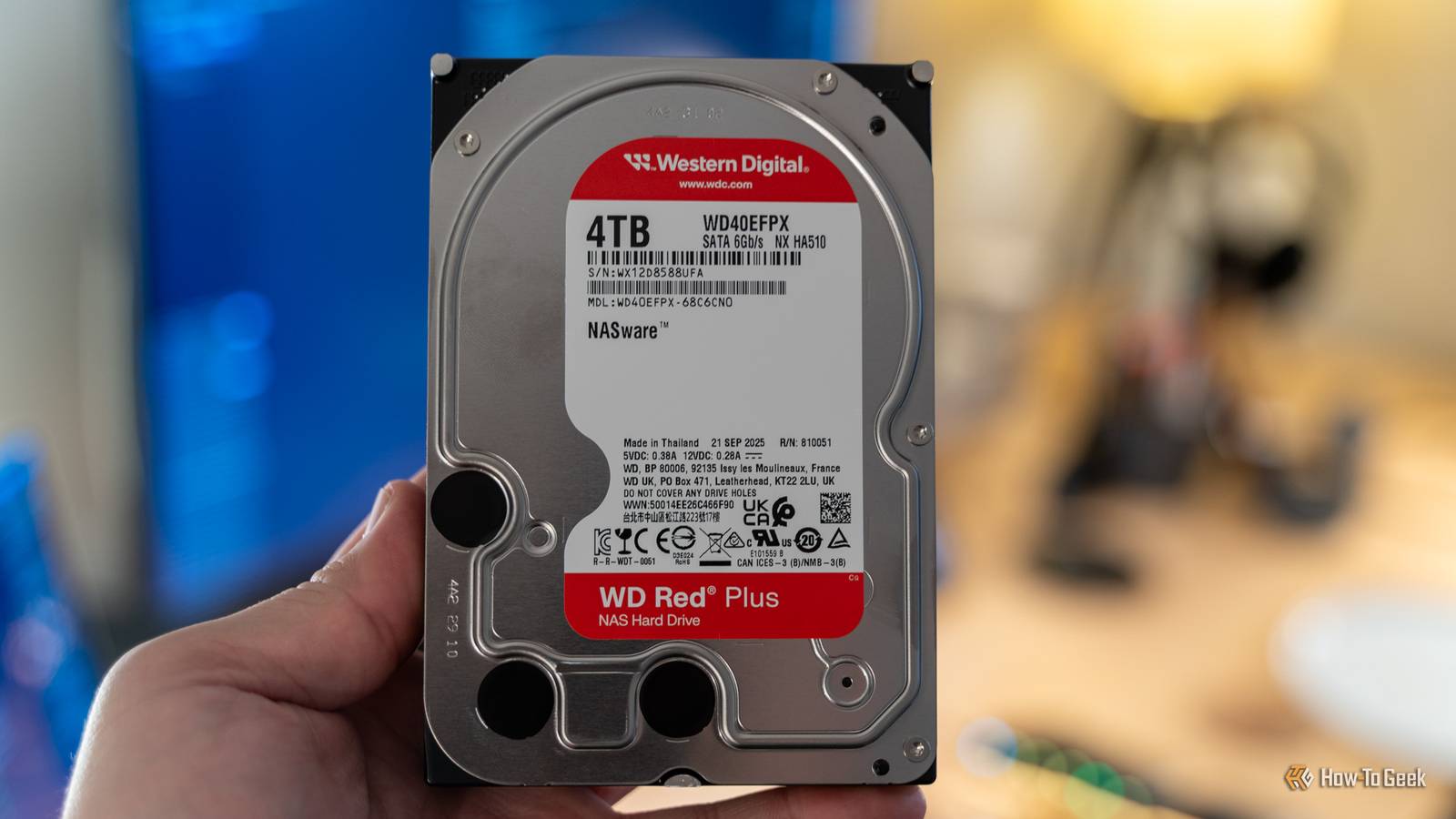
So why would you use RAID 0 if you don't need that much speed? That brings me to my next point—it's not for use with SSDs.Smaller hard drives or slower SSDs are frequently available at a lower cost per unit of storage due to market saturation and manufacturing yields.By combining two affordable 1TB drives into a RAID 0 array, a gamer can create a single 2TB logical volume that often outperforms a single 2TB drive of equivalent class, potentially for less money.
It won't be as fast as a last-generation SSD, but it's still a good way to save money.This is also particularly useful for those who may already have one drive and wish to double their capacity and speed by simply purchasing a matching unit rather than discarding their current hardware for a larger, more expensive replacement.In an era where modern AAA titles frequently exceed 100GB in size, the ability to combine disparate, smaller drives into a large, unified repository for a Steam or Epic Games library is a practical logistical solution that keeps storage management simple and cost-effective.
Why do people fear it? RAID 0 is not for the weak.In a RAID 0 configuration, there is zero redundancy.Absolutely zero.
One drive goes bad, your entire array goes kaput.Because the data is striped across all member drives, every single drive is essential to the integrity of the volume.If you have a two-drive array and one drive suffers a mechanical failure or severe controller error, the data on the surviving drive becomes essentially useless.
You do not lose just half your data; you lose the entire volume because the file system cannot reconstruct the fragmented files without the missing stripes.This architecture creates a single point of failure where the probability of data loss is roughly double that of a single drive, assuming identical hardware reliability.In fact, mathematically speaking, a RAID 0 array is twice as risky as a single drive.
You are doubling your points of failure Here's the thing, though.If you're using a RAID 0 array of hard drives for your game library, that's fine.Hard drive failure killing your whole array won't make you lose any permanent files, as long as you keep these drives for just your game library and move all your important stuff somewhere else.
It's not a good option for everyone RAID 0 is an excellent tool for specific scenarios, but as I've alluded to before, it is not a universal solution and should be approached with a clear understanding of its limitations and your specific hardware environment.It's a poor choice for anyone storing critical, irreplaceable data such as family photos, creative work, or financial documents without a robust, external backup strategy.The volatility of the array means that a power surge, a controller glitch, or a simple drive failure can result in an irreversible catastrophe.
Therefore, users who cannot afford to lose their data at a moment's notice should look toward RAID 1 for redundancy or stick to single drives backed up to the cloud.How-To Geek Report: Subscribe and never miss what matters Unlock your tech-savvy potential and master the digital world with How-To Geek.Subscribe By subscribing, you agree to receive newsletter and marketing emails, and accept our Terms of Use and Privacy Policy.
You can unsubscribe anytime.What worries me more, though, is that the performance benefits of RAID 0 are facing a point of diminishing returns with the advent of ultra-fast NVMe technology.Modern PCIe Gen4 and Gen5 NVMe drives are already so fast that they often saturate the bandwidth of the CPU or the game engine’s ability to decompress assets.
In these scenarios, striping two NVMe drives together may produce impressive benchmark numbers in synthetic tests, but result in a negligible difference in real-world gaming load times.The bottleneck shifts from the storage device to the processor or the software architecture itself.Consequently, gamers with high-end, modern motherboards and premium NVMe storage may find that the hassle of configuring RAID 0—which can sometimes complicate firmware updates or system migration—offers no perceptible advantage.
If you want to squeeze performance out of SATA SSDs or mechanical hard drives, you're going to use it for games only, maybe RAID 0 is fine for you.
Read More