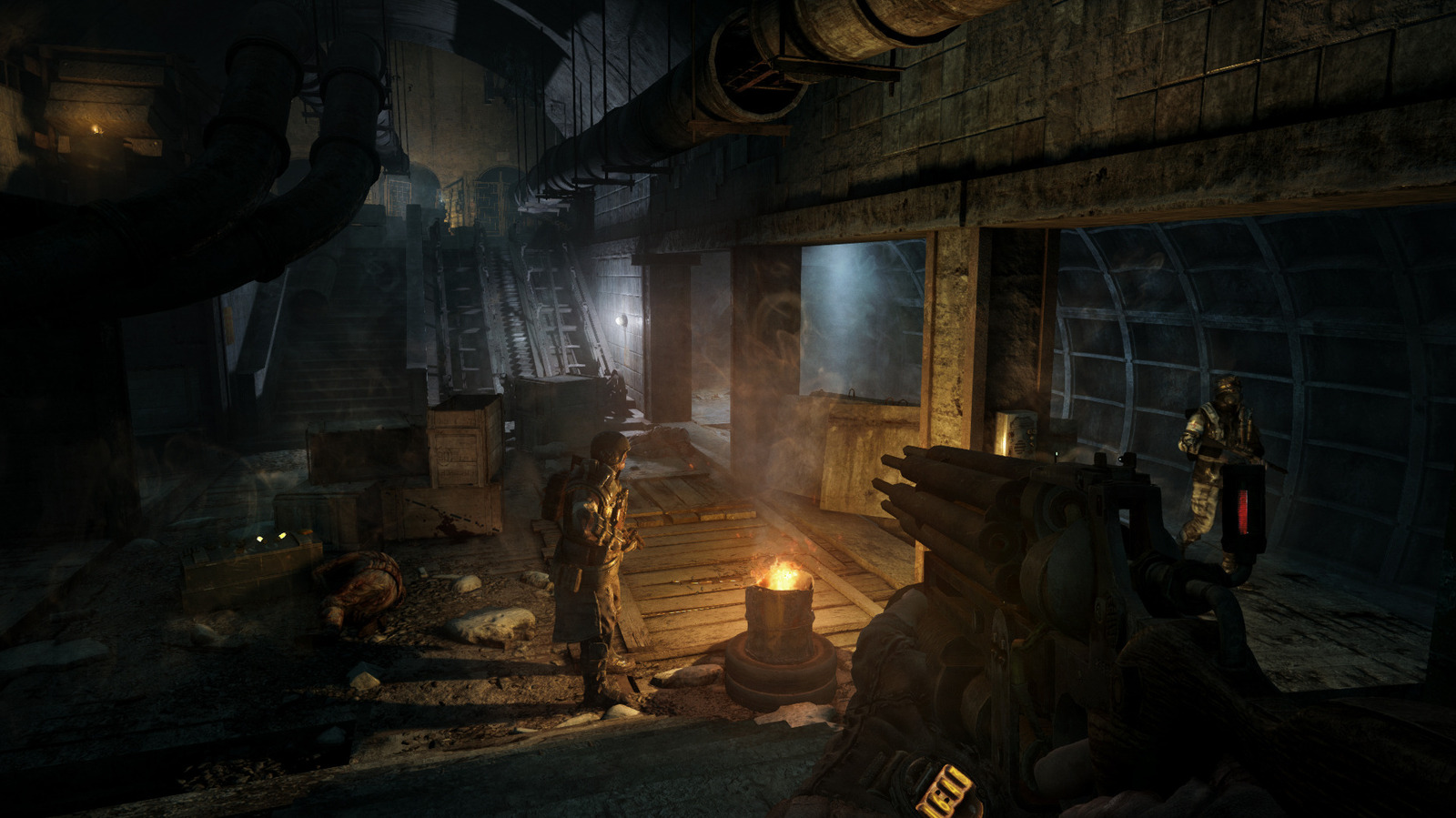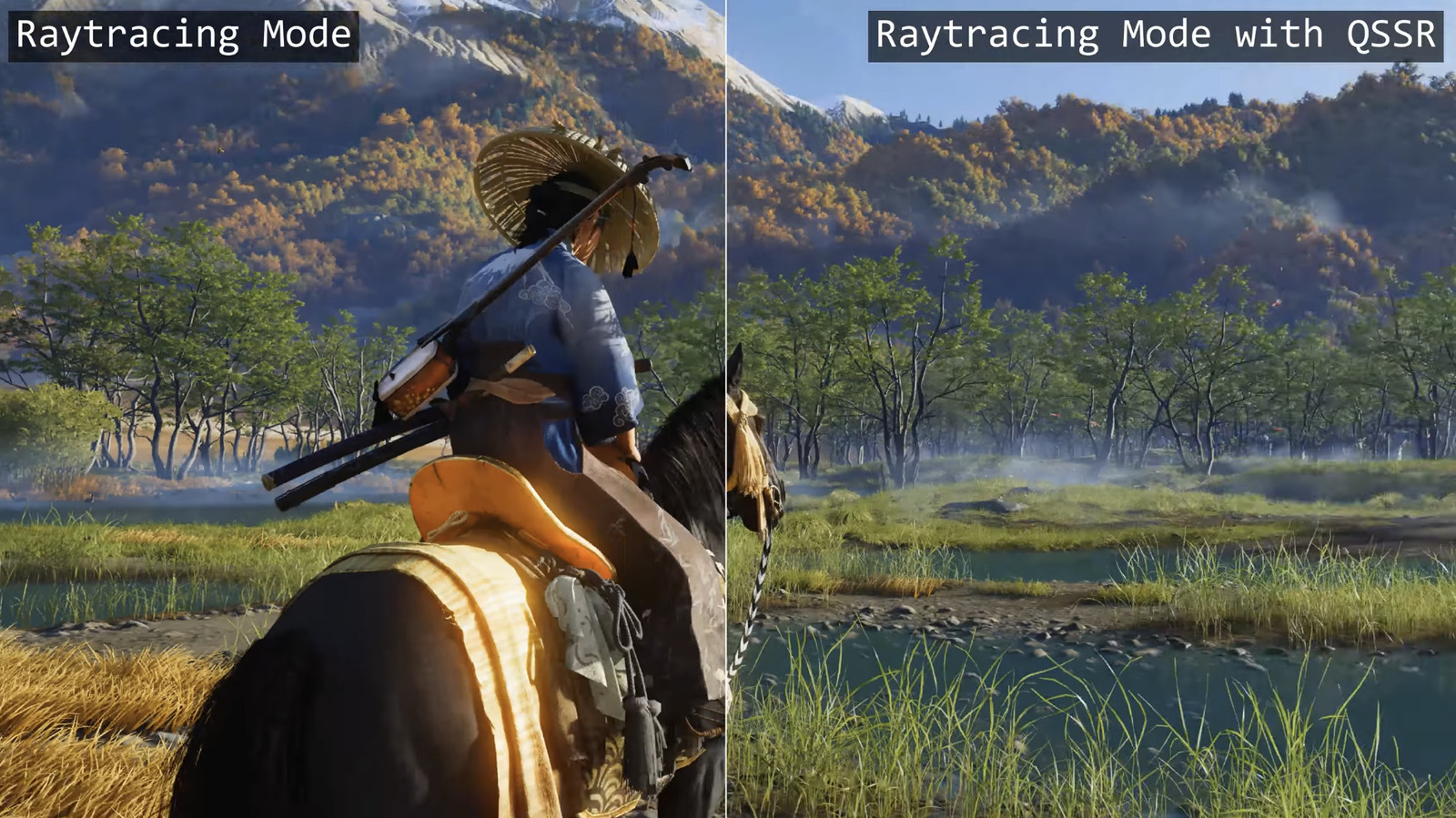
DLSS has been a game-changer.NVIDIA's decision to sacrifice space in its GPUs for dedicated AI-acceleration hardware has turned out to be a visionary move.DLSS solves a serious problem created by high-resolution flat panels and the frustration of having to target an arbitrary panel resolution because scaling methods looked awful.
Thanks to DLSS (and to a much lesser extent FSR and XeSS), that problem is now effectively solved, but there's a perception that game developers are using DLSS as a crutch to make up for the lackluster generational improvement in raw GPU rendering power in the past few years.There's probably some truth to that, but I don't think DLSS and other technologies like that are going to carry all the weight of future graphics compute needs.Chipmakers just have to overcome the speedbumps preventing faster chips from existing, and you're not going to use a software solution to achieve that.
The big monolithic elephant in the room You get one shot to get it right Why aren't GPUs getting faster at the rate they used to? The simple answer is that we're hitting the same walls that exist with CPU technology.There's a limit to how small the transistors can be, at least with our current lithography methods, and there's also a limit to how big the actual GPU dies can be.Microchips are etched into large silicon wafers.
If you have bigger, more complex and powerful chips, then you get fewer chips from each wafer.That makes each chip more expensive.There is also a hard lithographic reticle-size constraint of roughly 26 × 33 mm.
Add to this the issue of chip "yield." Some of the chips will have faults in them, which might mean they have to be scrapped, and that cost is passed on to the chips that do make it.There are some ways to lessen this blow.It's not uncommon for lower-tier GPUs in a series to have exactly the same chip dies as the top-end card.
They've simply had the faulty compute units disabled to create a less powerful, but perfectly functional GPU.But, you can't just keep making chips bigger and bigger.So-called "wafer-scale" chips do exist, but it's hardly reasonable to expect that GPUs will hit that size.
Chiplets let you build your GPU from smaller, cheaper parts The forbidden LEGO Close That's where the idea of "chiplets" comes into play.Instead of making your processor as one monolithic die, you put it together from several smaller units that have better yields, and are individually cheaper to make.So if you want a more powerful chip, just use more chiplets.
This is a method that AMD used to amazing effect on its CPUs to make them cheaper and scalable.It took quite a while for Intel to finally catch up with its chiplet design.The big problem here is how to connect these chiplets together so that they have the same performance as a monolithic chip.
Even small issues with the communication between chiplets can destroy performance.Apple's made some amazing progress with "fusing" chips together and creating single logical GPUs (apps see it as a single GPU) despite there being multiple GPU blocks on the die in some of its Apple Silicon SoCs.It's worked so far with CPUs, but what about GPUs? Well, AMD has already tried chiplet-based GPUs.
RDNA 3 uses chiplets for components like cache units.The AMD MI300X has eight GPU Accelerator Complex Dies, four I/O dies, and eight HBM stacks interconnected into one accelerator.NVIDIA's Blackwell architecture uses two compute dies connected at 10TB/s but presented to software as one coherent GPU.
However, NVIDIA didn't do this with consumer cards.The RTX 5090 is monolithic! Likewise, AMD went back to a monolithic design with RDNA 4.It seems they aren't quite ready to go all-in.
Still, it's not that chiplet design is coming to GPUs, it's here, and it's only going to get more interesting.Related Don’t judge a USB-C cable by its wattage alone—here's what to look for instead Fast charging and fast file transfers are separate capabilities.Posts 4 By Patrick Campanale GPUs can gain raw power again While GPUs aren't exactly following Moore's Law or anything close to it, I also don't think we'll have to rely completely on alternative rendering methods like DLSS to carry computer graphics into the future.
By liberating GPUs from the one-shot nature of enormous monolithic dies, chiplets give designers another way to scale.Instead of putting every transistor on the newest and most expensive process, they can reserve leading-edge silicon for the components that benefit from it and manufacture cache, I/O, and other functions elsewhere.Smaller compute dies can also be easier to manufacture successfully than one enormous die.
None of this guarantees cheaper GPUs (the packaging itself is expensive) but it gives chip designers options that monolithic GPUs simply don't have.Given how badly AI demand has distorted today's GPU and memory markets, I can at least hope that the enormous sums being poured into GPU packaging and chiplet research eventually trickle down into cheaper gaming hardware.
Read More