We’re starting with metallized polymer micro-AM components for satellites in today’s 3D Printing News Briefs, and then moving to a new facility, an award-winning gas storage manufacturing project, and Snapmaker awards.We’ll finish with 3D printed car accessories and a 3D printed unibody bike saddle.Horizon Gets Grant to Industrialize Metallized Micro-AM Satellite Parts Horizon Microtechnologies recently received a major grant, which will support a two-year project about industrialization of metallized polymer micro 3D printed components for satellites.
Its hybrid manufacturing method pairs precision polymer 3D printing with advanced functional coatings and metallization, which results in parts with the design freedom and low weight of polymer parts, but metallic surface properties.The project, supported by about €500,000 in funding, will work to scale Horizon’s AM and coating technologies to produce high-volume satellite hardware; the specific goal is up to 50,000 precision-coated shielding housings for constellation-class deployments.Horizon has previously demonstrated that its metallized polymer micro-AM components can work for space and RF applications, so this project will expand the capability into a repeatable manufacturing framework for satellite production.
Additionally, the project will support Horizon’s expansion of its in-house manufacturing infrastructure, coating scale-up, process verification, and more.“Horizon has spent years proving that metallised polymer micro-AM can deliver far more than lightweight prototypes.This project is about the next step, taking a validated technology platform and building a manufacturing pathway geared towards the prices, leadtimes and throughput required for supplying and supporting satellite constellations with advanced components,” said Andreas Frölich, CEO of Horizon Microtechnologies.
“The space economy needs more than innovation, it needs credible routes to industrial production.When a component appears tens of thousands of times across a satellite constellation, weight, cost, and manufacturing repeatability become decisive.That is where Horizon can make a meaningful difference.” MELD PrintWorks Constructing New AM Facility in Virginia Location of future home of PrintWorks, including (L-R): Brian T.
Hamilton, Economic Development Director, Montgomery County, VA; Larry Vicari, President, MELD PrintWorks Corporation; Nanci Hardwick, CEO, MELD PrintWorks Corporation; Brenda Rigney, Project Manager, Montgomery County Economic Development.MELD PrintWorks Corporation has announced construction on a new 12,000 square foot additive manufacturing (AM) facility, which should be ready in 2027.This purpose-built facility in Christiansburg, Virginia will give the company much needed room to expand its operations, and, as CEO Nanci Hardwick said, “facilitate bigger parts made by larger MELD metal printers.” Its MELD process enables solid-state deposition, fabricating high-performance components in metal alloys, like aluminum, copper, and titanium, without any melting involved.
There’s increasing demand for AM capabilities that are able to support strained casting and forging supply chains, and MELD has customers in the aerospace, defense, automotive, and shipbuilding industries using its technology.The new facility will help the company transition its technology into high-throughput production environments and scale manufacturing of massive parts by housing expanded production lines.“Our trajectory over the last few years has been driven entirely by our customers’ needs for reliable, open-atmosphere metal printing that side-steps traditional casting vulnerabilities.
This dedicated new facility will allow us to scale operations, implement enhanced quality control architectures, and provide our customers with high-value components at unmatched lead times,” stated Larry Vicari, President of MELD PrintWorks.ORNL & Collaborators Win Award for 3D Printed Water-Soluble Mandrel ORNL and collaborators display a lightweight, linerless Type V composite pressure vessel for high-pressure gas storage, research that earned a 2026 ACE Award at CAMX.Credit: Logan Korn/ORNL, U.S.
Dept.of Energy Researchers at Oak Ridge National Laboratory (ORNL), along with project collaborators Infinite Composites, JuggerBot 3D and Oklahoma State University, won an Award for Composites Excellence (ACE) for their development of a large-format 3D printed, water-soluble, polymer mandrel, used to manufacture linerless Type V pressure vessels that store hydrogen, compressed natural gas, nitrogen, and helium.These vessels are made from composite materials and don’t retain an internal liner, which helps reduce weight.
The team used 3D printing to make a temporary mandrel out of a special water-soluble polymer.A carbon fiber composite is wound around it, and once curing is complete, water dissolves the mandrel, leaving behind the hollow pressure vessel, which receives a gas barrier coating.3D printing the mandrel is a better option than expensive metallic or complex collapsible tooling, and can shorten lead times and increase flexibility for manufacturing high-pressure gas storage vessels.
“Type V linerless composite pressure vessels represent the next frontier in lightweight, high-pressure gas storage, but their manufacturing remains extremely challenging, particularly when it comes to producing and removing complex internal tooling.Our water-soluble, 3D-printed mandrels represent an important step toward overcoming this barrier and enabling scalable, cost-effective manufacturing of Type V vessels,” said Ahmed Arabi Hassen, group leader for composites innovation at ORNL.“This achievement demonstrates how advanced manufacturing and strong industry partnerships can help bring these technologies closer to commercial reality.” 20 Projects Win Phase 1 of Snapmaker Innovation Fund This summer, Snapmaker opened its Snapmaker Innovation Fund, supporting hardware, software, and workflows that advance toolchanger 3D printing, and give users more ways to work with the Snapmaker U1 printer.
This month, it announced the 20 winning projects in Phase 1 of the open competition, chosen by community voting and technical committee review.Snapmaker created the fund not only to support those working to improve the printing experience, but also to thank the community that helped bring its U1 to life.Projects were judged based on technical depth and innovation, openness and quality, and adaptability and practicality.
Winners get to keep ownership of their work, and receive cash prizes, access to select product beta programs, official recognition, and promotion across Snapmaker’s global channels.While there were a total of 20 Innovation Fund winners, here are the three projects that won the U1 Pioneer Award, the highest tier in the competition: LixNix, Full Multi-Nozzle Printing: gives users more control over how single prints are sliced, helping them match nozzle sizes and layer settings to different parts of a model.decay71, multiACE: expands color and material options through 16 filament slots and automatic filament changes by connecting up to four Anycubic ACE Pro or ACE 2 units to the U1.
paxx12, Paxx12 Snapmaker U1 Extended Firmware: gives advanced users more customization and monitoring options to make the U1 their own by unlocking SSH access, debugging, and additional software tools.Phase 2 of the competition opened last week, and submissions close on December 24th.Makers, developers, and U1 users can continue developing their Phase 1 entries, or enter new projects.
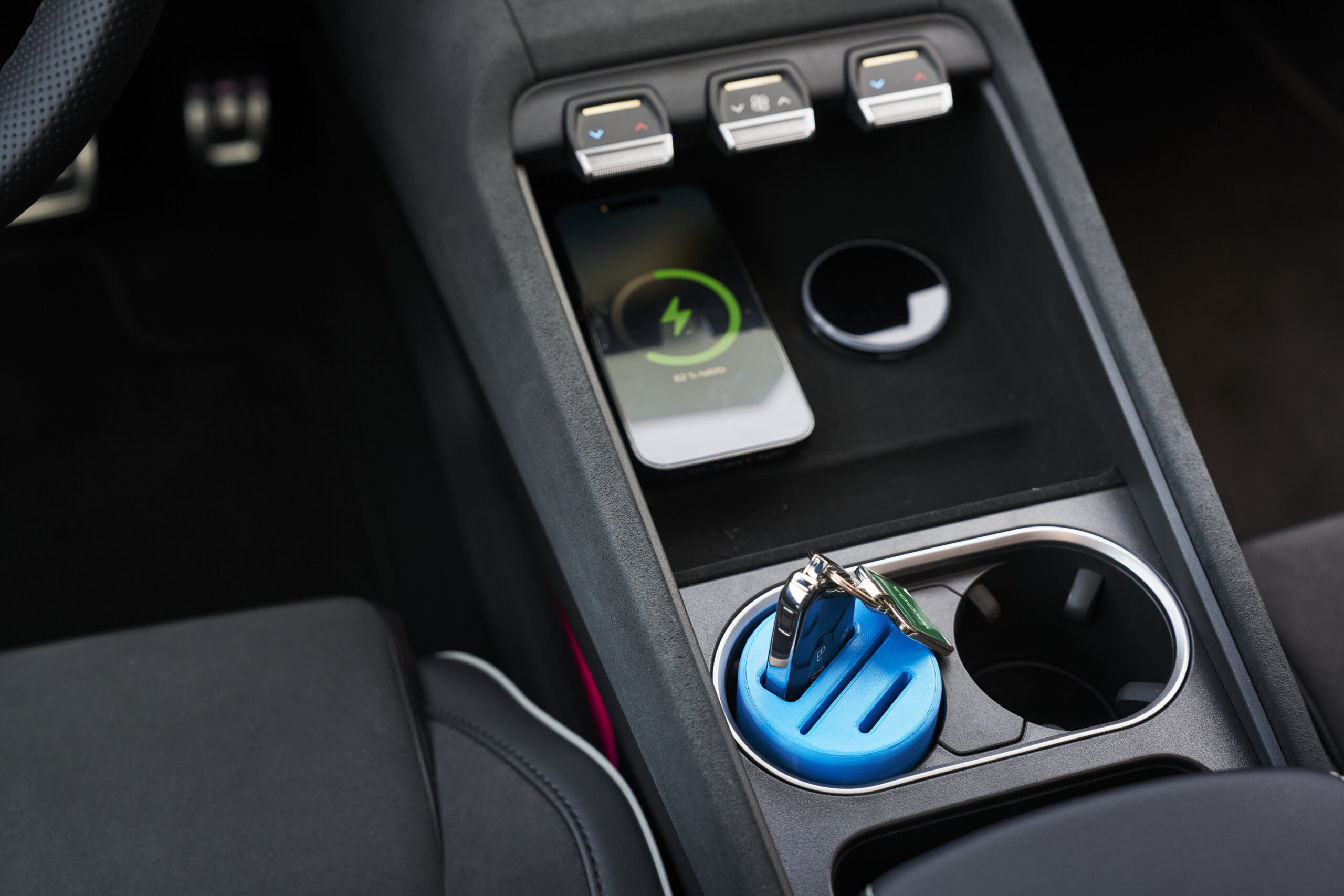
Škoda Auto Launches 3D Printed Simply Clever Accessories on Printables Czech automobile manufacturer Škoda Auto offers Simply Clever features, which are nifty little gadgets meant to make your life easier and more convenient, like a funnel integrated into the washer fluid tank for easy fill-up, mobile phone pockets, a hidden, water-resistant compartment for your umbrella, etc.Now, it’s expanding the Simply Clever range with a selection of free 3D printable accessories, called Printly Clever, on Printables.com, making it possibly the first carmaker to offer custom 3D printables add-ons via a dedicated platform.Škoda’s innovation incubator, and design and engineering teams, developed the idea.
The Printly Clever line makes it possible for you to download the 3D files free of charge, adapt them, and print your own accessories from the comfort of your workshop.That means no tooling, inventory, or long lead times to get custom, practical car accessories.The idea builds on the positive feedback the automaker has received from the Škoda community about its previously released 3D vehicle models.
So far, community response has been unsurprisingly good about the Printly Clever line as well.Škoda looks at Printables.com user feedback to decide which ideas to make next, and has developed plenty of 3D printable accessories for the line, ranging from cupholders, coin boxes, and cable management tools to phone brackets, top tether hooks (the most popular so far), and even a holder for french fries! Most of the add-ons use current storage compartments, without having to modify the vehicle itself, and the range is compatible with current Škoda models, and many discontinued models.There are even a few accessories specifically for the Epiq and Peaq models, including a lower console organizer, a jumbo box tray, cupholder covers, and a clip-on cupholder for the Peaq’s foldable table.
Hong Kong Polytechnic University Team 3D Prints Unibody Bicycle Saddle The Activewear Design Team at Hong Kong Polytechnic University has earned a prestigious Red Dot design award for the Air One saddle—what they say is the world’s first unibody 3D printed bicycle saddle produced as a single piece.The team wanted to investigate the possibility of making industrial products based on a 3D looping knitted structure, and decided on a bicycle saddle, designed to be 3D printed in just one piece.They realized the main engineering challenge would be making the load-bearing rails in the saddle strong enough, without adding weight, and went with the Markforged Mark Two, with continuous fiber reinforcement (CFR) and strong Onyx base material.
The prototype was designed in CAD and sliced with Markforged Eiger software, and then tested on the road for over 1,000 km by a team member who happens to be an avid cyclist.The 3D printed rails did deliver the necessary strength, while keeping an ultralight profile, and the Air One saddle can be customized to meet the needs of individuals.Plus, because it’s produced as a single unibody unit, assembling components during manufacturing is unnecessary, which speeds up the process.
“At just 171gm, the Air One saddle is lighter than most commercially-available saddles, while meeting all the required strength criteria,” said team lead Dr.Ho Chu Po.“An additional benefit is that, thanks to the flexibility of composite 3D printing, the basic design of the saddle easily adapts to suit rider ergonomics, for example by modifying the shape of the saddle or the hardness of the inner structure, including shell geometry or internal lattice density.
“We are now examining ways to apply this continuous fiber approach to other sporting applications, including protective gear.” Subscribe to Our Email Newsletter Stay up-to-date on all the latest news from the 3D printing industry and receive information and offers from third party vendors.Print Services Upload your 3D Models and get them printed quickly and efficiently.Powered by FacFox Powered by 3D Systems Powered by Craftcloud Powered by First Mold Powered by Xometry 3DPrinting Business Directory 3DPrinting Business Directory
Read More