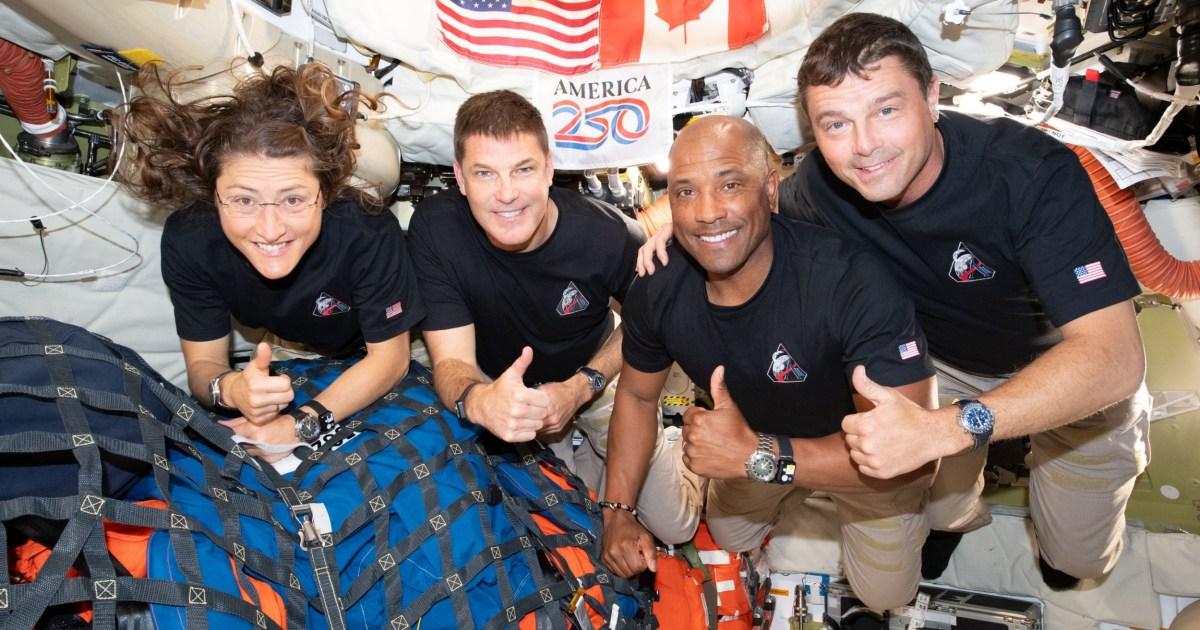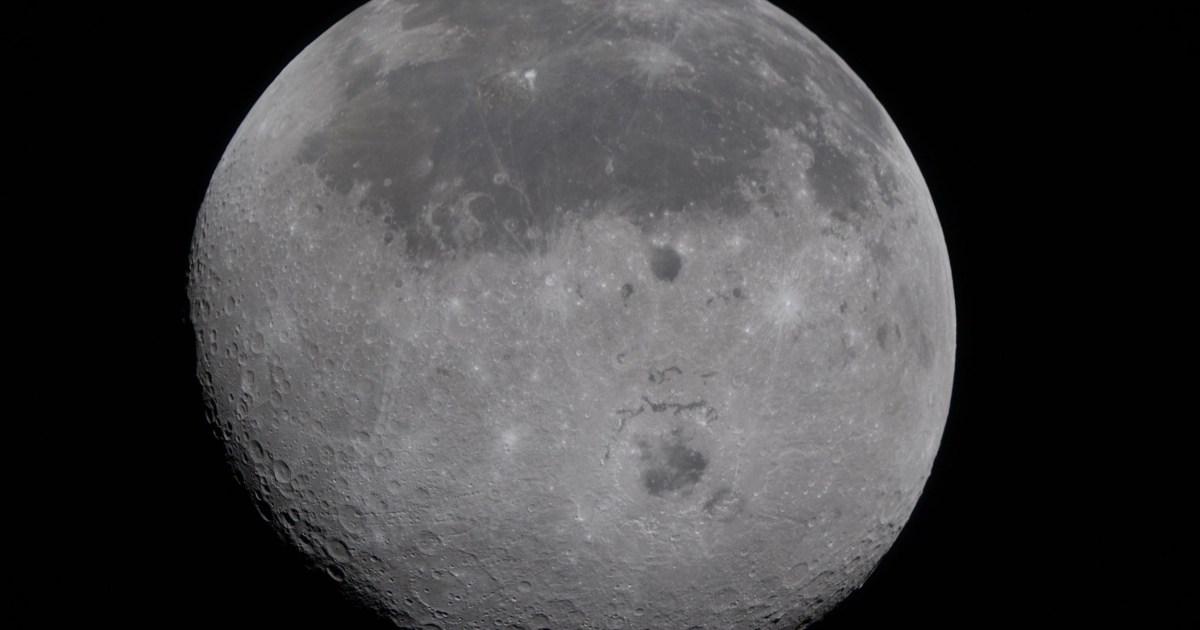
Up Next The Artemis II crew are preparing for the final leg of their journey to the moon and back – returning to Earth.Nasa’s 10-day mission reached its mind-bending peak on Monday when four Earthlings saw the moon’s far side for the first time in history.By viewing the far side, also called the dark side because it is the hemisphere that never faces Earth, the crew also became the farthest humans have ever been from Earth.
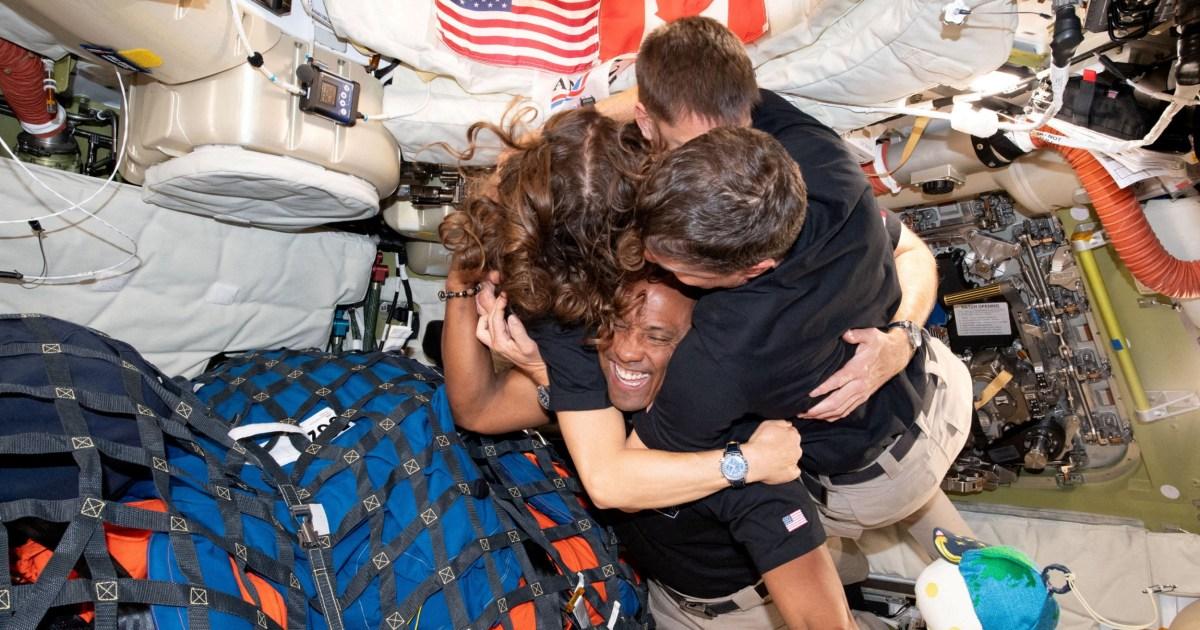
Reid Wiseman, Victor Glover and Christina Koch and Jeremy Hansen are now being dragged back to Earth by the planet’s gravity at 2,400mph.They did a group hug as their close approach, known as a lunar flyby, came to an end aboard the deep-space capsule Orion on Monday.‘I’ve actually been thinking of re-entry since April 3, 2023, when we got assigned to this mission,’ Glover, the first Black astronaut to travel to deep space, said yesterday.
Saying splashdown, the moment when the capsule will hit the ocean, was what he’s looking forward to, Glover added: ‘We have to get back.There’s so much data that you’ve seen already but all the good stuff is coming back with us.’ Here’s what to know about the astronauts’ reunion with Earth – and gravity.Where and when will the Artemis II crew splash down? Nasa confirmed just after 1.40am UK time that the crew ship, which they named Integrity, was halfway home.
About three hours later, very much in Earth’s gravitational embrace, the astronauts made a course-correction burn to ensure they were on target.The Orion will soon split in two, as the crew leave behind the service module – the cylindrical section below the crew capsule – and course-correct one more time.They’ll then smash into Earth’s atmosphere, beginning a nail-biting 13 minutes.
When a spacecraft re-enters the atmosphere, the air beneath it gets hot – so hot that it turns into plasma that tears apart air molecules.This is why spacecraft become glowing fireballs when they come back to Earth.The Orion’s heat shield, which transfers heat away from the capsule, can withstand temperatures of nearly 2,800°C.
These particles can also disrupt radio signals, cutting off communication, meaning mission control will have to wait with bated breath.If all goes to plan – which many tests have already shown will be the case – the splashdown will happen 8.07pm ET.Nasa has already warned people against trying to get a glimpse of re-entry, given that metal scraps and other debris could break off.
What happens once the crew land? Bopping around in the ocean, the crew will exit the vehicle onto a US Navy recovery vessel within about two hours.Their ride back will be the 684-foot amphibious transport dock ship USS Murtha.Once they have their feet on the ground for the first time in 10 days, they will be flown by helicopter to Naval Air Station North Island before being flown to Houston.
They will likely undergo some health checks before holding a post-trial press conference.What could be next for Nasa? A lot.For one, not only getting humans back on the lunar surface but also building a base.
This is quite a tall order, even though technology is far beyond what it was the last time humans were on the moon during the Apollo era; things can go wrong.And there’s not exactly a cosmic equivalent of AA just yet.Artemis II is effectively a trial run of Artemis III, which will launch a craft in mid-2027 to orbit the Earth and see how well it can rendezvous with the lunar landers that are under development by SpaceX and Blue Origin.
In other words, Artemis III is yet another trial run for Artemis IV and Artemis V, which aim to land on the moon’s south pole by 2028.Doing so could pave the way for what Nasa’s top official, Jared Isaacman, called a ‘sustained human presence on the moon’.Getting equipment and materials over to the moon to do this would be very expensive – a bottle of water alone costs up to £32,000 to send to space.
There are lots of resources that moonfarers could use to get by, such as frozen water in the shadowy crater.Or they could mine the lighter and far rarer version of helium, Helium-3, which can be used to fuel power plants.Trending Now Pregnant mum shot dead after honking horn at man in car park US 1 day ago By Brooke Davies Chimp 'civil war' breaks out between 200 great apes Girl killed by dog bite was a three-month-old baby Abusive husband jailed for killing wife who jumped off bridge to escape him One reason for Artemis, says the London Science Museum’s head of space Libby Jackson, is ‘FOMO’, or the fear of missing out.
China is also eyeing a lunar base by 2030, sparking a modern space race between Beijing and Washington.‘Just as we had a space race back in the 60s where the US and Soviets wanted to demonstrate their superiority, the US don’t want to give China a free pass at the moon,’ she tells Metro.She adds: ‘But the long-term goal is to send humans one day to Mars, and the moon is a proving ground to try that out.’ Get in touch with our news team by emailing us at [email protected].
For more stories like this, check our news page.MORE: Houston, we don’t have lift-off — what happens to your penis in space MORE: Donald Trump claims ‘Space Force’ is watching Iran in latest rambling post MORE: People think Nasa’s Artemis II has found a face on the dark side of the moon Comments Add as preferred source News Updates Stay on top of the headlines with daily email updates.This site is protected by reCAPTCHA and the Google Privacy Policy and Terms of Service apply.
Your information will be used in line with our Privacy Policy HomeNewsTech Related topics NasaSpaceThe Moon Artemis II faces mission's 13 riskiest minutes as it prepares for splashdown Tech 11 hours ago By Josh Milton Inside Artemis II's Orion – a cosmic 'minivan' where the toilet already broke once Tech April 3, 2026 By Josh Milton
Read More