Android dominates the smartphone market, and Google TV is a strong streaming platform.That same success hasn't followed Google's attempts with PCs — and it's not for lack of trying.Back in 2015, it tried to put a desktop OS in a streaming stick.
You might be thinking, "But wait, aren't Chromebooks popular?" While these affordable laptops are certainly well known, the best market share that Chrome OS has ever had was around 14% in 2020.There's a reason why the company is transitioning to a brand concept in the form of "Googlebooks." As we wait for the next generation, let's look into the past.The era of the mini PC Google wasn't alone Compact PCs like the Mac Mini and Lenovo Yoga Mini have been pretty popular in the 2020s.
However, these are far from the first attempt at miniature desktop-class computers.In the late 2000s, netbooks exploded on the scene, and in the mid-2010s, it was the "stick PC." The appeal of stick PCs was pretty obvious: a full computer that could be carried in your pocket.They worked essentially the same as a Chromecast or Fire TV stick.
Any display with an HDMI port could instantly become your desktop.Pair the stick with a wireless keyboard and mouse, and you're good to go.In many ways, it was the same idea as desktop mode in Android phones.
Every major PC brand launched a stick PC in the 2010s.Most ran Windows or Linux, but some of the most popular stick PCs ran Android.A few of the best models included the Intel Compute Stick, Asus VivoStick, and Lenovo Ideacentre Stick.
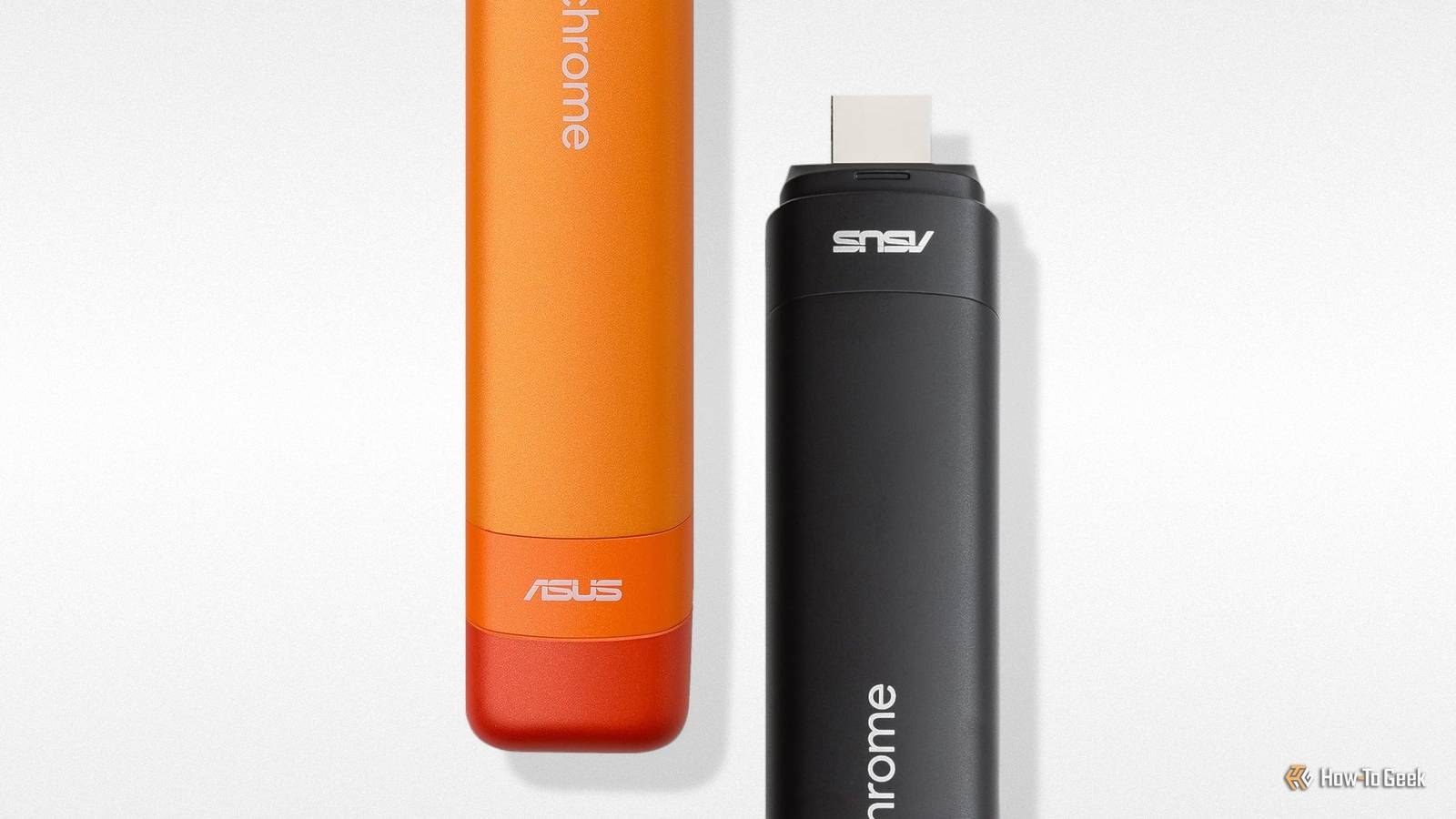
Google and Asus unveiled their attempt — called the "Chromebit" — in March 2015.A Chromebook without the best part of a Chromebook Who was the Chromebit for? The Chromebit launched in 2015 with a price tag of $85.It was significantly cheaper than Intel's $150 Compute Stick, but that device ran full Windows 8.1.
The Chromebit ran Chrome OS, of course, and that meant it had the same strengths and weaknesses as every Chromebook.It was powered by a Rockchip RK3288 CPU, quad-core Mali 760 GPU, and 2GB of RAM.Other details included 16GB of storage, Wi-Fi, Bluetooth, and a full-size USB-A port.
The HDMI end could swivel, making the dongle easier to fit in tight places.It even came in three colors: black, orange, and blue.On paper, that was a spec sheet that looked very similar to a regular Chromebook.
The ability of Chrome OS to run smoothly on low-powered hardware has always been a big selling point.It's what allows Chromebooks to be so lightweight and affordable.However, a laptop is a very different device.
Close A Chromebook is an entirely self-contained unit: display, keyboard, and mouse (you know what a laptop is).That form factor makes up for a lot of Chrome OS's limitations.You give up the more advanced capabilities of Windows or macOS for the convenience of what is essentially a web access portal.
Throw it in a bag and pop it open whenever, wherever.It's all you need.The Chromebit — and all other stick PCs — didn't work like that.
Portability is not the same as convenience.What good is it to have a full computer in your pocket if you don't have a screen to use it with? A laptop takes up more space in your bag, but it can be used in almost any situation.That's why the Chromebit did ultimately find an audience, but probably not the one Google and Asus were hoping for.
Riding off into the enterprise sunset Never to be seen again As a sub $100 computer, people bought the Chromebit more for novelty than actual purpose.It's true calling ended up being in the enterprise and education sectors.They were used to power menu boards, store displays, kiosks, and public internet terminals at libraries, hotels, and airports.
A Chromebit was a quick and cheap way to give an old classroom projector or monitor an upgrade.However, this wasn't enough to warrant a sequel.Google never released another Chrome OS stick PC.
Support for the Chromebit officially ended in 2020.Eventually, the other stick PC makers learned the same lessons that Google did.The product category essentially died out before reaching the 2020s.
For Google, the Chromebit goes down as yet another hardware experiment that failed to last the test of time.Related Google’s hardware graveyard: 7 obscure devices even Google wants to forget Google is known for a lot of things, and one of those things is killing its own products.The graveyard is filled with Google apps and services you may have heard about, but there are interesting, lesser-known hardware projects, too.
Some were ahead of their time, others were just not good.Posts 6 By Joe Fedewa
Read More