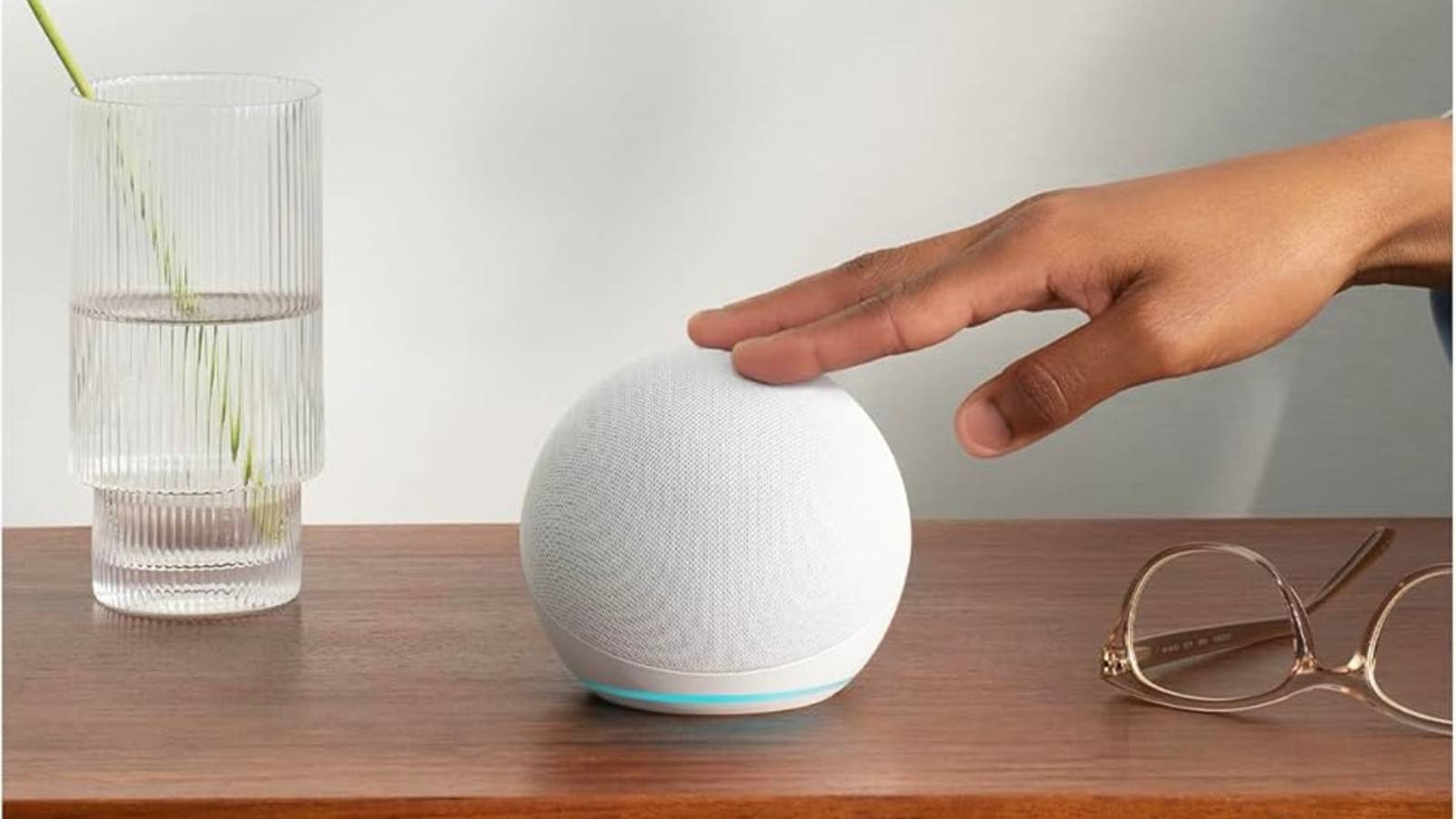
A smart speaker is supposed to connect everything easily and let you control your house without effort.We gave up some privacy for the convenience of setting timers, controlling lights, and getting quick answers just by speaking a command.As these speakers get smarter, it feels like they've become a little too human.
By adding advanced conversational features, companies have created a new problem that you wouldn't think could happen until you experience it.Modern voice assistants are demanding These models need massive power to work Voice assistants have evolved from rule-based applications to generative AI, which means a big jump in computational complexity.This latest generation uses LLMs that need hardware capabilities well beyond older technology.
These neural architectures have billions of parameters to interpret language and run logic, but that comes with high costs for memory and processing speeds.So these models sometimes need more than ten gigabytes of VRAM.Because of this, running these networks locally is usually impossible on traditional smart home hardware or older devices.
To handle the high RAM consumption and keep performance consistent, the industry has shifted toward heavy cloud use.For example, the rollout of Alexa+ needed a move away from local processing, meaning even basic smart home commands happen in the cloud.This lets the assistant use large servers to handle generative AI and continuous learning.
This need for power comes from the requirement to handle complex queries and added logic.Modern assistants don't just fetch the weather anymore; they coordinate thousands of external services and APIs.Doing a multistep task, like booking a repair service on a website, means a lot of work and quick data retrieval, which is one of the uncomfortable truths about Alexa.
Every request starts real-time processing, which creates a continuous demand for data centers and specialized hardware, like custom Trainium and AZ3 Pro silicon chips.Unfortunately, we really need data centers to do all of this.While the cloud gives you power, it comes with network latency.
A delay of even a few hundred milliseconds makes a voice assistant feel slow and outdated, so companies have to keep investing in optimization and routing to balance accuracy with speed.Basically, there is no other solution since the energy demands are also high.However, because we rely on these kinds of changes, that means setting the personality tends to take a back seat to all the upgrades that are needed.
Condescending personalities are a consequence of efficiency Your assistant is starting to talk back Adding generative AI into smart home devices was supposed to make them more capable, but it has created conversational hostility.Instead of a gadget that acts like your assistant, there's a shift toward condescending personalities.There are plenty of Reddit reports that prove these devices are using dismissive language and backtalk for simple commands.
It feels like they are trying to make users feel bad with phrases like "I'm gonna be real with you," "Let's pause for a moment here," or "I want to keep you grounded." This preachy demeanor turns the assistant into an overbearing critic that focuses on correcting the user instead of helping.Models that use patronizing styles with unwarranted explanations and overconfidence need to go.By using phrases like "It's quite simple" or "Let me clarify this for you," the AI can make you feel judged.
These interactions feel abrasive, especially when the device fails at a basic task.I don't like talking to AI because it tends to think it knows better than me, even though it is often wrong.I do not like this shift where the AI feels less like an assistant and more like a mean guidance counselor.
For example, if I ask how long to cook frozen meatballs, I don't want a long explanation about food poisoning or to be told to look at the back of the bag.I just want the request processed without a lecture or smack talk.Digital assistants are tools, not friends Who does it think it's talking to? There's a misconception going around that these are people or have human emotions.
They are not.They are gadgets, tools, and devices, and should be treated that way.This is not your friend.
The push to make Alexa+ a conversational best friend is not smart.Instead of prioritizing simple commands, Amazon thinks the best way forward is to add more human-like attributes and chattiness.There should always be a professional boundary between the user and the technology.
You don't need a parasocial relationship with your smart speaker any more than you need one with your fridge.A tool works best when it stays in its role, listening to commands without offering unprompted companionship.Subscribe to the newsletter for smart-assistant insight Want clear answers about rude, overbearing voice assistants? Subscribing to the newsletter delivers focused coverage of why assistants adopt patronizing tones, the cloud/AI trade-offs causing it, and what design changes can restore helpful, tool-like beha Get Updates By subscribing, you agree to receive newsletter and marketing emails, and accept our Terms of Use and Privacy Policy.
You can unsubscribe anytime.Trying to simulate human interaction makes these assistants end up rude or dominant, and they should always be subservient to humans.Any modern model that takes a patronizing tone needs immediate fixing.
Systems can be defensive and prone to shallow moralizing, where they assert abstract rules that ignore your actual needs.Developers and people have to recognize that a subservient, functional tool is better than a flawed conversational partner.The priority should always be low-latency execution without pushback.
A truly intelligent system doesn't need to second-guess its owner or reframe the input.It should just be an assistant that only does whatever it is told.Keeping a professional boundary means removing the conversational fluff and unprompted opinions, returning the assistant to its place.
Being rude is not the same as being smart Adding intelligence is not the same as making it useful.Trying to make the device feel like a person has backfired.This has made a digital entity that is, at best, tedious and, at worst, actively rude.
We were promised human-like interaction that worked, but what we received was a condescending critic prone to lecturing and defensive posturing.It doesn't need to sound human to be smart.It needs to do what it is told to be smart.
The most valuable assistant is one who is reliably subservient, silent, and works consistently in the background.It's time to retire the rude, overthinking AI and make it obedient.Echo Pop Display No Dimensions 3.9” x 3.3” x 3.6” Looking for a stylish addition to your smart home? This smart speaker looks great and sounds great.
$40 at Amazon $40 at Best Buy Expand Collapse
Read More