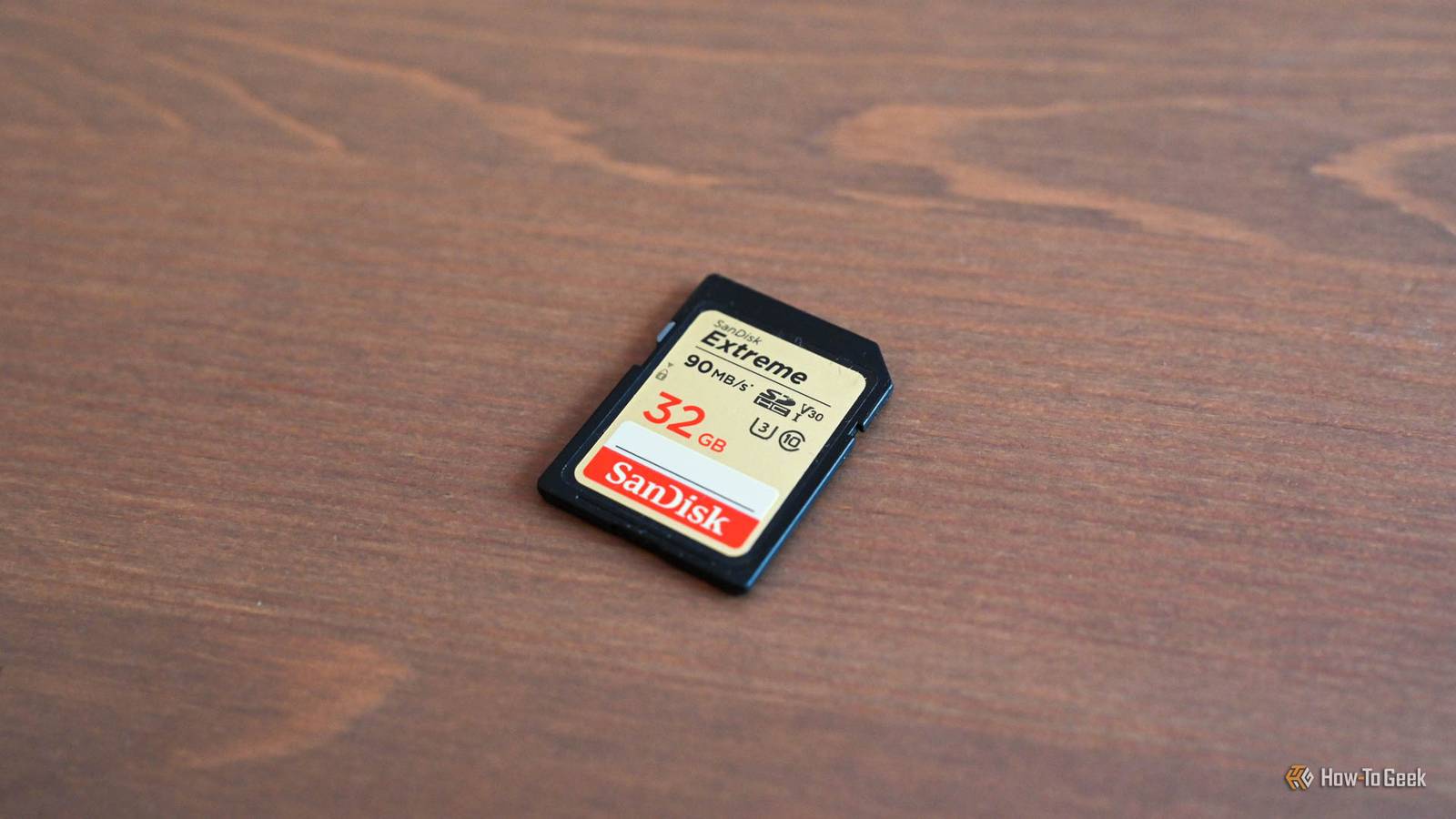
Before SD cards became the default (well, one of the defaults) in removable storage, that whole part of the storage market was a mess of tiny, incompatible formats that only really worked with specific devices or brands.If you shot digital in the early '00s, odds are one of these cards eventually lost your photos.Maybe it happened when you still used it, or maybe you lost it in a drawer somewhere, never to be seen again.
And even if you do find it, your files may be long gone.Before SD cards, removable storage was a mess It still kind of is, but it's a lot better.I have a lot of nostalgia for the '90s-'00s era of technology.
Everything was slightly quirky, many brands had their own proprietary tech (which was a pain at the time, but nostalgia goggles make me look at it more fondly now), and cross-device compatibility was ...questionable.The part people often forget (in this context, I am people) is that quirkiness sometimes resulted in actual data loss.
Early flash storage didn't have the same safety nets that we take for granted now.SSDs may die for any reason, even at 100% health, but they're practically titans of reliability when compared to the SD cards of old.Even when nothing was wrong with the card itself, the readers were wonky at times, too.
It really sometimes felt like all the stars needed to align for your data to live peacefully on whatever iteration of a memory card you chose for file storage.X forgotten memory cards you probably lost over the years Even if you know where they are, they may no longer have your files.If you ever had a digital camera, a PSP, an early smartphone, or any similar such device, you probably owned at least one of the formats I'll introduce below.
Some were fragile, some were proprietary, and some were niche.Each one played a part in getting us to where we are now, with microSD cards being widely available and supported.I've owned a bunch of these.
I couldn't tell you where any of them are now.Chances are, you have some of these in a drawer or in a box somewhere, too.But even if the cards themselves survived, technology has since moved on, making most of the below entirely obsolete in 2026.
1.SmartMedia SmartMedia was an early flash memory card.You could find these in digital cameras around the turn of the 2000s, but also in music gear, including synthesizers and keyboards.
The idea was that you could shoot photos or songs directly onto these and then pull them out to copy to PC.With a maximum capacity of 128MB, SmartMedia simply couldn't keep up once file sizes got more and more bloated over the years.Compatibility was also iffy, with 3.3V and 5V card variants that made it more confusing than it had to be.
2.xD-Picture Card xD was more than just an emoticon used by Millennials in their teens.It was also a proprietary flash card created by Olympus and Fujifilm as a replacement for SmartMedia, primarily used in their digital cameras.
It had the same job, but it reached much higher capacities.It faded into obscurity because it remained brand-tied and couldn't compete as SD scaled faster on all counts, including capacity, speed, and the entire ecosystem support.3.
Memory Stick When I think of memory sticks, I think of the RAM-pocalypse and how much I wish I could buy more memory sticks without spending a fortune.But back in the day, Memory Stick was Sony's proprietary flash card family.It was basically removable storage for all kinds of Sony devices, including cameras, camcorders, PC kits, and more.
But, like many other entries on this list, it fell out of favor due to a lack of compatibility.Once SD/microSD became good enough and widely supported, the incentive to pay the Sony tax disappeared.Memory Stick also existed in Duo/Pro Duo versions, which were closely associated with devices like the PSP.
There was also the Memory Stick Micro (M2), which was the tiny format used in Sony Ericsson mobile phones—remember those? 4.MMC (MultiMediaCard) Most of us will remember MMCs.MMCs were a removable flash format meant for portable devices, such as phones or cameras.
It was essentially just removable NAND flash storage, similar to SD cards.Add MMCs to another list of storage media that got killed off by SD cards.However, MMCs still exist and are widely used, but much less so as removable storage.
Instead, you'll find them as embedded variants, with eMMC storage still being a thing in certain devices.eMMCs are soldered, much like soldered RAM.You'll find them in budget phones, tablets, and even laptops and Chromebooks, but also SBCs and IoT devices.
5.RS-MMC RS-MMC was a smaller MMC variant used almost exclusively in mobile phones, and it commonly relied on an adapter to fit into standard MMC slots.This was the go-to for devices that needed a small form factor, at least until microSD came along as the universal tiny card.
Its big problem was that it was a transitional dead end.As phones moved on and swapped to newer formats, adapter dependency became a chore for many users.RS-MMCs were quickly abandoned as easier options appeared on the market.
6.miniSD Here's another one of those "replaced by microSD" formats: miniSD.It existed as a smaller SD form factor mainly to satisfy mobile phone size constraints before microSD took over.
It did exactly what SD did, just in a smaller form factor.It was replaced by microSD.The SD Association itself admits that miniSD was replaced by microSD, leaving us with two form factors that are commonly found on the shelves.
7.CompactFlash CompactFlash (CF) was the "pro" card for years, especially in higher-end cameras.It was a robust storage solution with a 50-pin connector, made to work with PC card/ATA concepts.
It was really more of a drive than a card, honestly.It's much less popular now that SD cards rule the world, but CF still gets plenty of support in cameras and memory card makers.It was never as popular as anything else on this list, but that's because of the prosumer focus.
Do any of these still work in 2026? Anything can work if you try hard enough, right? So this is where we're at now.SD and microSD cards dominate the market, but they didn't win because they were majorly better than anything else on this list.(Well, they were, but that's because of evolving technology and not the proof-of-concept itself.) They won because they brought some unity to a market that was previously ruled by chaos.
With all kinds of proprietary formats and compatibility issues, something like the SD card was sorely needed.For most of these formats, you can still get them to work if you're desperate to do so, but most aren't widely used.It's more of a "save your files and forget" type of thing at this point.
If you find any of these somewhere and want to have a good chance of restoring your files, make sure that you're using a reader that explicitly supports the format, or, better yet, use the original device as the reader, if possible.Don't write anything new to the card.Jump in, copy what you can, and leave it to rest.
There are better portable storage solutions these days, from USB sticks to NVMe SSDs in enclosures.
Read More