In the Android world, performance is king.Leaked benchmarks bring praise or ridicule to phones that have never been touched.Everyone wants the latest and greatest Snapdragon chip.
As a long-time Pixel user, I've never been concerned with any of this.I didn't always feel this way.When Android was still finding its footing, I remember how big a deal it was when 1GHz processors started to appear in phones.
For years, I wouldn't consider an Android device if it didn't have the latest SoC.Things changed when I switched to Pixel phones.Fighting bad software with raw power Sometimes, specs aren't the problem There's a reason why the mere mention of "1GHz" created so much hype back in the day.
The software was a bit clunky, especially on phones with custom OEM skins like HTC Sense and Samsung TouchWiz.They needed all the processing power and RAM they could get — and people still complained about performance.Meanwhile, iPhones of the same era consistently had "worse" specs than their Android counterparts, yet they were praised for being smooth and snappy.
Apple optimized the software and hardware to work better with lower-powered components, while Android OEMs tried to overcome the shortcomings with more power.Nowadays, this isn't as much of a problem.Samsung has polished and refined One UI over the years, but it still asks a lot of its devices.
No other Android device offers as many built-in features as a Galaxy phone — and that's before foldables and DeX mode come into play.For better or worse, Google has taken a very different approach.Even before the Pixel series, Nexus devices were beloved for their clean, "stock Android" experience.
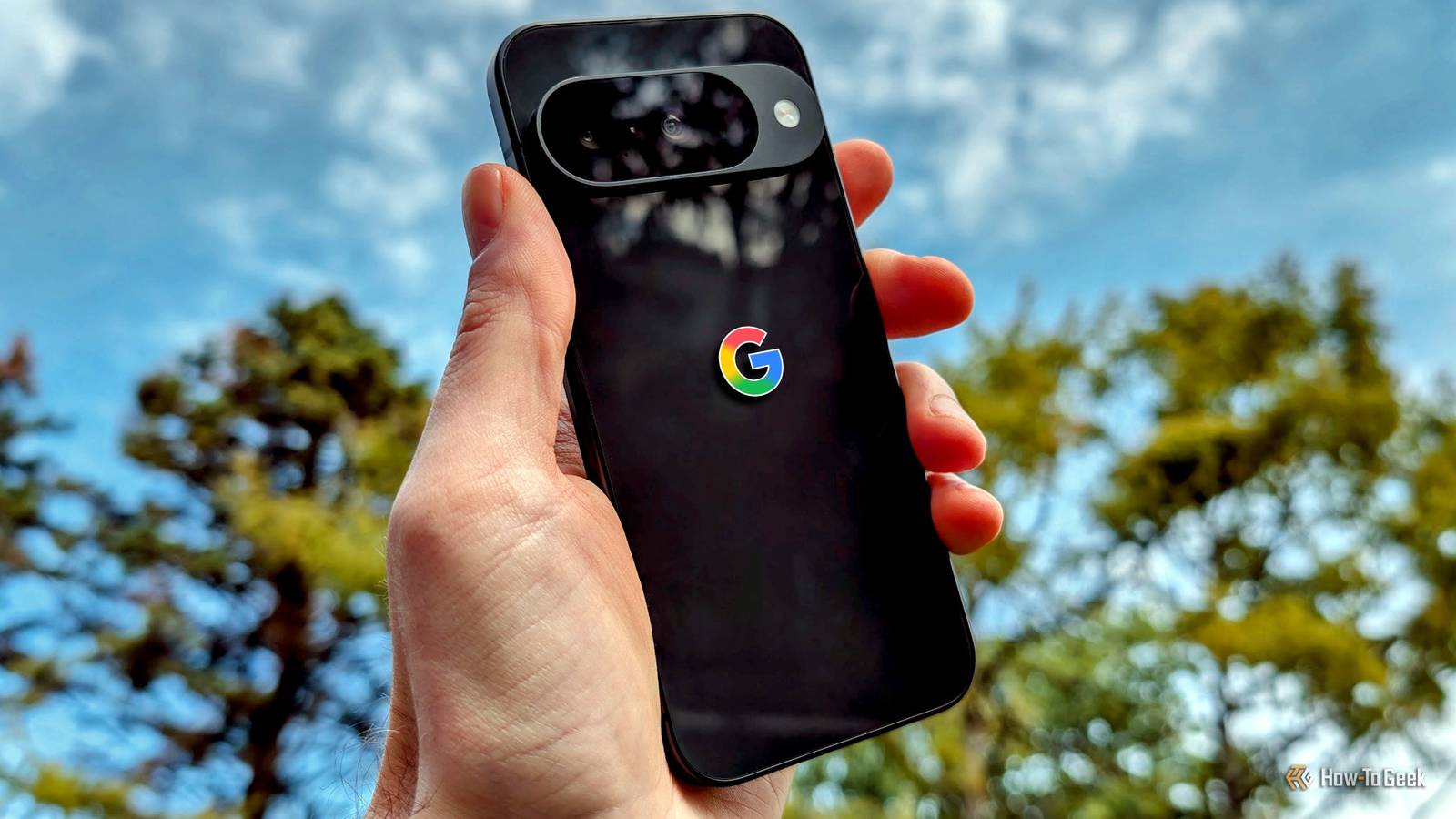
Pixel phones started from the same place, and while they've fully diverged from "stock Android," they still offer a minimal interface.Software is the number one reason why I prefer Pixel phones.I certainly appreciate all the bells and whistles on Galaxy phones (especially Modes & Routines), but at the end of the day, I want a simple phone that Just Works️.
The side effect of that simplicity is less need for brute force power.Related I've owned Pixel phones for 8 years.The Pixel 11 really isn't as bad as it seems Nobody wants to admit last year's phones were already perfect.
Posts 27 By Joe Fedewa Real-world usage is more important than benchmarks I can feel for myself Close Speaking of brute force power, let's talk about benchmarks.Pixel phones perform worse than almost any "equal" competitor you put them up against.The Tensor G6 in the Pixel 11 Pro, for example, is apparently 20% better than the Tensor G5.
However, that still lands significantly behind the Galaxy S26 Ultra and iPhone 17 Pro Max in a variety of tests.I could not care less.As an Android writer, I regularly switch back and forth between Pixel phones and Samsung phones.
In the past three months, I've used a Pixel 10, Galaxy Z Fold 8 Ultra, Pixel 11 Pro Fold, and Galaxy Z Fold 8.Despite the high-powered Snapdragon chips, I'm always happy to return to a Pixel.Personally, I have experience with nearly every Pixel model: Pixel 2, Pixel 3, Pixel 5, Pixel 7, Pixel 9 Pro XL, Pixel 10, and, briefly, the Pixel 11 Pro Fold.
The Pixel 5 is the model that best illustrates my point.It's the generation that was definitively "mid-range." Google ditched flagship chips and went with the Snapdragon 765G instead.The Pixel 5 also happens to be the model I used the longest as my daily driver — it's one of my all-time favorites.
Yet, thanks to my job, it's one of the few non-flagship Android phones I've spent time with.Performance was simply not a concern.The Pixel 5 nailed the basics and offered a clean, streamlined experience.
It didn't need the biggest, baddest processor and tons of RAM to get the job done.Related Google Pixel phones keep getting better with age Your phone doesn't have to get worse over time.Posts 4 By Joe Fedewa But what about Pixel's history of issues? It's not a short list I can't write an article about Pixel performance without mentioning the numerous issues that have cropped up over the years.
Google used Qualcomm chips starting with the first Pixel and ending with the Pixel 5.During this era, there were a smattering of complaints about battery drain, RAM management, and CPU throttling.Since the switch to Google's own Tensor chips with the Pixel 6, there have been issues around overheating and dropped frame rates.
As I said, I've personally used most Pixel phones that have existed — that includes those that suffered from performance issues.I can honestly say I've rarely noticed them to the degree that others have reported.Year after year, I continue to reach of Pixel phones because they give me the fewest headaches.
The regular monthly updates and Pixel Drops don't hurt, either.What Pixel phones lack in power, they make up for with polish.That's where I believe they really shine.
Material Expressive design and the Pixel hardware feel like a cohesive unit in a way that other Android phones just never have to me.Components and numbers on a spec sheet don't tell the whole story.The real-world, day-to-day experience is what matters most.
Read More