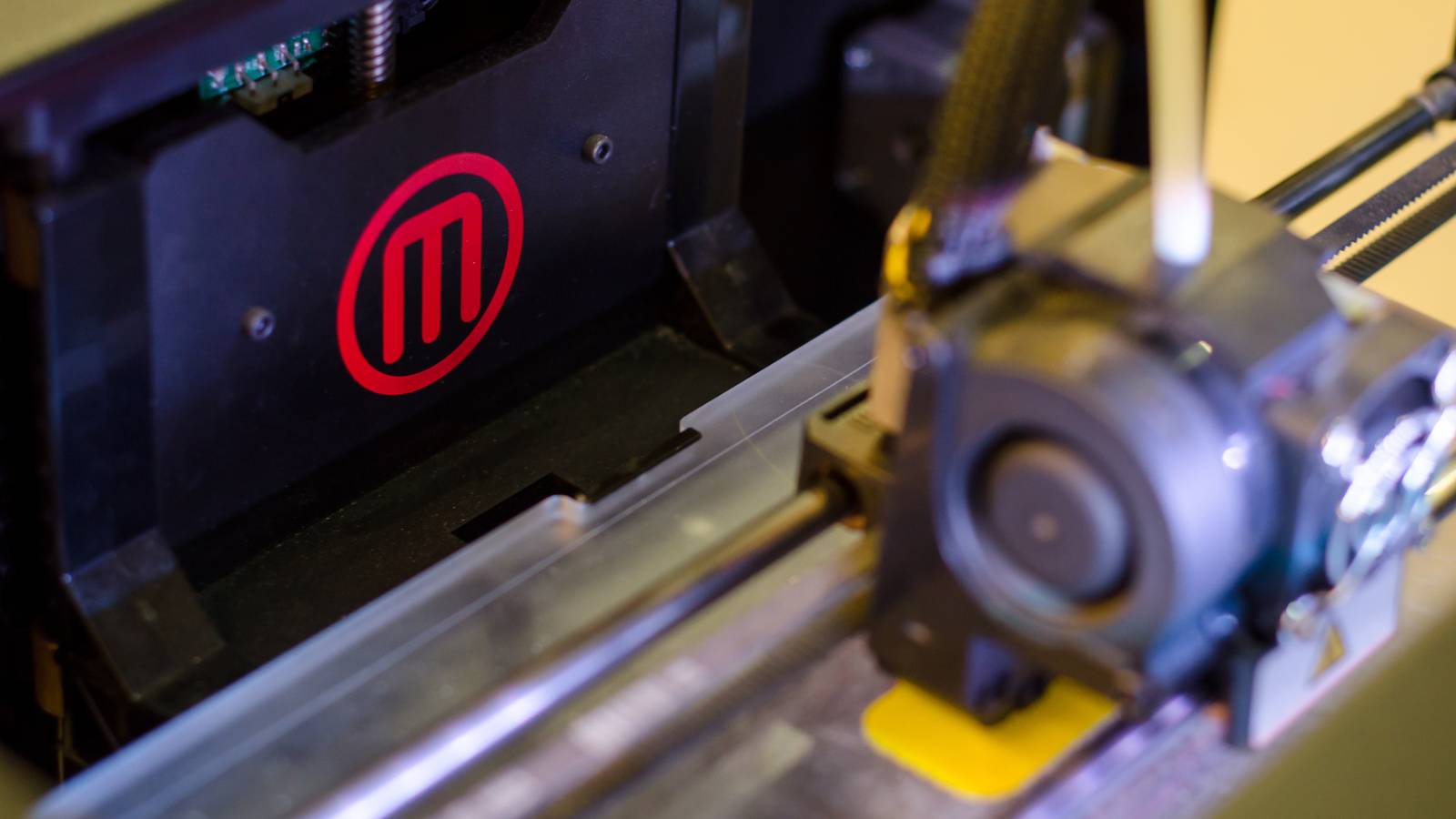
If you’re interested in 3D printing, you probably recognize brands like Bambu Lab, Creality, Prusa, and Elegoo.But a decade ago, the brand on every 3D printing nerd’s lips was MakerBot.So what happened, and how did we get here? MakerBot was a product of a hobby’s humble beginnings For a while, MakerBot 3D printing Close MakerBot was founded in 2009, when 3D printing at home was in its infancy.
The idea was borne out of the success of the RepRap project, an open-source initiative that was established to make low-cost 3D printers a reality.The project’s stated goal was to create machines that could rap_idly with only filament and a few off-the-shelf parts.The RepRap project attracted all sorts of people interested in making additive manufacturing techniques available to the masses.
From the project came the RepRap Research Foundation, a non-profit group of which one of the founders was Zach Smith.He would go on to form MakerBot with Bre Pettis and Adam Mayer, with Zach and Adam also starting 3D model repository Thingiverse a year earlier.MakerBot took shape as a company that sold kits anyone could use to build a 3D printer themselves, at home.
The project was a success and soon attracted investors, leading to disagreements among the founders (and the departure of Smith).It wasn’t long before Stratasys took interest in what MakerBot was doing.Stratasys began life in 1989, at a time when 3D printing was a bold new idea.
Over the next few decades, the company established itself as a leader in the additive manufacturing space, mostly catering to clients looking to build rapid prototypes.After a failed deal with HP in 2010, Stratasys was still looking for a way into the consumer market—which is where MakerBot came in.In mid-2013, Stratasys acquired MakerBot for $403 million (plus shares) under a deal that saw the company continue to operate as a separate brand.
According to one report, MakerBot had sold over 40,000 printers prior to this acquisition.Within the next three years, the company would go on to hit the 100,000 mark.The downfall of MakerBot Things didn’t go well following the Stratasys acquisition To understand MakerBot’s decline, it’s important to understand the company’s appeal at the time.
While the RepRap project was designed to make it possible for anyone to build their own 3D printer, the process was labor-intensive.Not only would you need to understand the documentation and source the parts, but you’d then need to build and learn how to use the machine in order to get anywhere.MakerBot was appealing because it sold ready-to-assemble 3D printer kits that required only a small amount of soldering, with all plans released under an open-source license.
You didn’t to buy a kit, but the kit removed a barrier to entry for many.On top of this, the community spirit fostered by the open-source model led to design revisions that improved the machines and benefited everyone.Following its first three devices—CupCake CNC (2009), Thing-O-Matic (2010), and Replicator (2012)—the company introduced the Replicator 2 in 2012, shortly before its Stratasys acquisition.
The printer wasn’t sold as a kit, but rather as a preassembled machine.It also happened to be the company’s first closed-source design.MakerBot released many more designs following this, including new models of Replicator, several 3D scanners, culminating in the METHOD and METHOD X printers in 2018.
These would prove to be the last 3D printers released solely under the MakerBot brand, as the company merged with rival Ultimaker in 2022.The decision to move away from open-source roots and discontinue kits, combined with a growing threat from rivals like Creality (who would go on to release the legendary Ender 3), proved too much for the brand.There were other missteps along the way, including accusations that the company filed patents for community designs and knowingly sold faulty “Smart Extruders” that easily clogged.
The name still exists in a limited form If you’re in education, at least If you want to buy a new 3D printer with MakerBot on the front, your only option is currently the MakerBot Sketch range.This 3D printer is aimed at the classroom, existing as Ultimaker’s educational brand.At $2,399, there are arguably cheaper ways for students to get hands-on with additive manufacturing.
It’s hard to imagine how things could have turned out for MakerBot if things had gone differently.Bambu Lab currently sits on top of the throne as the most dominant force in 3D printing, a brand that earned a reputation for ease of use and value for money despite its restrictive closed-ecosystem approach.Perhaps the most apt comparison is Prusa, a company that stuck to its open-source roots for years until the release of the Core One+ (the first Prusa printer to not be open source) and Core One L+ and XL+ models (the first Prusa printers that aren’t available in kit form).
The company has something of a cult-like following, but cannot match other brands on price.Even if MakerBot was still a force to be reckoned with, it’s unlikely the company would have had that “Bambu Lab moment” that made cheaper mass-produced brands so appealing.
Read More