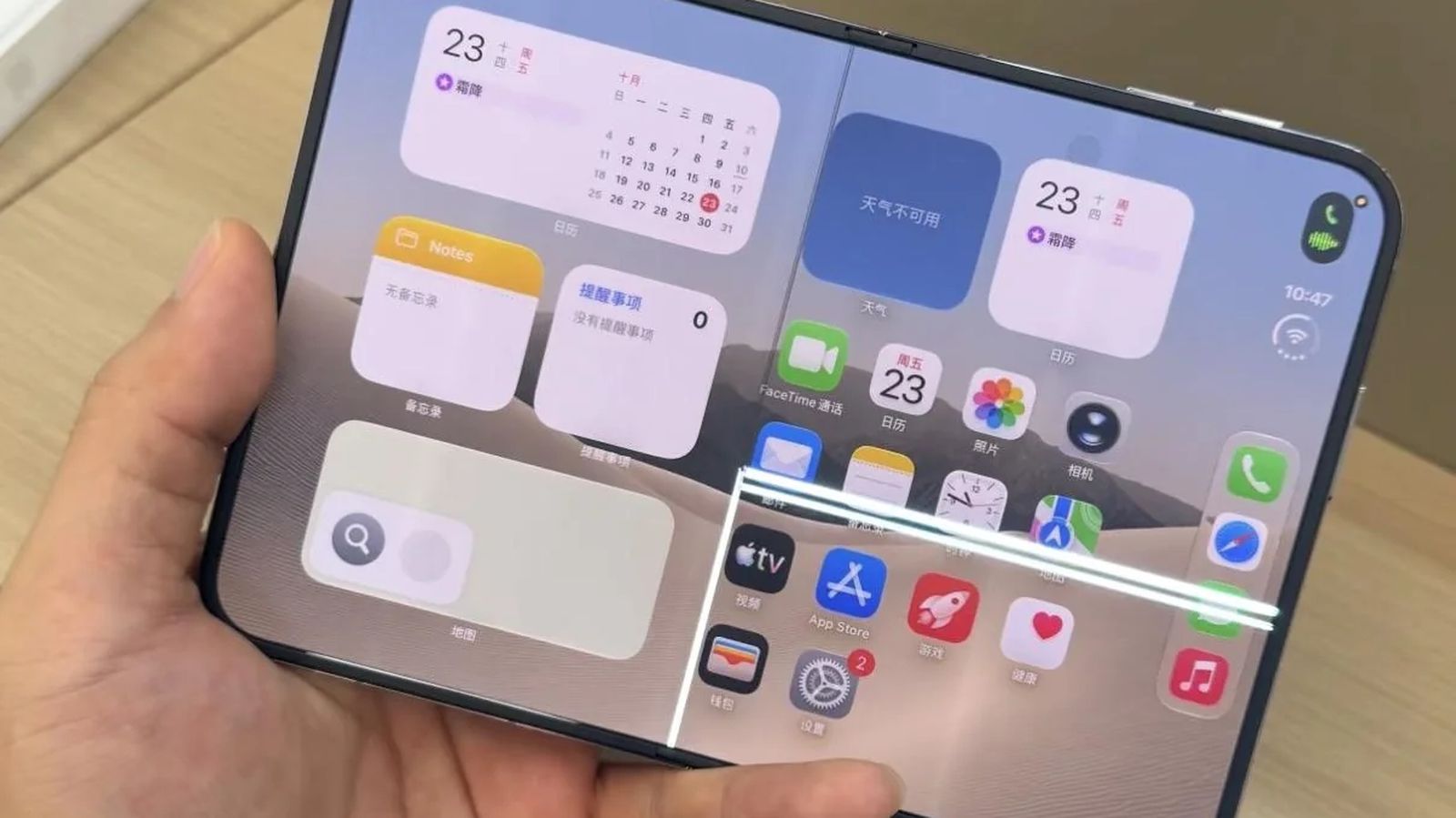
If you had asked last month if you could run Windows on your Android phone natively, the answer would have been "no." Today, the answer is "Yes, but with some important caveats." Add How-To Geek on Google Add as Preferred Source Follow on Google Discover A developer named Kevin Shroff experimented, replacing the OS of his foldable Android OnePlus Open with Windows 11 running directly on the phone's hardware.Windows boots directly from the phone's internal storage instead of relying on Android apps or streaming support from another computer.The experiment has proven its point, but it still lacks several important functions required to call it complete.
How does it work? The main reason it works is that both devices use the same instruction set; OnePlus Open uses an ARM processor while Windows 11 uses ARM64.This allows the phone to read and execute ARM64 instructions directly on its processor.Shroff built custom UEFI firmware and ACPI components that let the phone launch Windows Boot Manager to load Windows from its internal storage.
You can potentially run both Windows and Android at once by dual-booting them.It takes advantage of the foldable nature of OnePlus Open.Because it folds out into a larger tablet, it can display all of Windows features without requiring janky controls or an annoying zoomed-in appearance.
Where he could, Shroff reused existing Windows components and drivers, but as he explains on Reddit, he created most of it from scratch or adapted it from the Snapdragon 8 Gen 2 / SM8550 (a Qualcomm chip that combines major components like the CPU and graphics processor into one chip), and the Adreno 740 graphics processor.The combination lets Windows use the phone's full 16 GB of RAM, rather than relying solely on Snapdragon's capabilities."The project reuses Windows ARM64 CPU/storage/USB stacks and OEM firmware, develops custom input and platform glue, and adapts credited Linux, UniXNU/NativeAdreno, Project Mu/Project-Aloha and Mesa/Topaz work," Shroff says on his project GitHub page.
While being able to run an operating system on a different device is nothing new, and there were earlier projects that let Windows 10 run on an Android phone, these projects were often sluggish, missing features, or were difficult to use.According to Shroff, it "is genuinely really good, feels perfect." However, the project isn't complete.It is still missing important features, including: USB peripherals Audio Bluetooth Cameras Cellular connectivity Proximity sensors It also has a range of incomplete features, such as: Physical buttons Power management Wi-Fi connectivity Charging and battery reporting GPU acceleration Related PC emulation on Android is incredible, but there's a catch Storage becomes the real limiter as PS3 and modern games chew hundreds of gigabytes and sideload tricks add complexity.
Posts 3 By Sydney Butler He is actively working on the project and has written about the next major components he wants to finish, including Wi-Fi connectivity.He intends to "resolve the firmware response/credit stall before another association attempt," and explains, "The priority2 variant retained the same response/credit stall.The next discriminator is the effective cache attributes of the DMA ring/common buffers." While the project has limitations, Shroff and other Reddit users (and I) are excited by its possible use cases.
"For me it would be cool to use the full Codex desktop app, FL Studio, gaming (after GPU acceleration), RDP, video editing, or other full blown laptop style work once WiFi is working," he writes.Source: Windows Latest
Read More