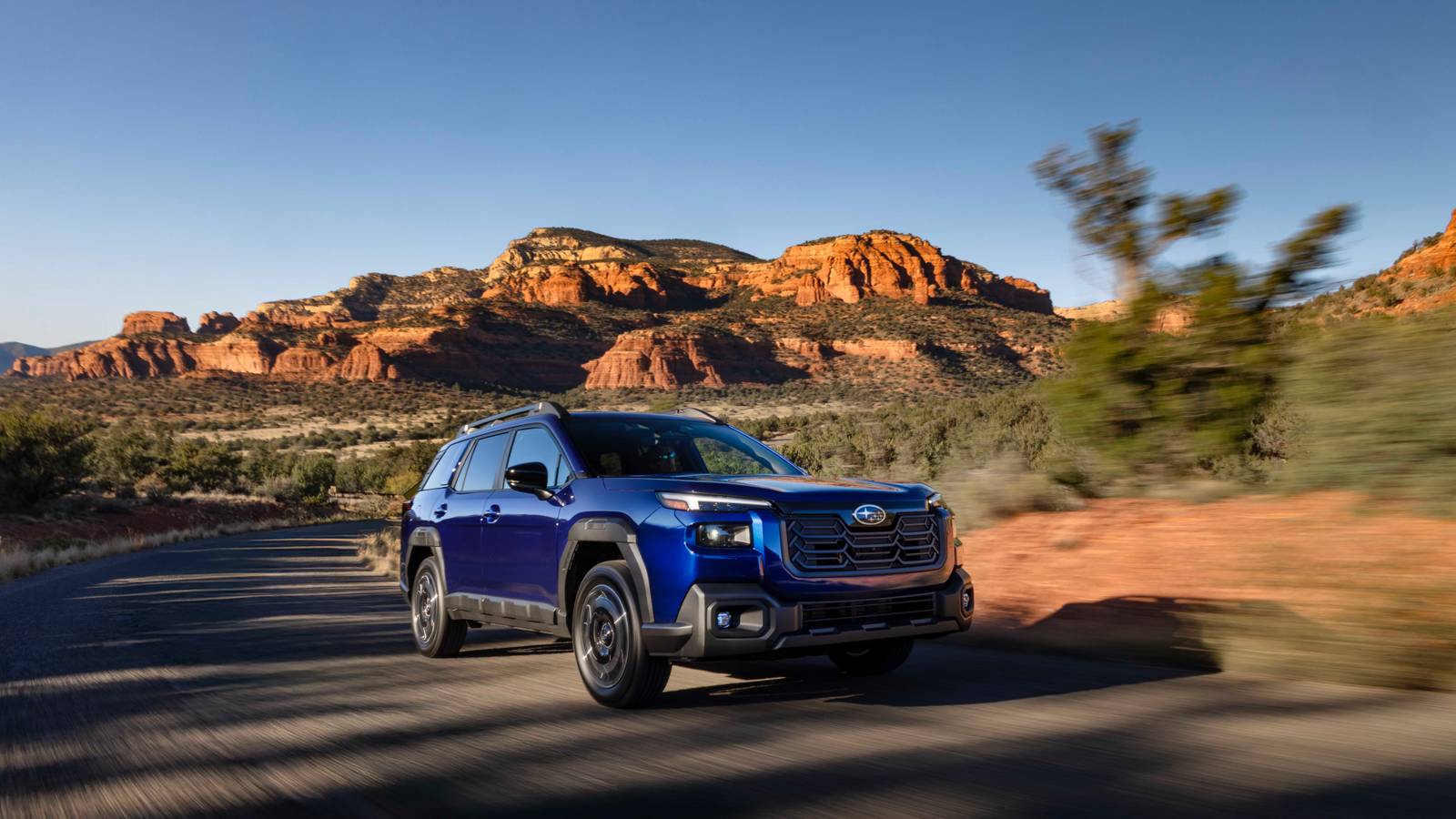
2026 Subaru Outback Touring and Touring XT owners can now receive a free dealer-installed software update to activate a hands-off highway driving system.The feature, officially called Highway Hands-Free Assist, is available for the first time on a Subaru and allows owners to drive with their hands off the steering wheel in a limited capacity at speeds up to 85 mph.When the advanced adaptive cruise control is on, Highway Hands-Free Assist engages automatically on divided highways, like most U.S.
interstates, with two or more lanes.The system offers hands-free driving under the proper conditions, along with additional support features such as lane-change assist, pre-curve speed control, and emergency stop assist with safe lane selection.The key here is Subaru’s use of the word limited as Highway Hands-Free Assist is not a fully autonomous driving system, though it could be easy to confuse it with one at first glance.
Subaru has interior monitoring technology and failsafes that ensure the system can be used only by an attentive driver and only when all road and weather conditions are met.The other keyword is “advanced” before adaptive cruise control, indicating a standard adaptive cruise control system but with integrated lane-centering functionality, which helps keep the 2026 Outback or any other Subaru vehicle in its intended lane of travel.How it works Radar and a cluster of three cameras Highway Hands-Free Assist is part of Subaru’s larger EyeSight driver assistance package, which includes a number of active safety features that have become ubiquitous today on all vehicles, like lane departure and sway warnings, for example.
In order to enable these active safety features and something like Highway Hands-Free Assist for the 2026 Outback, EyeSight relies on radar and a cluster of three cameras positioned near the rearview mirror: Dual Color Stereo Cameras: Like human eyes, these two cameras provide depth perception, allowing Subaru vehicles to identify the distance and speed of objects, including cars, pedestrians, and other obstacles.Wide-Angle (180-degree) Mono Camera: This third camera is designed to catch cyclists and pedestrians entering the Subaru vehicle’s path from the sides, especially at intersections, before the narrow-focus stereo cameras can see them.Millimeter-Wave Radar: For the first time, Subaru has integrated front-facing radar, which provides critical data for the assisted hands-off highway driving system.
Radar has advantages in rain or fog where cameras may struggle.Highway Hands-Free Assist combines the cameras and radar with GPS and 3D high-definition maps to enable the feature on two-lane highways.Meanwhile, an interior camera with infrared LEDs tracks the driver’s eye movement, accounting for glasses and sunglasses.
The interior camera is part of a system that issues warnings should a driver become inattentive while using the feature.Related 2026 Subaru Forester Hybrid defies trends with a surprising $1,800 price drop 581-mile range, standard AWD, and updated safety features.Posts By Carl Anthony Supporting features One can pull the 2026 Outback over in an emergency Support features while Highway Hands-Free Assist is engaged include lane change assist, pre-curve speed control, and emergency stop assist with safe lane selection, defined accordingly: Highway Active Lane Change Assist Allows the Subaru vehicle to change lanes automatically while in hands-free mode when the turn signal is activated.
The rear-corner radar sensors scan for other vehicles and if the adjacent lane is clear, the Subaru vehicle automatically moves into the next lane.A small animation of a car is displayed on the gauge cluster during the maneuver.Highway Pre-Curve Speed Control Using the 3D high-definition maps, the Subaru vehicle anticipates an oncoming curve and automatically slows down before entering it.
Emergency Stop Assist with Safe Lane Selection Designed for medical emergencies or extreme fatigue, if the interior camera detects that a driver’s eyes are closed or has become unresponsive despite multiple warnings, the system will maneuver the Subaru vehicle to the shoulder, crossing lanes if needed.Once stopped, the transmission is automatically shifted into park while the hazard lights are activated, the doors are unlocked, and a call is placed to emergency services.The 2026 Outback is the first Subaru model to feature emergency stop assist with safe lane selection, though it's likely other Subaru models will offer it in the future.
Like Subaru Outback Wagon Base: $34,995 Base Trim Engine 2.5-liter four boxer Base Trim Transmission CVT Base Trim Drivetrain All-Wheel Drive Powered by Expand Collapse How to get the update Highway Hands-Free Assist is available through a free dealer-installed software update for the 2026 Subaru Outback Touring and Touring XT.Outback models sold after January 19th, 2026, already have this update.Subscribe to our newsletter for hands-free driving insight Get in-depth coverage: subscribe to the newsletter for expert analysis on hands-free highway driving.
Subscribing brings concise explainers, real-world testing insights, and clear context about Subaru's Highway Hands-Free Assist and related vehicle autono Get Updates By subscribing, you agree to receive newsletter and marketing emails, and accept our Terms of Use and Privacy Policy.You can unsubscribe anytime.While the software update is done at no cost, the high-definition map data, which the Highway Hands-Free Assist feature must have to function, requires an active MySubaru Companion or Companion+ subscription.
Subaru typically includes a five-year trial for 2026 models.Subaru engineers tested the hands-free system for almost 100,000 miles to improve its performance and how drivers interact with it.According to Subaru, the updates make driving more accurate and help owners feel more confident and comfortable on the road.
However, some evidence suggests that most consumers are skeptical of autonomous cars.While Highway Hands-Free Assist isn’t a full self-driving feature, for some consumers, the idea of even taking their hands off the wheel momentarily at a high rate of speed is a bridge too far.
Read More