The 1990s were one of the most important decades for personal computing.During the '90s, PCs finally became affordable enough to enter many homes, we saw the rise of the internet and mobile phones, Intel released its first Pentium CPU, and Microsoft released Windows NT in 1993 and Windows 95 just two years later.On top of that, gaming switched to 3D graphics, and flash-based storage started appearing.
Today, I want to focus on the last trend, or more specifically, on flash-based memory cards, the most successful of which, the SD card, appeared at the end of the decade.The 1990s were huge for flash memory We got our first flash-based SSDs and memory cards during the '90s Close While flash memory was invented during the previous decade, real flash storage products wouldn't start appearing until the 1990s.In 1991, SanDisk (then known as SunDisk) released the first-ever flash-based SSD.
It had only 20MB of capacity, it was aimed at IBM laptops, and it was a luxury product with an eye-watering launch price of around $1,000.Despite its ludicrous price and small capacity, the product was a big deal because flash memory was revolutionary at the time.Unlike hard drives and earlier removable storage, which included floppies and RAM-based cards that needed a battery to keep the data written to them, flash storage kept its data even with the power off, didn't have any moving parts, and was simple to rewrite.
Other manufacturers followed SunDisk and released their own flash-based SSDs.Just a few years later, the flash-based SSD market included options from SunDisk, STEC, BiTMICRO, and others.Just three years later, SunDisk launched the CompactFlash memory card, which was truly compact for the time.
It was one of the first flash memory card formats smaller than PC Card, which made it a good fit for portable devices, and it went on to become one of the most popular storage formats for digital cameras.The first SD card saw the light of day in 1999 One memory card format to rule them all The release of CompactFlash opened the floodgates, and just a few years later, the market teemed with different flash-based memory card formats.You had SmartMedia, developed by Toshiba, the first memory card to use NAND memory.
It was cheap because it didn't include a controller, but that, along with its max capacity of just 128MB, would prove to be its Achilles' heel.Sony also released its proprietary format, the infamous Memory Stick.It was an excellent product, but Sony decided to sell it at a gross premium.
The high price, the proprietary nature that kept most other companies from using it in their own products, and the arrival of a certain rival I'll get to shortly all contributed to the Memory Stick's failure.There was another popular memory card format released in the 1990s.The MultiMediaCard was launched in 1997 as a joint project between SanDisk (the company changed its name in 1995), Nokia, and Siemens.
MMC cards were relatively popular and made their way into many Nokia Symbian phones, but they lacked some important features that would later show up in the MMC's successor, the SD card.The SD card was also a joint project.This time, SanDisk partnered with Matsushita (now known as Panasonic) and Toshiba.
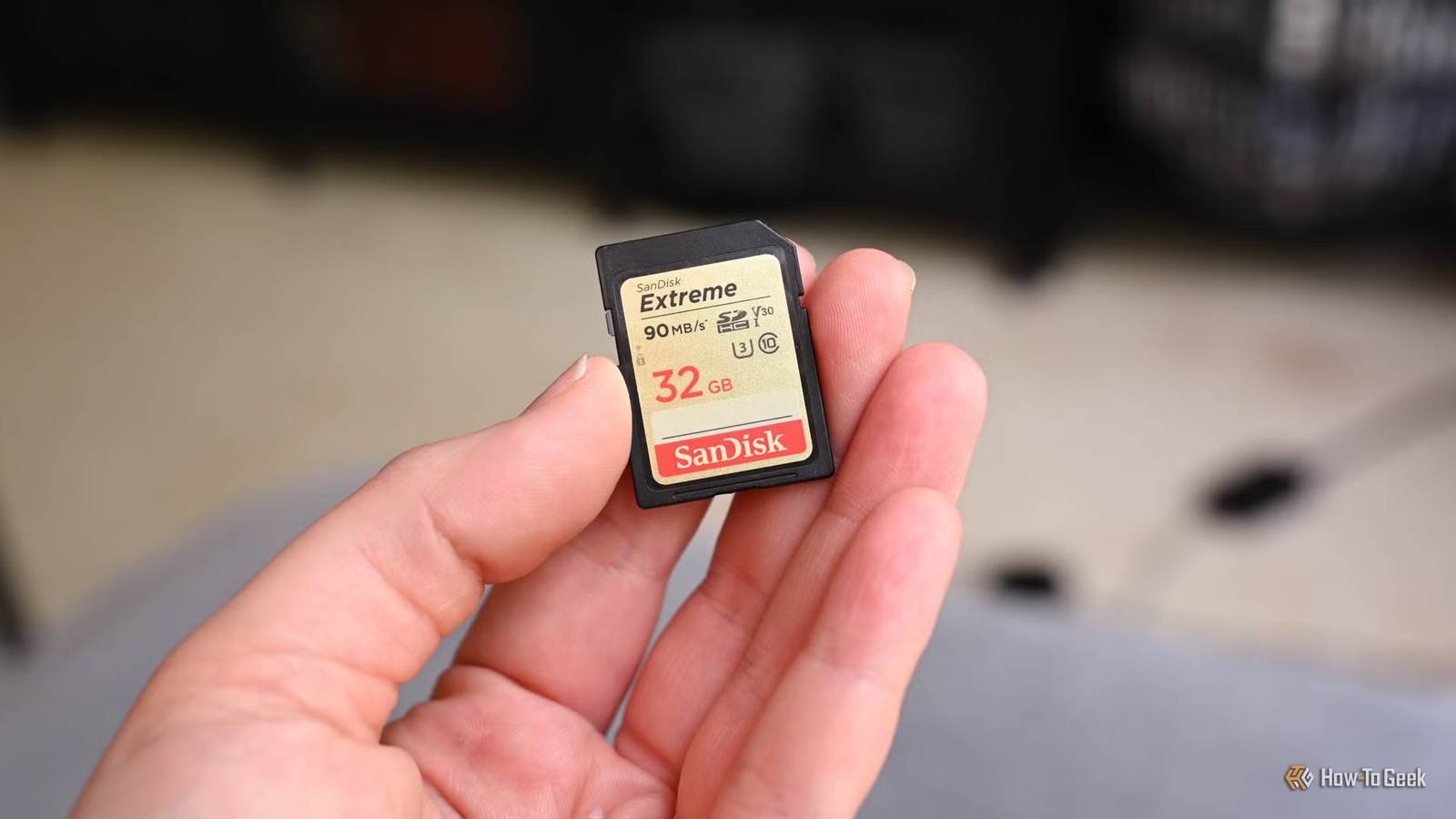
SanDisk brought the MMC's electrical design, which was then expanded with a faster bus, built-in copy protection, the famous physical write-protection switch, and a sturdier body.The SD card was announced in August 1999, and it changed the removable storage industry for good.The SD Association was announced in January 2000 at CES, and we got the first cards in early 2000, with a capacity of only 8MB.
The same year brought 64MB cards, and the original SD standard supported capacities of up to 2GB.SanDisk then introduced a tiny new format called TransFlash at CeBIT in 2004, which the SD Association adopted as microSD in 2005, and the rest is history.The SD card's most important achievement is that it consolidated the fragmented memory card market of the 1990s.
It did that in three ways.First, unlike formats such as Sony's Memory Stick, it was licensed to any manufacturer that wanted it, which allowed it to quickly become the go-to removable storage in many gadgets.Second, it was compact but still packed a controller, which allowed its capacity to keep growing.
And third, it had built-in copy protection.Almost three decades later, the SD card is still alive and kicking And will live on thanks to standards like SD Express While the 2000s, and especially the 2010s, were the golden age of the SD card, the most popular memory card ever is still doing great.It was Nintendo's pick for expandable storage on the hugely successful Nintendo Switch, it's the go-to storage option on the vast majority of modern cameras, and it's still found on some budget phones.
SD and microSD card slots can also be found on many laptops, virtually every handheld PC and retro handheld console, and many mini PCs.The future of the SD card looks bright thanks to the latest standard, SD Express, which allows SD cards to reach SSD-like speeds by using the same PCIe interface as modern SSDs.That solves the biggest issue with regular SD and microSD cards: slow read and write speeds.
SD cards also keep growing in capacity, with SDUC (Secure Digital Ultra Capacity) supporting up to 128TB, a massive jump from the 2GB limit of the original SD standard.The Nintendo Switch 2, which is on track to be just as popular as the original Switch, comes with a microSD Express slot.Some high-end handheld PCs, like the MSI Claw 8 EX, also come with a microSD Express slot, and while smartphones have mostly abandoned SD cards, I wouldn't be surprised if they brought them back (perhaps in the form of microSD Express support?) due to the ongoing global memory and storage shortage.
Last but not least, digital cameras will keep using SD cards for the foreseeable future.If you ask me, the SD card will remain the most popular expandable storage format for years to come, and I simply can't see it going away anytime soon.Related Every way to add an SD card to your Android phone, ranked The best way to expand your Android phone's storage is also the rarest.
Posts 3 By Joe Fedewa The SD card is one of the most important storage formats ever There's no doubt that the SD card is by far the most successful memory card format in history, but I'd also argue that it's one of the most important storage formats ever released.It was embraced by countless companies, it's the first truly universal expandable storage format, finding its way into nearly every gadget with a card slot, and when anyone says "memory card," you know they're likely thinking of either an SD or a microSD card.Not bad for a format that's nearly 30 years old.
Read More