Soldered RAM is widely seen as a disadvantage, even as a pain point, on some laptops and compact PCs, including the MacBook.The thing is, it's usually seen as a solution only when you need to save space—like on a compact device, or a thin laptop.As it turns out, though, soldered RAM actually has a lot more advantages than you'd think.
So before you pile on me for the title, hear me out—and yes, I'm aware that sacrificing upgradeability sucks and it's a perfectly understandable deal-breaker.It's faster The single biggest advantage When RAM is soldered directly to the motherboard or integrated directly onto the CPU package, the physical distance data must travel is drastically reduced.This proximity minimizes signal degradation and electrical interference, allowing for significantly higher clock speeds and tighter timings than traditional dual in-line memory modules (DIMMs).
Meanwhile, standard socketed DDR5 memory often struggles to maintain stability at ultra-high frequencies due to the electrical resistance and capacitance introduced by the physical socket mechanism itself.MacBook Pro (M5) Operating System macOS CPU Apple Silicon M5 RAM 16 or 24GB Storage 512GB or 1TB Display (Size, Resolution) 14 or 16 inches Colors Space Black, Silver The 2025 MacBook comes with the powerful M5 chip, plus everything else you've come to know and love from Apple.Expand Collapse Slotted RAM is not slow by any stretch, but soldered connections provide an uninterrupted, high-integrity pathway, so it has an inherent advantage in this aspect.
This is why we are seeing compact systems with soldered LPDDR5X pushing bandwidths that desktop builders can only achieve through extreme, exotic overclocking of top-tier socketed kits.Furthermore, moving the memory closer to the compute cores drastically reduces latency.In workloads that are heavily dependent on memory bandwidth, such as high-resolution video editing, large-scale data compilation, and complex gaming simulations, this architectural shift translates to a measurable, undeniable performance uplift.
The traditional motherboard traces required to route data to physical DIMM slots create a hard physical ceiling on how fast signals can propagate without error.It consumes less power Hence why it's used on thin laptops The energy dynamics of modern computing are becoming just as critical as raw speed, and this is another area where soldered memory architectures demonstrate a profound advantage over traditional socketed RAM.Standard desktop memory modules require a substantial amount of power just to drive signals across the motherboard traces, through the physical pins of the DIMM slot, and into the memory controller.
Every physical junction introduces electrical resistance, which inherently wastes energy as heat.Soldered RAM, on the other hand, circumvents this inefficiency by utilizing direct, highly optimized micro-connections that operate at significantly lower voltages.This is the core principle behind LPDDR memory, which was originally designed for mobile devices but is increasingly relevant for high-performance desktop computing.
By eliminating the power overhead required to overcome the impedance of standard DIMM slots, systems equipped with soldered memory can achieve higher bandwidth-per-watt metrics.This reduction in power consumption has a cascading positive effect on the entire desktop ecosystem.Less power draw from the memory subsystem means less strain on the motherboard's voltage regulation modules and the power supply unit.
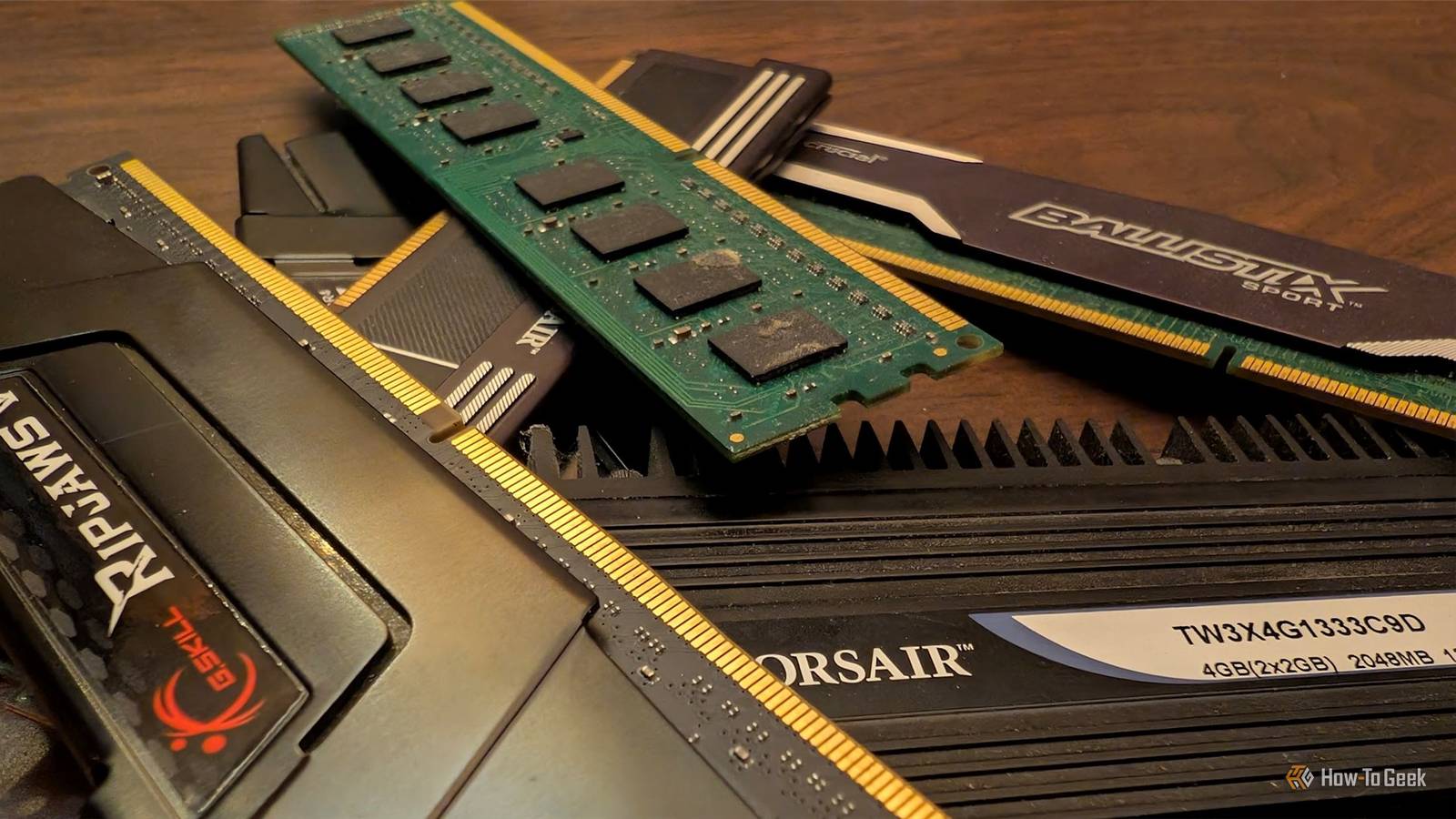
More importantly, it dramatically reduces the thermal footprint of the memory itself.Socketed DDR5 modules often require dedicated heatsinks and active airflow to prevent thermal throttling under heavy loads.Soldered memory, benefiting from lower operating voltages and better heat dissipation directly into the motherboard PCB or processor package, runs significantly cooler.
This allows desktop builders to design quieter, more thermally efficient systems, redirecting the power and cooling budget toward the CPU and GPU.Ultimately, transitioning to a soldered memory paradigm transforms the desktop from a power-hungry collection of disparate parts into a tightly unified, highly efficient computational engine.It's cheaper—especially considering the current RAM shortage Unique times we're living in Beyond the technical metrics of speed and power efficiency, the transition toward soldered memory presents a compelling economic argument, particularly in the context of fluctuating global hardware supply chains.
The manufacturing process for traditional socketed memory is inherently complex and resource-intensive.Producing a standard DIMM requires manufacturing the printed circuit board, sourcing and surface-mounting the individual DRAM chips, integrating power management ICs, and attaching thermal spreaders, all of which must then be paired with complex, expensive physical sockets on the motherboard.Soldering memory directly to the mainboard or processor package bypasses much of this redundant manufacturing overhead.
Hardware manufacturers can source raw memory chips directly in massive bulk quantities and integrate them during the primary board assembly process.This streamlined supply chain reduces the number of physical materials required, cuts down on packaging and individual shipping costs, and eliminates the need for third-party memory vendors entirely.In the face of current RAM shortages, this vertically integrated approach becomes a vital cost-saving measure.
When the open market for standalone DIMMs experiences price inflation due to silicon scarcity or logistical bottlenecks, systems that utilize soldered memory can often insulate consumers from the worst of the price hikes.Manufacturers are leveraging their massive purchasing power to secure long-term contracts for raw memory modules, integrating them directly at a lower overall cost than a consumer could achieve by purchasing a motherboard and separate, highly marked-up retail RAM kits.It's still not perfect Don't get me wrong—soldered RAM still has an insane amount of disadvantages.
But if you don't mind the biggest one—upgradeability loss—then maybe, just maybe, you'll learn to make peace with the remaining ones, and perhaps even learn to love it for its advantages.
Read More