After a decade of using Linux, it has now been two years since the last time I loaded up a distro to get work done—and it's becoming increasingly hard for me to see myself going back.The computers I use and the way I use them has changed, and Linux just isn't suited for my new computing world.Linux isn't on the type of hardware I want In the battle between Microsoft Windows, Apple macOS, Google’s ChromeOS, and Linux—I have long chosen Linux.
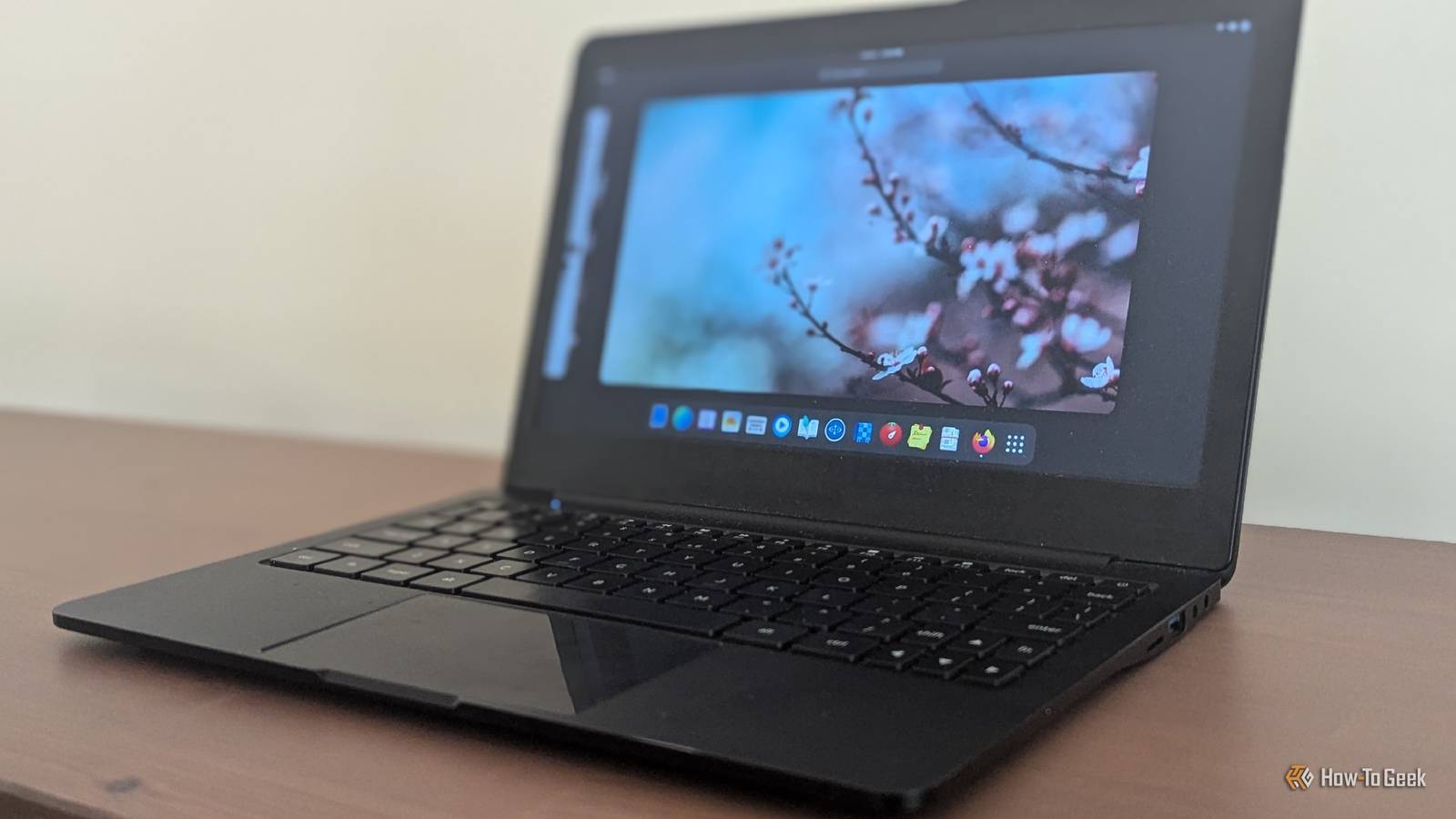
It’s the only one that provides true ownership over my software and complete flexibility to use my computer however I want.There has yet to be an operating system I prefer to power a laptop or desktop PC.Thing is, I don’t use a laptop or desktop anymore.
Over two years ago, I ditched my laptop for a smartphone that could load up a full Android-based desktop when connected to a lapdock or an external monitor.Linux companies like Canonical and Purism had promised the idea of a single device that could adapt to different form factors, but it was Android that delivered on this vision of convergence.I have since replaced that phone, a Moto Edge+ 2023, with a book-style foldable smartphone and learned that the inner screen is large enough for me to do my entire job.
I am writing these words not on an Android-based desktop, but on the 7.6-inch screen of a Samsung Galaxy Z Fold 6—and I'm writing not with a keyboard, but a stylus.Now, when I do want a larger screen, I rarely connect my lapdock or even dock to an external monitor.I have since purchased a Galaxy XR headset instead.
That spatial computer runs the same apps as my phone, and it's easy to share files between the two.The high-resolution OLED panels in this headset makes images and video look better than I've ever experienced, and when I can work by standing apps all around me, even a large monitor just feels limiting.Linux is amazing on laptops and desktops, and it's finally available on a few tablets as well.
Unfortunately, it still isn't much of a thing on slab phones, and it's non-existent on foldable ones.While Valve's upcoming Steam Frame will be a Linux-based VR headset, its lower-resolution LCD panels and lack of color camera passthrough make it less appealing as a spatial computer (even if the KDE developers adapt Plasma for VR).These new form factors work well for me, and Linux just isn't viable on them yet Switching back means giving up features I now rely on My mobile-first workflow means I'm now relying on features that aren't available or all that good on a free and open-source desktop.
When I mentioned that I am writing these words using my S Pen, I'm not actually writing words out longhand.I am swiping across the virtual keyboard.I find I can write much longer this way without my hands getting tired, and it places much less strain on my wrists.
Writing this way relies on the prediction engine baked into my virtual keyboard.The virtual keyboards available for Linux tend not to offer predictable text or support gesture-based typing.The list goes on.
I can now use the object erase feature built into Samsung Gallery without having to modify an image by hand using GIMP or digiKam.The same app can erase some shadows or reflections using on-device AI processing.I can also tap a share button in nearly any app and easily send that file to any other, reducing how often I need to navigate a file picker.
So many Android apps may not seem like power tools, but that doesn't mean they aren't.My devices are now integrated with the rest of my family My software decisions aren't just about me anymore.I am married and have two kids.
It took years, but my wife and I have finally settled on software that we can agree on for managing our digital lives.All of these exist as Android apps.While I could still utilize Samsung Calendar and Samsung Notes on my phone, nothing in either of these apps would be as accessible from a Linux desktop and I would find myself compelled to switch us to something that is.
I now live in a Samsung Galaxy household, where all of our devices communicate very well with each other.Anything can be transferred with Quick Share.Any app I'm familiar with can easily be installed on someone else's, and I know how to get them up and running in minutes.
Modern Android tablets are remarkably similar to laptops, and my kids simply don't need a conventional desktop PC for school.Aside from my wife's MacBook, we're all doing the majority of our computing on Android and the many forms factors that it takes.I'm no longer sure I believe FOSS is the best path forward Not only is Linux no longer the most practical option for me to use, but I'm no longer sure I even find the free and open source model to be the best approach to software anymore.
As much as I agree with the ethos and the ethics, I increasingly appreciate the benefits that come with a rich ecosystem of software that people are able to make a living developing.I love the accessibility and polish of apps like Niagara Launcher compared to Olauncher or my personal favorite open source launcher, Kvaesitso.I wrote using Apostrophe on GNOME for years, but man does PenCake make my heart sing.
These apps are able to thrive as long as they have a large enough niche of paying users, and they don't have to resist the pressure of contributions from volunteers whose visions might complicate the app.Some corporate-backed software excels as well—I am consistently blown away by how much power is packed into Samsung Notes, a seemingly simple note-taking app for phones and tablets that would be no less impressive on a desktop.As computing has expanded into my smart home, I value simplicity even more.
As much as I want to cheer on Home Assistant, I've had a much smoother time using Homey.I'm no longer at a point in my life where I want to put time into tinkering with my PC.Troubleshooting my smart lights and figuring out why voice commands aren't getting my ceiling fan to come on is even less appealing.
I still believe strongly in open standards like Matter and open-source foundations like Linux and Android, but I increasingly see the value in user-facing software being designed by people being paid to spend their workdays making sure everything works.My heart remains with Linux.I want to be able to use a fully open-source folding phone and entirely free apps, but such options don't exist.
And as someone who has worked remotely for my entire career, I'm less willing to sacrifice quality of life improvements in order to stick to my principles.
Read More