The Toyota Prius arrived in the United States in 2000 and spent the next 25 years becoming the textbook definition of a hybrid car.It was the first mass-produced hybrid most Americans ever saw, and its name became synonymous with fuel efficiency and environmental consciousness in a way no other has matched.By the mid-2000s, it had become a cultural symbol, with celebrities arriving at award shows in Priuses rather than limousines or luxury cars.
U.S.sales passed the one million mark by 2011, with the Prius name attached to spinoffs like the compact Prius c hatchback and the larger Prius v wagon, each aimed at a different kind of buyer who still wanted that core hybrid reputation.Most hybrids that have tried to compete with the Prius have followed the same blueprint, namely a fuel-sipping sedan built around aerodynamics and a low curb weight.
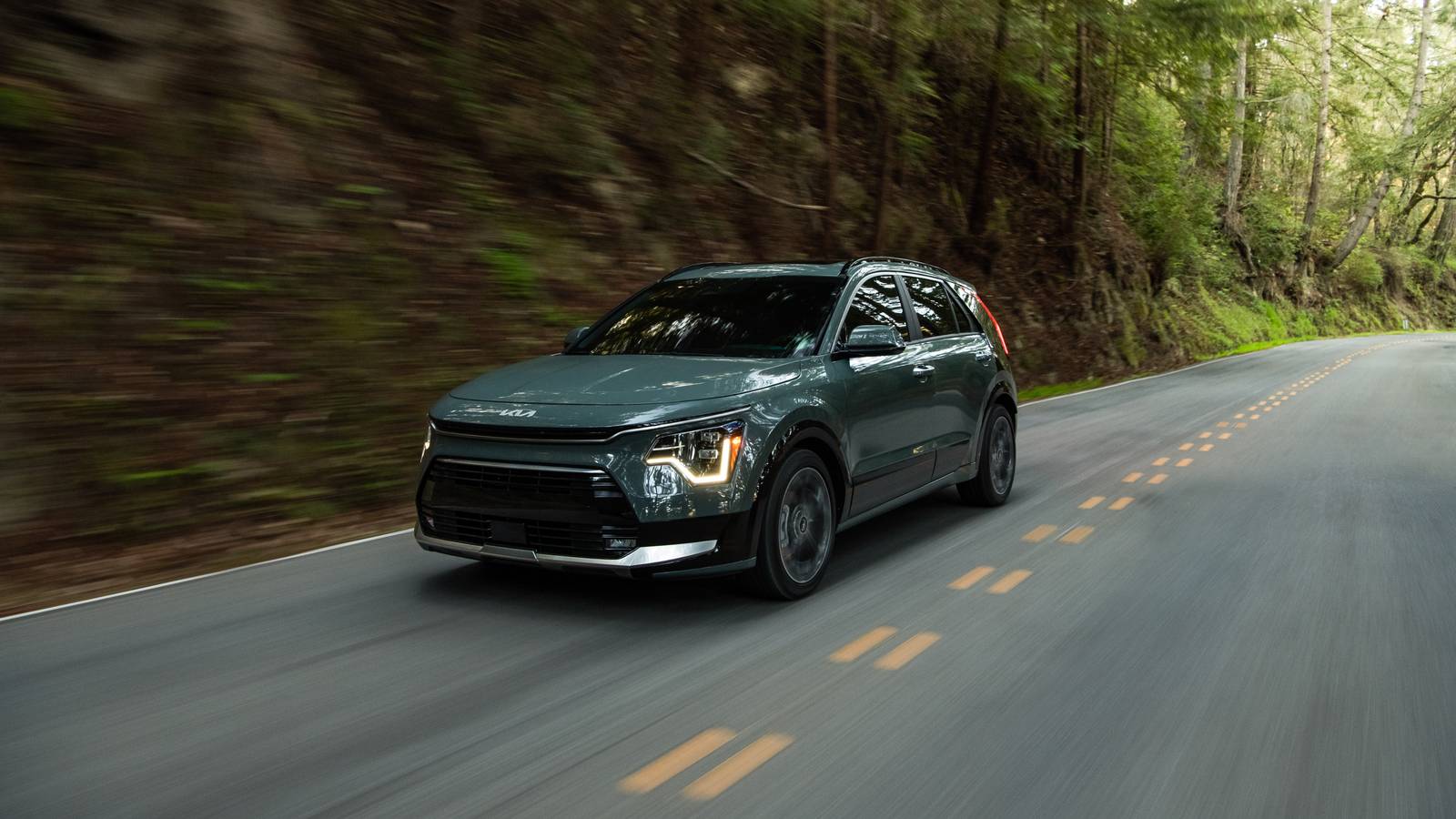
However, the 2026 Kia Niro Hybrid takes a different approach.It is a small SUV, not a sedan or a hatchback, but it still lands within a few miles per gallon of the Prius LE.For buyers who want the utility and look of a small SUV, the Kia Niro Hybrid may be a compelling alternative to the Prius.
It offers more cargo room and more rear-seat space than expected, all while delivering strong fuel economy against a car that defined hybrid driving for a generation.Kia Niro SUV 2026 Base: $27,090 Base Trim Engine 1.6L I4 Hybrid Base Trim Transmission 6-speed auto-shift manual Base Trim Drivetrain Front-Wheel Drive Powered by Expand Collapse Powertrain and fuel economy Note the slight efficiency gap The Prius LE uses a 2.0-liter Atkinson-cycle four-cylinder engine paired with Toyota's fifth-generation hybrid system, producing a combined output of 194 horsepower (all-wheel drive models have a combined system output of 196 horsepower).By contrast, the Niro Hybrid uses a smaller 1.6-liter four-cylinder paired with an electric motor for a combined system output of 139 horsepower and 195 lb-ft.
of torque.The 2026 Prius is available with an all-wheel drive system, but the Niro Hybrid is front-wheel drive only.For fuel-economy comparison purposes, we are focusing on the front-wheel drive Prius LE, the most fuel-efficient model in the 2026 Prius lineup.
The Prius LE has an EPA rating of 57 in the city, 56 on the highway, and 57 mpg combined.The Niro Hybrid LX has an EPA rating of 53 in the city, 54 on the highway, and 53 mpg combined.The four mpg combined difference reflects the real-world loss of moving from a low-slung sedan to a taller SUV body style.
Range follows a similar pattern when looking closely at the EPA ratings.The Prius LE covers 644 miles on a full tank, while the Niro Hybrid LX covers 588 miles.That 56-mile gap works out to roughly one or two additional fill-ups per year for someone driving 15,000 miles annually.
In dollar terms, the EPA estimates annual fuel costs at $1,100 for the Prius LE and $1,150 for the Niro Hybrid LX, a difference of just $50 per year.Like Toyota Prius Hatchback 2026 Base: $28,550 Base Trim Engine 2L I4 Hybrid Base Trim Transmission 2-speed CVTi-S CVT Base Trim Drivetrain Front-Wheel Drive Powered by Expand Collapse The starting MSRP and what it gets you Rear passenger space is where the Niro Hybrid makes its strongest case The 2026 Kia Niro Hybrid LX starts at $28,765 while the 2026 Toyota Prius LE starts at $29,685, including destination fees.It’s a modest price difference of less than $1,000 between the two.
Every 2026 Kia Niro Hybrid comes standard with an eight-inch touchscreen, Apple CarPlay and Android Auto, and a six-speaker sound system.Standard safety features include forward collision avoidance with pedestrian detection, blind-spot collision warning, rear cross-traffic collision avoidance, and lane departure warning.Meanwhile, every 2026 Prius features an eight-inch touchscreen, Apple CarPlay and Android Auto, and six USB-C charging ports throughout the cabin.
On the safety side, Toyota includes Safety Sense 3.0 as standard, which features pre-collision and pedestrian detection, full-speed dynamic radar cruise control, lane departure alert with steering assist, and road sign assist.Rear passenger space is where the Niro Hybrid makes its strongest case.It offers 39.8 inches of rear legroom, compared to 34.8 inches in the Prius.
That five-inch difference can alter the comfort level on a long road trip.Cargo space is a trade-off depending on how you use the vehicle.With the rear seats folded, the Niro offers 63.7 cubic feet of space compared to 50.4 cubic feet in the Prius, a noticeable difference.
With the rear seats up, the Prius offers 23.8 cubic feet of space, slightly edging out the Niro's 22.8 cubic feet.Related Forget a hybrid SUV—this one gets 32 MPG without a battery A hybrid isn't the only way to save at the pump—this SUV delivers an impressive 32 MPG without a battery or charging cable.Posts 3 By Adam Gray Factory warranty coverage Both have their strong points The Kia Niro Hybrid comes with a five-year, 60,000-mile bumper-to-bumper warranty and a 10-year, 100,000-mile powertrain warranty.
Kia also covers the hybrid battery for 10 years or 100,000 miles.The Toyota Prius comes with a three-year, 36,000-mile bumper-to-bumper warranty and a five-year, 60,000-mile powertrain warranty.Toyota covers hybrid-related components for eight years or 100,000 miles, and the hybrid battery specifically for 10 years or 150,000 miles.
Kia's bumper-to-bumper coverage is longer, which matters for buyers concerned about early repair costs.Toyota's hybrid battery warranty runs 50,000 miles further, an advantage for buyers planning to keep their vehicle well past the 100,000-mile mark.Related This Toyota delivers AWD confidence without the fuel economy penalty This Toyota hybrid gives you all-weather confidence without the fuel economy hit most AWD vehicles bring.
Posts By Adam Gray Which one makes more sense The Toyota Prius is the right call for buyers who want the absolute best fuel economy in this class, the longest hybrid battery warranty, or simply trust Toyota's track record over 25 years in this segment.The Kia Niro Hybrid makes more sense for buyers who want more cargo space, more rear-seat room, and a slightly lower starting price.While it cannot match the Prius on total fuel economy, the Niro Hybrid proves that an SUV can come close to that efficiency without sacrificing utility.
Kia discontinued the plug-in hybrid version of the Niro for the 2026 model year, so it is no longer part of the lineup.Toyota still sells a plug-in version of its own (formerly the Prius Prime), which is a separate model with its own pricing and electric-only range.
Read More