There's always been a strong rivalry between Apple and Microsoft along with the companies that make Windows hardware.This has been going on ever since both companies were "inspired" by the graphical technologies they saw at Xerox PARC all those years ago.The truth, however, is that Apple and Microsoft have been pushing and pulling each other to greater heights as time has gone by.
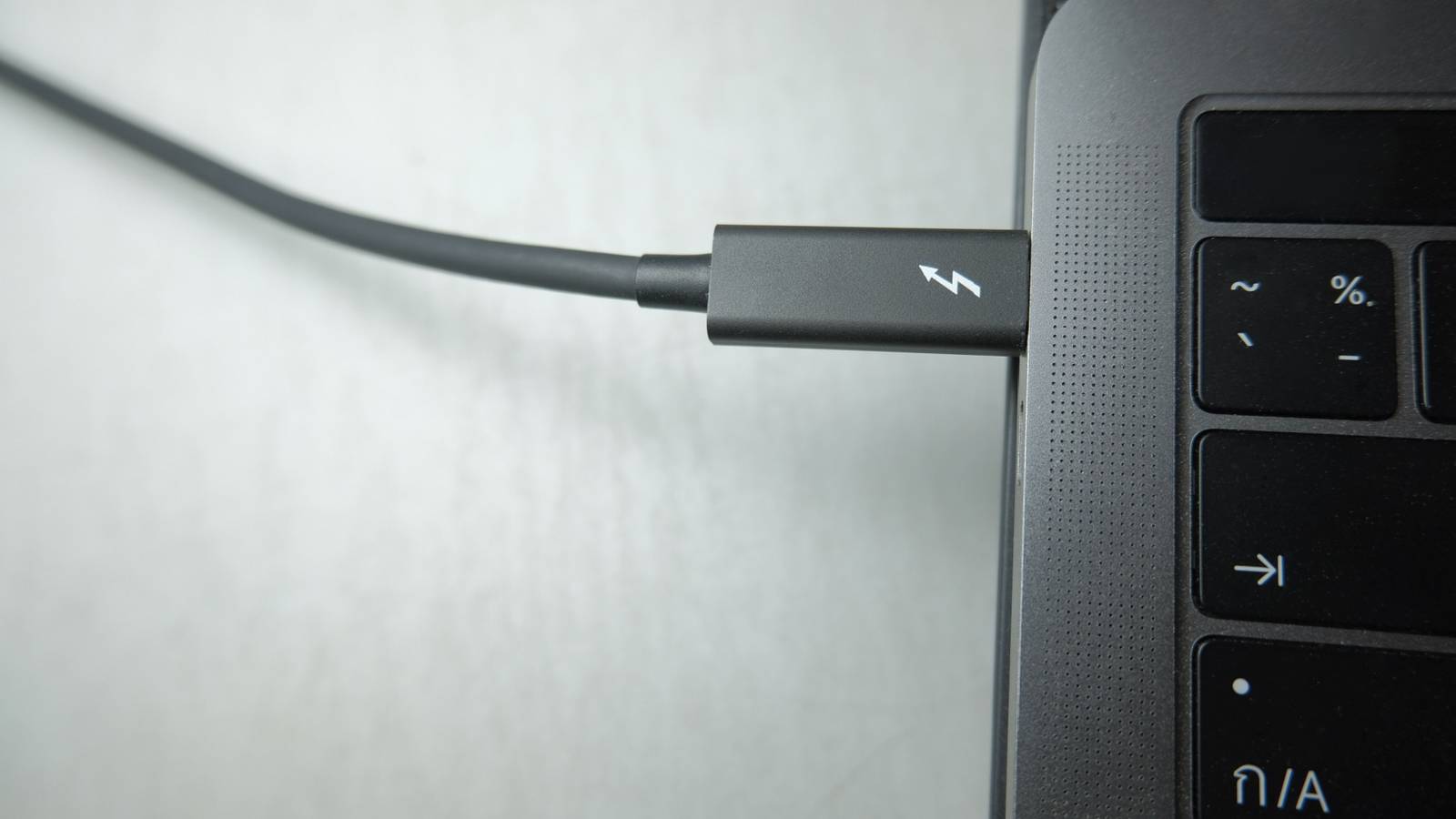
When one company comes up with a good idea, the other "borrows" it for their own users.What was that about "great artists" again Steve? That said, for a company with a small share of the desktop computer space, Apple has had an outsized impact on the world of Windows computers.Thunderbolt Made High-Speed External I/O normal Data in a flash Today, Thunderbolt is a connection technology that allows both Apple and Windows PCs to send and receive data at stupendous speeds when connected to external peripherals.
Whether you need to connect to an external monitor or copy files to an SSD, Thunderbolt can do it with ease.But let's not forget it was Apple who put Thunderbolt in its computers first.Co-developed with Intel, Apple staked its claim with Thunderbolt in early 2011 MacBook Pro models, and the world hasn't been the same since.
The first Windows PC motherboard with Thunderbolt (the Intel DZ77RE-75K as reviewed by Techradar) would only see the light of day about a year later.DisplayPort won because Apple pushed it early and hard The superior port Few PC users today would argue that DisplayPort isn't the superior choice compared to HDMI, but you might have to thank Apple for giving this excellent display connection technology a foothold in the market.While Apple wasn't the only company to offer DisplayPort in its products, the inclusion of Mini DisplayPort in MacBooks in late 2008 (which actually caused some problems for VGA and DVI users, as reported by CNET) was an important part of making it a widespread standard.
This is one of those classic Apple moves where it makes a clear decision about moving to a new connector or dropping an old one, and Mac users just have to live with it.However, there's no arguing that Apple played a significant role in establishing DisplayPort as something monitor manufacturers would justify including in their products.Now if only more TVs would also get the memo! High-DPI displays stopped being optional You can't see beyond the veil It might be hard to remember just how grainy screens used to look on laptops, but you really could see the pixel grids on these computers without much effort.
Apple's push with its "Retina" marketing made the idea of high pixel density normal.The idea wasn't to render graphics at these insane resolutions, but to have the physical pixels be so small that you can't see the substrate.Trackpads became genuinely good It's like second nature If you've never used an Apple trackpad, you might be confused at how technology reviewers always praise them as the best trackpads in existence.
However, it's the honest, objective truth.Apple pushed the idea of an enormous trackpad that was essentially a multitouch screen without the screen bit.Using a Mac or MacBook with a touchpad is a revelation, and a true alternative to a mouse.
On a Windows laptop, it's always felt like a touchpad is something you use because you didn't have access to a mouse at that moment.On a MacBook you'd never think about anything, you just used your computer.Well, more than a decade ago, Windows responded with its "Precision Touchpad" standard.
Microsoft covered the software side and laid out what OEMs had to do in hardware to make it all work.Now we have multitouch gestures and big precise trackpads on Windows laptops too.Although they aren't as good as Apple's somehow.
All-day battery life became a design goal Can you believe we used to think four hours was good? When the M1 Apple Silicon MacBooks dropped on an unsuspecting world, it completely reset our idea of what "good" battery life was on a laptop what performance expectations you could have.On a Windows laptop using an Intel or AMD CPU, you'd be lucky to get a whole day in the office without plugging in, and you'd have to run in an awful low-performance mode to get even that.Subscribe for the newsletter: deeper Apple vs PC insights Join the newsletter for clear analysis of how Apple innovations shaped Windows PC hardware and why those shifts matter — focused coverage that ties design choices, performance trade-offs, and interface standards into practical tech understanding.
Get Updates By subscribing, you agree to receive newsletter and marketing emails, and accept our Terms of Use and Privacy Policy.You can unsubscribe anytime.Meanwhile, the M1 MacBooks were cruising through entire days on battery with no performance penalty, bright screens, and no noise.
This was a multi-generation leap and Microsoft was caught sleeping.It took before Windows, Intel, AMD, and laptop makers could catch up.There were disastrous experiments with ARM PCs running a special version of Windows, but eventually the Windows side of the world managed to pull together x86 machines that could run all day and give decent performance while doing it.
It just goes to show that once someone shows you that something is possible, you can find a way to achieve it yourself.Or, you could just buy a Mac and have it now, I guess.
Read More