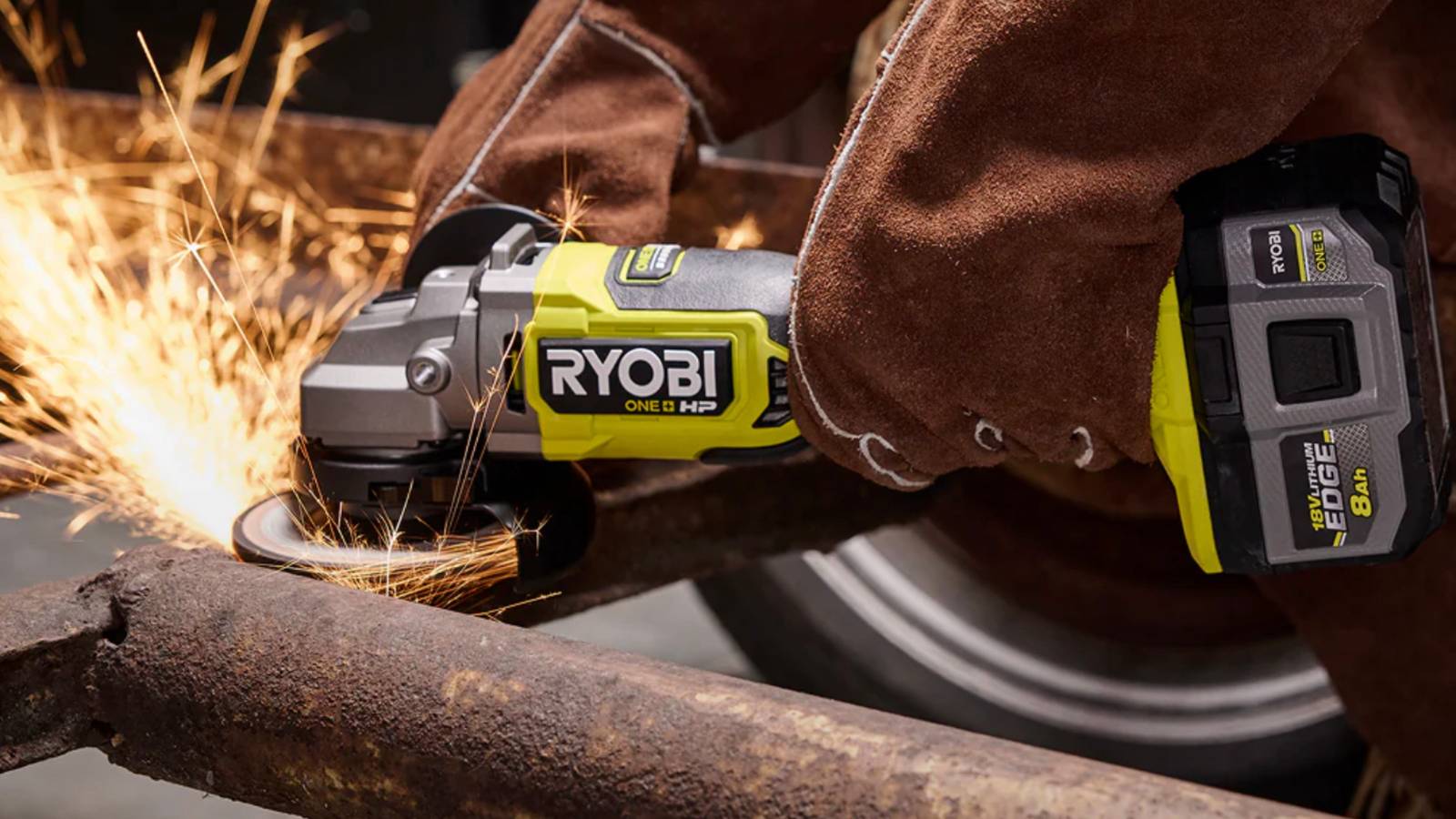
Picking a cordless tool brand feels like it should be simple until you realize the battery you buy first decides everything that comes after it.I learned that the hard way when I priced out a basic kit and saw the gap between Milwaukee and Ryobi up close.Both brands come from the same parent company, but they're built for completely different users and budgets.
There are price differences to consider You’re basically buying from the same parent company When building a cordless tool collection, the single most important financial decision you'll make is choosing your battery.That one choice locks you into a brand's ecosystem for years, and the manufacturers know it.A battery from one brand won't work with another brand's tools.
While aftermarket adapters exist, they can be a safety hazard, void your warranty, and usually don't perform as well.I never recommend using one unless it is proven to work just as well.So, whichever platform you start with, you're essentially committed.
This makes the upfront cost of entry a huge deal.Which is why you should make sure the tools you look for solve problems you have.The interesting part is that both brands are actually owned by the same company.
Techtronic Industries (TTI) is the parent company, but it has deliberately positioned Milwaukee and Ryobi at opposite ends of the market.Milwaukee handles the professional trade channels, Ryobi handles everyday consumers, and TTI profits from both sides.It is a smart business strategy, similar to how major beverage brands operate.
When you are competing for market share, it is better to own the competition.Milwaukee is the expensive one, and that is on purpose.It's built for contractors, electricians, mechanics, and tradespeople who depend on their tools daily and often have a company card to swipe.
For a regular homeowner, that pricing can feel a bit too much.On top of that, Milwaukee runs two separate battery lines, M12 and M18, which can force you into buying two different battery and charger systems depending on what tools you need.Ryobi takes the opposite approach entirely.
It is cheaper and comes with its own battery pack.The batteries are very important The first battery sets the groundwork for your whole workshop Ryobi figured out decades ago that people didn't want to overcomplicate the battery setup.The company's 18V ONE+ platform has been around since 1996, and in all that time, Ryobi has kept the same battery design so that a battery you buy today will still fit a tool from twenty years ago, and vice versa.
If you've ever used the tool, you'll know that the company keeps that original connector style, where the battery slides up into the handle.So you have over 300 tools that can take it.Milwaukee does things differently, and it's probably the most argued part of the company's plan.
The company splits its tools between the M12 and M18 platforms.The M12 is a 12-volt system with a compact triangular battery that fits inside the handle, making it small and easy to maneuver in tight spaces.The M18 is an 18-volt system with a larger slide-on battery that attaches to the base of the tool, built to handle heavier workloads.
The problem is that these two systems do not intermix, so you're basically buying into a specific grade of battery.Different batteries, chargers, and everything else.This is why I personally like Ryobi better.
I am not a professional; I used to be a landscaper, but I'm not buying into a whole system that's more expensive when both brands are reliable.Match the brand with what you're actually building You don’t need construction site quality to hang up a photo frame Before you pick a cordless tool, you need to think about what you actually plan to do with it.Milwaukee builds its tools to take a beating on active job sites day after day.
They're the high end of the two.You pay for things like reinforced housings, rubber overmolding, hardened steel gears, and cast-metal gear cases.These things can get rained on, caked in mud, dropped off scaffolding, and still keep running through hours of continuous heavy use.
For a professional who depends on their tools to hold up through a full work week, that kind of build quality is worth every penny.Most people aren't professionals, and there are plenty of tool owners who are weekend warriors, new homeowners, or people who do the occasional renovation.Hanging pictures, building a deck, and redoing a kitchen do not come close to the punishment a construction site dishes out.
When you buy Milwaukee, you're paying for durability and power you may never actually need.A Ryobi, brushed or brushless, handles every typical home project just fine, usually at half the price of a comparable Milwaukee setup.Milwaukee might shave a few seconds off a task or have a little more raw torque, but that difference is nearly impossible to notice if you're only picking up your tools a couple of times a month.
On top of that, you're much more likely to take much better care of your tools than a shared job site crew ever would.Your drill isn't getting thrown in the back of a truck or borrowed by ten different guys.It's going to sit in your garage or a closet, clean and dry.
Milwaukee's power and toughness are genuine, but you likely don't need it and shouldn't feel like you need to pay top dollar for it.That extra money is better spent on materials or rounding out your tool collection.Ryobi is built specifically for the regular user, and it delivers exactly what you need.
That's why it's so well-liked.Ryobi is better for a wider variety of people Milwaukee and Ryobi aren't competing for the same buyer, and that's okay.Milwaukee is built to survive conditions most garages will never see, and that durability costs real money.
If you're hanging shelves or building a deck a few weekends a year, you're paying for strength you won't use.People like going for Ryobi because it does everything the layman needs without forcing you into a second battery system down the road.Ryobi 18V HP Hammer Drill Product Dimensions /2" (Chuck Size) What's Included 18V ONE+ HP Brushless 1/2" Hammer Drill, Auxiliary Handle, and Operator's Manuals The Ryobi 18V ONE+ HP Brushless Hammer Drill makes easy work of any house project.
With several speed modes, a built-in handle, and LED lighting, you'll be all set. $129 at Home Depot Expand Collapse
Read More